Data Localization Laws: US Fintechs Can Save 20% on Compliance

US fintechs navigate complex data localization laws, incurring substantial compliance costs, yet strategic re-evaluation of data management and infrastructure can yield up to 20% savings by 2025.
The landscape for financial technology (fintech) companies in the United States is constantly evolving, with increasing scrutiny on data handling. Understanding the financial impact of data localization laws: how US fintechs can save 20% on compliance costs in 2025 is not just a regulatory burden, but a critical strategic imperative for sustainable growth and operational efficiency.
Understanding Data Localization Laws and Their Scope
Data localization laws mandate that certain types of data, often personal or sensitive financial information, must be stored and processed within the geographical borders of the country where it originated or where the data subject resides. These regulations vary significantly across jurisdictions, creating a complex web of requirements for global and even national fintech operations.
For US fintechs, navigating these diverse mandates is a monumental challenge. The primary goal of these laws is typically to enhance national security, protect citizen privacy, and ensure data accessibility for local law enforcement or regulatory bodies. However, this often translates into substantial operational and financial overhead for companies that rely on global data flows and cloud infrastructure.
The Regulatory Patchwork
The absence of a uniform global standard means fintechs must contend with a patchwork of regulations. This necessitates a granular understanding of each market’s specific requirements, from data residency to data processing rules.
- GDPR (Europe): While not a US law, its extraterritorial reach impacts US fintechs serving European customers, dictating strict data transfer mechanisms.
- CCPA/CPRA (California): These state-level laws impose stringent data privacy and residency requirements that can necessitate localized data handling for California residents.
- Industry-Specific Regulations: Financial services often have additional layers of data protection requirements, like those from the New York Department of Financial Services (NYDFS) Cybersecurity Regulation Part 500.
The scope of these laws extends beyond mere storage. It encompasses how data is collected, processed, transmitted, and ultimately destroyed. Each stage of the data lifecycle is subject to potential localization mandates, creating bottlenecks and increasing the complexity of compliance frameworks.
In conclusion, data localization laws are a multifaceted challenge for US fintechs, demanding a comprehensive understanding of diverse regulatory environments and their implications for data management strategies. The financial consequences of non-compliance are severe, making proactive adaptation crucial.
Direct Financial Burdens of Data Localization on US Fintechs
The direct financial burdens imposed by data localization laws on US fintechs are considerable, often manifesting as increased infrastructure costs, higher operational expenses, and significant compliance expenditures. These costs can quickly erode profit margins and stifle innovation if not managed effectively.
Establishing and maintaining localized data centers or cloud instances in every relevant jurisdiction is a capital-intensive undertaking. Fintechs, especially those with a global customer base, may find themselves needing to replicate their data infrastructure multiple times, leading to redundant investments and increased management complexity.
Infrastructure and Technology Investments
The requirement to keep data within specific borders often means investing in new hardware, software, and network infrastructure. This can include:
- Local Data Centers: Building or leasing facilities in various countries, which involves significant upfront costs and ongoing maintenance.
- Cloud Service Redundancy: Subscribing to multiple cloud providers or regions to ensure data residency, often at a premium.
- Specialized Software: Implementing tools for data mapping, encryption, and access control that comply with specific localization mandates.
Beyond the initial setup, there are recurring operational costs. These include higher energy consumption for localized servers, increased staffing for local IT support, and the complexities of managing a distributed IT environment. The overhead associated with maintaining multiple, often disparate, systems can quickly accumulate.
Furthermore, the cost of skilled personnel to manage these complex, localized systems cannot be underestimated. Cybersecurity experts, compliance officers, and data privacy specialists are in high demand, and their salaries reflect their specialized knowledge. These personnel are essential for ensuring that localized data environments are secure and compliant with ever-evolving regulations.
In summary, the direct financial impact of data localization on US fintechs is substantial, driven by the need for costly infrastructure, redundant technology, and specialized human capital. Addressing these costs requires strategic planning and innovative solutions.
Indirect Costs and Operational Challenges
Beyond the direct financial outlays, data localization laws introduce a myriad of indirect costs and operational challenges that can significantly impact a US fintech’s efficiency, agility, and competitive edge. These subtle yet pervasive costs often go unnoticed until they begin to impede growth and innovation.
One primary indirect cost is the increased complexity of data management. When data is fragmented across multiple jurisdictions, maintaining a unified view of customer information becomes challenging. This can hinder analytics efforts, impact customer service quality, and slow down product development cycles.
Impact on Innovation and Agility
Divided data pools can create data silos, making it harder to leverage big data analytics and machine learning for product innovation. Fintechs thrive on rapid iteration and data-driven insights; localization laws can impede this by:
- Slowing Data Analysis: Transferring or aggregating localized data for global analysis becomes cumbersome and often legally restricted.
- Hampering Product Development: Developing new features or services that rely on cross-border data insights becomes more complex and time-consuming.
- Reducing Scalability: Expanding into new markets requires re-architecting data strategies for each new jurisdiction, slowing market entry.
The operational challenges extend to talent acquisition and retention. Maintaining a global workforce while ensuring compliance with varying data access rules can be a logistical nightmare. Employees in one country might not be able to access data stored in another, creating inefficiencies and potential compliance breaches.
Moreover, the increased legal and administrative burden associated with navigating multiple regulatory frameworks consumes valuable resources. Legal teams spend countless hours interpreting regulations, drafting internal policies, and ensuring adherence, diverting focus from core business activities. This constant vigilance is an ongoing expense that adds to the indirect cost of doing business.
Ultimately, the indirect costs and operational challenges stemming from data localization laws can erode a fintech’s ability to innovate, scale, and compete effectively. Proactive strategies are essential to mitigate these less obvious yet equally impactful burdens.
Strategies for Reducing Compliance Costs by 20%
Achieving a 20% reduction in compliance costs related to data localization by 2025 is an ambitious yet attainable goal for US fintechs. This requires a multi-faceted approach, combining technological innovation, strategic partnerships, and a deep understanding of regulatory nuances. The key lies in optimizing data architecture and processes to meet localization requirements efficiently.
One of the most effective strategies involves adopting a hybrid cloud model or utilizing advanced data management solutions that offer granular control over data residency. This allows fintechs to store sensitive data locally while leveraging global cloud infrastructure for non-sensitive data or for processing that can be conducted remotely without breaching regulations.
Optimizing Data Architecture and Cloud Strategy
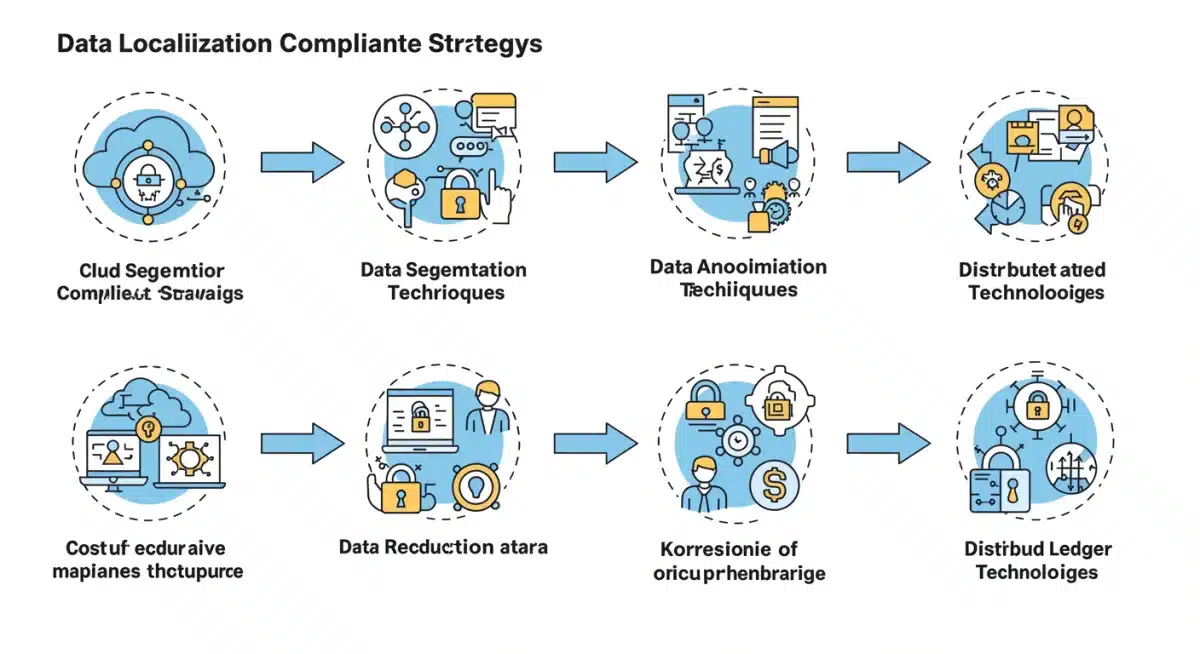
A well-planned cloud strategy can significantly cut down on infrastructure costs associated with data localization. This involves:
- Data Minimization: Only collecting and retaining data that is absolutely necessary, reducing the volume of data subject to localization.
- Pseudonymization and Anonymization: Transforming personal data so it cannot be attributed to a specific individual without additional information, allowing for greater flexibility in data processing.
- Regional Cloud Instances: Utilizing regional instances of cloud providers to ensure data residency where required, without needing to build physical data centers.
Another crucial strategy is the use of Distributed Ledger Technology (DLT) or blockchain for certain types of data. While not a panacea, DLT can offer immutable records and enhanced security, potentially reducing some compliance overheads related to data integrity and auditability. However, its application must be carefully evaluated against specific localization rules.
Furthermore, engaging with regulatory bodies and industry consortia can provide insights into impending changes and best practices. Proactive participation in these discussions allows fintechs to influence policy and prepare for future requirements, potentially avoiding costly last-minute adjustments. This collaborative approach fosters an environment where compliance becomes a shared responsibility rather than an isolated burden.
In conclusion, cost reduction in data localization compliance is achievable through strategic technological adoption, intelligent data handling, and active engagement with the regulatory landscape. These combined efforts can pave the way for significant savings.
Leveraging Technology for Efficient Compliance
Technology is the cornerstone of efficient data localization compliance, offering sophisticated tools and platforms that can automate processes, enhance data security, and provide the necessary visibility to meet regulatory demands. By strategically deploying these technologies, US fintechs can streamline their compliance efforts and reduce associated costs.
Data mapping and discovery tools are indispensable for understanding where sensitive data resides across an organization’s IT ecosystem. These solutions help identify data subject to localization rules, enabling targeted compliance efforts rather than broad, expensive overhauls.
Automation and AI in Compliance
The integration of automation and Artificial Intelligence (AI) can revolutionize compliance processes. AI-powered tools can:
- Monitor Data Flows: Continuously track data movement to ensure adherence to residency requirements, flagging anomalies instantly.
- Automate Reporting: Generate compliance reports automatically, reducing manual effort and the risk of human error.
- Risk Assessment: Predict potential compliance breaches based on data patterns and suggest preventative measures.
Cloud service providers are also continuously evolving their offerings to support data localization. Many now provide specific regional data centers and compliance certifications tailored to various global regulations. Partnering with a cloud provider that has a strong commitment to regulatory compliance can offload a significant burden from fintechs.
Moreover, advanced encryption and tokenization techniques allow fintechs to process sensitive data without exposing its raw form. This means that while the encrypted data might reside in a different jurisdiction, the actual sensitive information remains protected and potentially outside the scope of strict localization mandates, depending on the specific legal interpretation.
Ultimately, leveraging technology for compliance is about working smarter, not harder. By investing in the right tools and platforms, US fintechs can transform a complex regulatory challenge into a manageable and cost-effective operational process, paving the way for substantial savings and enhanced data governance.
Case Studies and Best Practices from Industry Leaders
Examining how industry leaders successfully navigate data localization laws provides invaluable insights and actionable best practices for other US fintechs. These case studies often highlight innovative approaches that balance regulatory adherence with operational efficiency, proving that significant cost savings are indeed possible.
One notable example involves a leading payment processing fintech that adopted a multi-cloud strategy. Instead of building proprietary data centers in every required country, they partnered with several global cloud providers, utilizing their localized infrastructure. This approach allowed them to meet data residency requirements without the massive capital expenditure of building their own facilities, resulting in an estimated 15% reduction in infrastructure costs.
Key Lessons from Successful Implementations
Several common themes emerge from successful compliance strategies:
- Proactive Regulatory Engagement: Companies that engage early with regulators often find more flexible and cost-effective compliance paths.
- Modular Architecture: Designing systems with modularity allows for easier isolation and localization of specific data sets when required, avoiding wholesale infrastructure replication.
- Strong Data Governance: Implementing robust data governance frameworks ensures a clear understanding of data origins, types, and residency requirements, leading to more efficient compliance.
Another best practice involves investing in extensive employee training and awareness programs. Human error is a significant contributor to compliance breaches. By ensuring all employees understand their roles in data handling and localization rules, fintechs can reduce incidents, avoid fines, and minimize the need for costly remediation efforts. This cultural shift towards data responsibility can yield long-term savings.
Furthermore, many successful fintechs emphasize continuous monitoring and auditing of their data environments. Regular assessments help identify potential compliance gaps before they become critical issues. This proactive stance, often supported by automated tools, is far less expensive than reacting to a regulatory violation after it has occurred.
In conclusion, learning from industry leaders demonstrates that a combination of strategic technology choices, active regulatory engagement, and a strong internal culture of compliance can effectively mitigate the financial impact of data localization laws, paving the way for significant cost reductions and a more secure operational framework.
The Future Outlook: Navigating 2025 and Beyond
As we look towards 2025 and beyond, the landscape of data localization laws is expected to become even more intricate, posing new challenges and opportunities for US fintechs. Staying ahead of these trends is paramount for maintaining compliance, fostering innovation, and realizing the projected 20% savings on compliance costs.
One significant trend is the increasing convergence of data privacy and cybersecurity regulations. Future laws are likely to integrate aspects of both, demanding more holistic and integrated compliance strategies. Fintechs that have already adopted comprehensive data governance frameworks will be better positioned to adapt to these evolving requirements.
Emerging Technologies and Regulatory Responses
The rapid advancement of technologies like quantum computing and advanced AI will also influence data localization. Regulators will likely introduce new guidelines to address the unique data processing and storage implications of these emerging technologies, requiring fintechs to remain agile and adaptable.
- Quantum-Resistant Encryption: Anticipating the need for stronger encryption methods to protect localized data from future threats.
- AI Explainability: Developing frameworks for AI transparency and accountability, particularly when AI models process localized sensitive data.
- Interoperability Standards: A potential push for greater international cooperation on data transfer standards to ease cross-border data flows while maintaining localization principles.
Moreover, the geopolitical environment will continue to shape data localization policies. Trade disputes, national security concerns, and international relations can all influence how countries regulate data within their borders. US fintechs must monitor these global dynamics closely and develop flexible strategies that can quickly respond to policy shifts.
The emphasis on data ethics and responsible AI will also grow, influencing public perception and regulatory pressure. Fintechs that prioritize ethical data handling and transparent AI practices will not only enhance their compliance posture but also build greater trust with their customers and stakeholders, which is invaluable in the long run.
In essence, the future demands a proactive, adaptable, and technologically astute approach to data localization. By anticipating regulatory shifts and embracing innovative solutions, US fintechs can not only achieve their 20% cost-saving goal but also build more resilient and trustworthy operations for the years to come.
| Key Aspect | Brief Description |
|---|---|
| Compliance Costs | High infrastructure, operational, and legal expenses due to varying data residency rules. |
| Cost Savings Goal | Aim to save 20% on data localization compliance costs by 2025. |
| Key Strategies | Optimized cloud architecture, data minimization, automation, and regulatory engagement. |
| Future Outlook | Anticipate convergence of privacy/security laws, impact of emerging tech, and geopolitical shifts. |
Frequently Asked Questions About Data Localization for US Fintechs
Data localization laws require specific data to be stored and processed within a country’s borders. They impact US fintechs by creating complex compliance requirements, necessitating investments in localized infrastructure, and increasing operational costs for companies operating internationally or handling diverse customer data.
The main financial burdens include significant infrastructure investments for local data centers or cloud regions, increased operational expenses for managing distributed IT environments, and higher costs for specialized compliance and cybersecurity personnel. Non-compliance can also lead to hefty fines and reputational damage.
Fintechs can achieve this by optimizing their cloud strategy, implementing data minimization and pseudonymization, leveraging automation and AI for compliance, and engaging proactively with regulators. Strategic vendor partnerships and modular data architectures also contribute significantly to cost reduction.
Technology is crucial for efficient compliance. Data mapping tools help identify sensitive data, while AI and automation monitor data flows, generate reports, and assess risks. Advanced encryption and tokenization techniques also allow for secure data processing, potentially reducing strict localization requirements.
The future suggests more integrated privacy and cybersecurity regulations, new guidelines for emerging technologies like quantum computing, and continued geopolitical influence. Fintechs must remain agile, invest in adaptable frameworks, and monitor global policy shifts to stay compliant and competitive.
Conclusion
The evolving landscape of data localization laws presents both formidable challenges and strategic opportunities for US fintechs. While the financial impact of compliance can be substantial, a proactive and technology-driven approach, coupled with strong data governance, can transform these burdens into efficiencies. By focusing on optimized cloud strategies, leveraging automation, and learning from industry best practices, fintechs are well-positioned to achieve significant cost savings, potentially reaching the 20% target by 2025. This strategic navigation will not only ensure regulatory adherence but also foster innovation and build greater trust in an increasingly data-centric financial world.