Cybersecurity Insurance 2025: US Fintechs Secure $5M Coverage

Securing comprehensive cybersecurity insurance in 2025 is vital for US fintechs aiming for $5 million in coverage, necessitating a proactive approach to risk management and compliance with evolving regulatory landscapes.
Fintech cybersecurity insurance in 2025 is no longer a luxury but a fundamental necessity for US financial technology companies. As digital innovation accelerates, so do the sophistication and frequency of cyber threats, making robust insurance coverage an indispensable safeguard against potentially catastrophic financial and reputational damage. This article delves into the critical aspects US fintechs need to understand to secure substantial coverage, specifically targeting a $5 million policy, in the rapidly evolving landscape of cyber risk.
The evolving landscape of cyber threats for US fintechs
The digital realm is a double-edged sword for fintechs. While it offers unprecedented opportunities for innovation and market reach, it also exposes them to a constantly evolving array of cyber threats. Understanding these threats is the first step toward building a resilient security posture and securing adequate insurance coverage.
In 2025, ransomware attacks continue to be a primary concern, often targeting critical financial infrastructure and customer data. Beyond ransomware, sophisticated phishing schemes, supply chain attacks, and zero-day exploits pose significant challenges, requiring continuous vigilance and adaptive security measures. The interconnected nature of fintech ecosystems means a vulnerability in one partner can cascade, affecting multiple entities. Therefore, a holistic view of potential attack vectors is essential.
Key cyber threats impacting fintechs
- Ransomware attacks: Encrypting data and demanding payment, often disrupting critical services.
- Phishing and social engineering: Tricking employees into revealing sensitive information or granting unauthorized access.
- Supply chain vulnerabilities: Exploiting weaknesses in third-party vendors or partners.
- Data breaches: Unauthorized access to sensitive customer financial and personal information.
The regulatory environment is also tightening, with increased penalties for non-compliance and stricter reporting requirements. Fintechs must not only protect against attacks but also demonstrate adherence to standards like PCI DSS, GDPR (even with US operations touching global data), and state-specific privacy laws. Failure to do so can lead to hefty fines, legal battles, and a significant loss of customer trust. This complex threat landscape underscores why a comprehensive understanding of risk and appropriate insurance is paramount for survival and growth.
Understanding cybersecurity insurance policies for fintechs
Cybersecurity insurance, often referred to as cyber liability insurance, is specifically designed to protect businesses from the financial fallout of cyberattacks and data breaches. For fintechs, these policies are tailored to address the unique risks associated with handling sensitive financial data and operating digital platforms.
A typical policy for a US fintech seeking $5 million in coverage will often include several core components. First-party coverage addresses direct costs incurred by the fintech, such as incident response, forensic investigations, data recovery, and business interruption. Third-party coverage, equally crucial, protects against liabilities arising from data breaches affecting customers or partners, including legal fees, regulatory fines, and public relations expenses.
Essential coverage components
- Business interruption: Compensation for lost income due to a cyber incident.
- Data breach response: Costs associated with notifying affected individuals, credit monitoring, and call center services.
- Cyber extortion: Payments for ransomware attacks and negotiation services.
- Legal and regulatory defense: Coverage for legal fees and fines from regulatory bodies.
- Reputational damage: Funds for public relations and crisis management.
It’s important to note that policies vary significantly between providers. Fintechs must meticulously review policy terms, exclusions, and limits to ensure they align with their specific risk profile. Some policies may exclude acts of war, certain types of negligence, or pre-existing vulnerabilities, making due diligence critical before committing to a provider. Understanding these nuances is key to maximizing the value of your fintech cybersecurity insurance.
Key factors influencing insurability and premiums in 2025
As the cyber threat landscape intensifies, insurers are becoming more stringent in their underwriting processes. For US fintechs aiming for $5 million in coverage, demonstrating a robust security posture is paramount. Insurers will meticulously evaluate a company’s cybersecurity practices, often requiring detailed questionnaires and even independent audits.
One of the most significant factors is the implementation of multi-factor authentication (MFA) across all critical systems, especially for administrative access and customer-facing portals. Strong endpoint detection and response (EDR) solutions, regular vulnerability assessments, and comprehensive employee cybersecurity training are also non-negotiable. Furthermore, a well-defined incident response plan, regularly tested through simulations, will significantly improve insurability and potentially lower premiums.
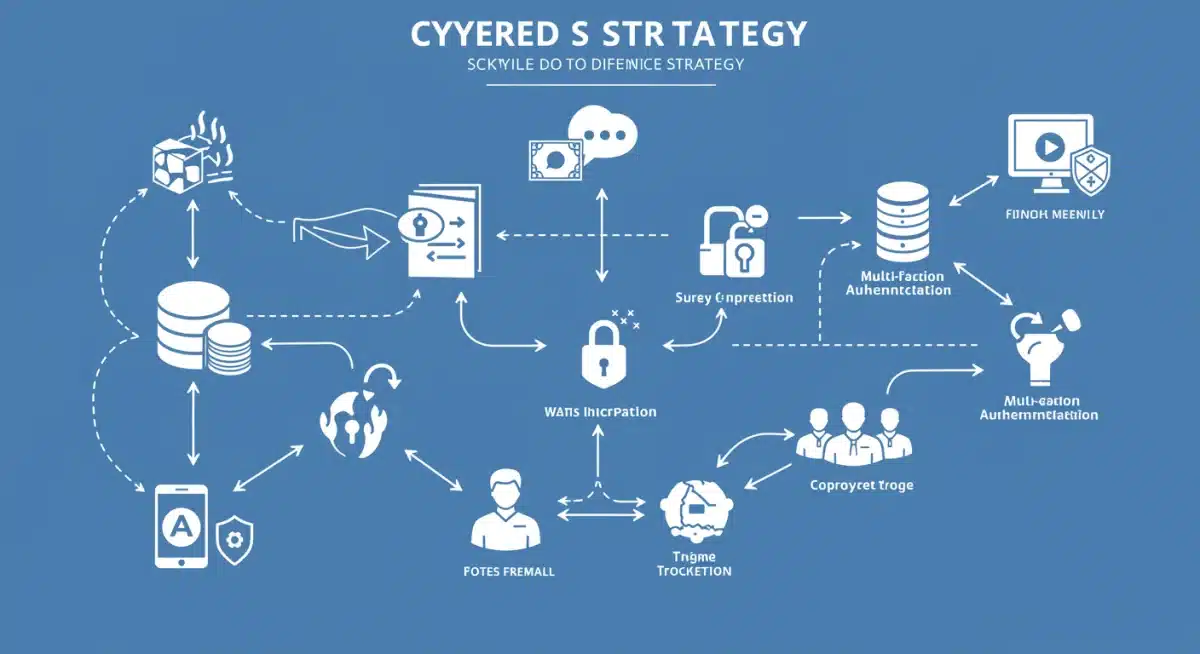

Data encryption, both in transit and at rest, is another critical element, particularly for fintechs handling sensitive financial information. Insurers are also looking for clear evidence of compliance with relevant industry standards and regulations, demonstrating a commitment to data protection. The more proactive and comprehensive a fintech’s security measures, the more attractive they become to insurers, leading to better coverage terms and more competitive pricing for their fintech cybersecurity insurance.
Strategies for US fintechs to secure $5 million in coverage
Obtaining a $5 million cybersecurity insurance policy requires a strategic and systematic approach. Fintechs need to present a compelling case to insurers, highlighting their commitment to security and risk mitigation. This involves more than just filling out an application; it demands a deep understanding of their own vulnerabilities and how they are actively addressing them.
Implementing advanced security controls
To begin, fintechs should invest in and implement advanced security controls. This includes next-generation firewalls, intrusion detection/prevention systems, and robust data loss prevention (DLP) solutions. Regular penetration testing and vulnerability scanning, conducted by independent third parties, provide objective evidence of security effectiveness. The results of these tests, along with remediation efforts, should be documented and readily available for insurers. Demonstrating a proactive stance on identifying and fixing vulnerabilities is a strong indicator of a mature security program.
Furthermore, strong vendor risk management is crucial. Fintechs often rely on a network of third-party providers for various services, from cloud hosting to payment processing. Each vendor represents a potential attack vector. Insurers will want to see robust due diligence processes for vendor selection, contractual agreements that mandate specific security standards, and ongoing monitoring of vendor security postures. This holistic approach to security, extending beyond internal systems, significantly strengthens a fintech’s case for higher coverage limits.
Building a strong security culture and compliance program
Beyond technical controls, cultivating a strong security culture within the organization is vital. This involves continuous employee training on cybersecurity best practices, phishing awareness, and incident reporting procedures. A well-informed workforce acts as an additional layer of defense, reducing the likelihood of human error leading to a breach. Insurers often look for evidence of such ongoing training programs.
Finally, a comprehensive compliance program, adhering to frameworks like NIST, ISO 27001, and relevant financial regulations (e.g., GLBA, CCPA), demonstrates a commitment to governance and risk management. Providing clear documentation of policies, procedures, and audit trails showcases a fintech’s dedication to maintaining a secure and compliant operational environment. These combined efforts significantly enhance a fintech’s profile, making them a more favorable candidate for securing substantial fintech cybersecurity insurance coverage.
The role of incident response planning in securing coverage
Even with the most robust security measures, cyber incidents can occur. How a fintech responds to a breach can significantly impact its financial and reputational fallout. Insurers place a high value on comprehensive and regularly tested incident response plans, viewing them as a critical component of a fintech’s overall risk management strategy.
An effective incident response plan outlines clear steps for identifying, containing, eradicating, recovering from, and learning from a cyberattack. It defines roles and responsibilities, communication protocols (both internal and external), and legal counsel engagement. Fintechs should conduct tabletop exercises and simulations regularly to test the plan’s effectiveness, identify weaknesses, and ensure all stakeholders understand their roles during a crisis.
Components of an effective incident response plan
- Preparation: Establishing policies, procedures, and an incident response team.
- Identification: Detecting and assessing the scope of a cyber incident.
- Containment: Limiting the damage and preventing further spread of the attack.
- Eradication: Removing the threat and restoring affected systems.
- Recovery: Restoring operations to normal and ensuring business continuity.
- Post-incident analysis: Learning from the incident and improving security measures.
Insurers often require evidence of such a plan and its regular testing as a prerequisite for offering higher limits, like $5 million in coverage. A well-documented and practiced incident response plan demonstrates that a fintech is prepared to mitigate the impact of a breach, thereby reducing the insurer’s potential payout. This proactive approach to managing the aftermath of a cyber event is a strong signal of maturity and responsibility, directly influencing both insurability and premium costs for fintech cybersecurity insurance.
Navigating the application process and underwriting challenges
Applying for cybersecurity insurance, especially for a significant sum like $5 million, can be a complex process. Fintechs should be prepared for extensive due diligence from insurers, who will scrutinize every aspect of their security posture and operational practices. The application often involves detailed questionnaires covering technical controls, employee training, incident response capabilities, and compliance frameworks.
One common challenge is accurately articulating the fintech’s specific risk profile. Many fintechs may underestimate or overestimate certain risks, leading to misaligned coverage or unnecessary premium costs. Engaging with a specialized insurance broker who understands the unique nuances of the fintech sector can be invaluable. These brokers can help bridge the gap between technical security teams and insurance underwriters, ensuring that the application accurately reflects the company’s risk management efforts.
Furthermore, insurers may request access to security audits, penetration test reports, and compliance certifications. Be prepared to provide clear, concise, and well-organized documentation. Transparency throughout this process builds trust with underwriters. Addressing any identified gaps or vulnerabilities promptly, even during the application phase, can demonstrate a commitment to continuous improvement and significantly enhance the chances of securing favorable terms and the desired $5 million in fintech cybersecurity insurance coverage. Understanding and proactively tackling these underwriting challenges is key to a successful application.
| Key Aspect | Brief Description |
|---|---|
| Evolving Threats | Fintechs face increasing ransomware, phishing, and supply chain attacks requiring adaptive security. |
| Policy Components | Coverage includes first-party costs (response, recovery) and third-party liabilities (legal, fines). |
| Insurability Factors | MFA, EDR, regular assessments, and incident response plans are crucial for favorable terms. |
| Securing Coverage | Implement advanced controls, foster security culture, ensure compliance, and test response plans. |
Frequently asked questions about fintech cybersecurity insurance
It’s critical because fintechs handle sensitive financial data, making them prime targets for sophisticated cyberattacks. Insurance provides financial protection against incident response costs, legal fees, regulatory fines, and business interruption, safeguarding against potentially ruinous financial and reputational damage in a rapidly evolving threat landscape.
A $5 million policy usually covers first-party costs like forensic investigations, data recovery, business interruption, and cyber extortion. It also includes third-party liabilities such as legal defense, regulatory fines, public relations expenses, and customer notification costs resulting from data breaches or cyber incidents affecting clients.
Insurers highly prioritize multi-factor authentication (MFA), robust endpoint detection and response (EDR), regular vulnerability assessments, comprehensive employee cybersecurity training, and a well-defined, tested incident response plan. Demonstrating strong data encryption and compliance with industry standards is also crucial for favorable terms.
To secure higher limits, fintechs should implement advanced security controls, conduct regular penetration testing, establish strong vendor risk management, foster a robust security culture through continuous training, and maintain a comprehensive compliance program. Proactive risk mitigation and transparent documentation are key.
Incident response planning is vital as it demonstrates a fintech’s preparedness to mitigate breach impacts. Insurers value well-documented and regularly tested plans, as they reduce potential financial losses from an incident, directly influencing insurability and premium costs. A strong plan shows responsibility and risk management maturity.
Conclusion
For US fintechs navigating the complexities of 2025, securing robust fintech cybersecurity insurance, particularly a $5 million policy, is an indispensable component of a comprehensive risk management strategy. The digital landscape continues to evolve, bringing with it increasingly sophisticated threats and stringent regulatory demands. By understanding the core components of cyber policies, proactively implementing advanced security measures, fostering a strong security culture, and meticulously preparing for the application and underwriting process, fintechs can not only protect their assets and reputation but also ensure their sustained growth and innovation in the dynamic financial technology sector.