Quantum-Resistant Cryptography: US Fintech 6-Month Roadmap

US fintechs must urgently adopt quantum-resistant cryptography by 2025 to protect sensitive data from emerging quantum computing threats, requiring a strategic, phased implementation roadmap.
The looming threat of quantum computing to current cryptographic standards demands immediate attention from the financial technology sector. Implementing quantum-resistant cryptography roadmap is no longer a futuristic concern but an urgent strategic imperative for US fintechs aiming to secure their operations and customer data against potential breaches by 2025 and beyond.
understanding the quantum threat to fintech
The rapid advancements in quantum computing pose a significant, existential threat to the cryptographic foundations underpinning modern financial systems. Traditional encryption methods, such as RSA and ECC, which secure everything from online transactions to customer data, are vulnerable to algorithms designed to break them with unprecedented speed. This isn’t a distant problem; experts predict that a cryptographically relevant quantum computer could emerge by 2030, with some estimations even earlier, making the 2025 horizon a critical preparation window for US fintechs.
The potential impact on fintech is catastrophic. Imagine a scenario where all historical and real-time financial transactions, customer identities, and proprietary algorithms become instantly decipherable. This would not only lead to massive financial losses and reputational damage but also erode public trust in digital finance. The National Institute of Standards and Technology (NIST) has been actively working on standardizing quantum-resistant algorithms, signaling the seriousness of this global cybersecurity challenge.
the core vulnerability: shor’s and grover’s algorithms
At the heart of the quantum threat lie two primary algorithms: Shor’s algorithm and Grover’s algorithm. Understanding their capabilities is crucial for appreciating the urgency of adopting new cryptographic standards.
- Shor’s Algorithm: This algorithm can efficiently factor large numbers and solve discrete logarithm problems, which are the mathematical bedrock of widely used public-key cryptosystems like RSA and elliptic curve cryptography (ECC). Breaking these systems means compromising secure communication and digital signatures.
- Grover’s Algorithm: While not a direct attack on public-key cryptography, Grover’s algorithm can significantly speed up brute-force attacks on symmetric-key ciphers (like AES) and hash functions, effectively reducing their security strength. A 256-bit AES key, for instance, might only offer 128 bits of security against a quantum attack.
These quantum algorithms threaten to render current cryptographic safeguards obsolete, making the development and deployment of quantum-resistant alternatives a top priority for any organization handling sensitive data. For US fintechs, this means protecting trillions of dollars in assets and the privacy of millions of users.
phase 1: assessment and strategy (months 1-2)
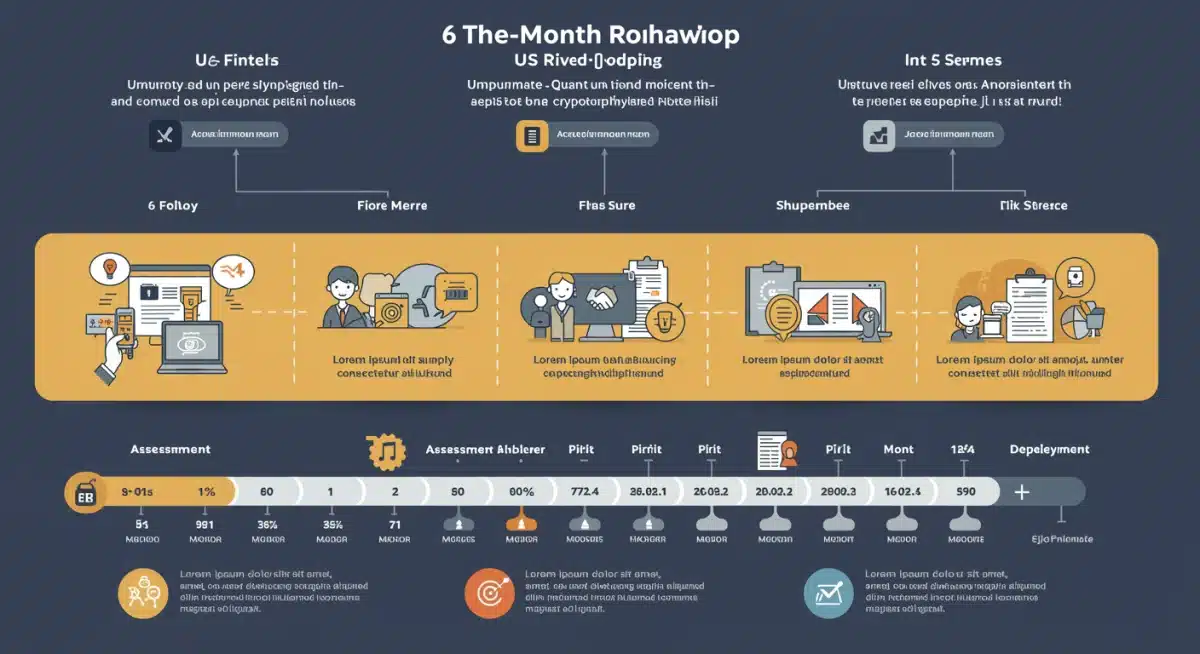
The journey towards quantum-resistant cryptography begins with a thorough assessment of existing infrastructure and a strategic planning phase. This initial two-month period is crucial for laying a solid foundation for future implementation, ensuring that all stakeholders understand the scope and implications of the project.
US fintechs must start by identifying all cryptographic assets, systems, and processes currently in use. This includes everything from data at rest and in transit to digital signatures, authentication protocols, and key management systems. A comprehensive inventory will highlight areas of greatest vulnerability and criticality, guiding subsequent decisions.
identifying cryptographic dependencies
Understanding where cryptography is embedded within your technology stack is paramount. Many systems rely on cryptographic libraries and protocols that might not be immediately obvious. This phase involves deep dives into:
- Application layer: Databases, APIs, microservices, and client-side applications.
- Network layer: TLS/SSL certificates, VPNs, and secure communication channels.
- Infrastructure layer: Cloud environments, hardware security modules (HSMs), and operating systems.
Each dependency needs to be mapped to its current cryptographic standard and assessed for its exposure to quantum threats. This mapping forms the basis for prioritizing migration efforts and resource allocation.
developing a migration strategy and budget
Once the assessment is complete, the focus shifts to crafting a detailed migration strategy. This involves selecting appropriate quantum-resistant algorithms, considering the NIST post-quantum cryptography (PQC) standardization process, and planning for a hybrid approach where traditional and PQC algorithms coexist during the transition. A realistic budget must be allocated, encompassing research, development, testing, and potential hardware upgrades.
Key considerations for the strategy include identifying internal teams, potential external partners, and establishing clear timelines and milestones. The strategy should also account for regulatory compliance, ensuring that the chosen solutions meet future standards and protect against evolving threats. This initial phase sets the tone for the entire project, emphasizing meticulous planning and informed decision-making.
phase 2: research and pilot implementation (months 3-4)
With a clear understanding of cryptographic dependencies and a strategic roadmap in place, the next step involves in-depth research into NIST-selected quantum-resistant algorithms and the initiation of pilot programs. This phase is about validating theoretical choices with practical application.
US fintechs should dedicate resources to thoroughly researching the PQC algorithms currently being standardized by NIST. These include lattice-based cryptography, hash-based signatures, and multivariate cryptography, each with its own strengths and weaknesses. Understanding their performance characteristics, security proofs, and implementation complexities is vital.
selecting and testing pqc algorithms
The selection process should not be rushed. It requires careful evaluation of several factors:
- Security strength: How well does the algorithm resist known quantum attacks?
- Performance: What are the computational overheads, key sizes, and signature lengths?
- Maturity: How well-vetted is the algorithm by the cryptographic community?
After selection, small-scale pilot implementations should be initiated. These pilots are crucial for testing the integration of PQC algorithms into non-critical systems or isolated environments. This provides valuable insights into potential challenges without risking core operations.
building a quantum-safe sandbox environment
To facilitate effective testing, creating a dedicated quantum-safe sandbox environment is highly recommended. This isolated environment allows fintechs to experiment with different PQC implementations, measure their performance, and identify any compatibility issues with existing systems. It’s a safe space to fail fast and learn faster, refining the implementation approach before broader deployment.
During this phase, collaboration with academic institutions or cybersecurity firms specializing in PQC can provide invaluable expertise. Their insights can help navigate the complexities of algorithm selection, implementation, and performance optimization, ensuring that the chosen solutions are robust and efficient. This iterative process of research and pilot testing is fundamental to a successful transition.
phase 3: integration and large-scale deployment (months 5-6)
The final phase of the 6-month roadmap focuses on the careful integration of quantum-resistant cryptography into core systems and subsequent large-scale deployment. This stage demands meticulous planning and execution to minimize disruption and ensure maximum security.
Building on the lessons learned from the pilot programs, US fintechs will begin integrating PQC solutions into critical infrastructure. This often involves a hybrid approach, where both classical and quantum-resistant algorithms are used concurrently. This dual-layer protection ensures continued security even if the transition encounters unforeseen obstacles or if quantum threats materialize sooner than expected.
rolling out hybrid cryptographic solutions
The deployment of hybrid solutions is a pragmatic approach to managing the transition. It allows fintechs to gradually replace vulnerable cryptographic components while maintaining backward compatibility and operational continuity. Key aspects of this rollout include:
- Certificate management: Transitioning to quantum-resistant digital certificates.
- Key exchange protocols: Implementing PQC-secure key exchange mechanisms for secure communication.
- Data encryption: Updating encryption schemes for sensitive data at rest and in transit.
This phased rollout minimizes risk and allows for continuous monitoring and adjustment. Regular security audits and penetration testing during this stage are essential to identify and address any vulnerabilities introduced during the integration process.
employee training and awareness programs
Technology alone is not enough; human factors play a crucial role in cybersecurity. As new cryptographic systems are deployed, it is imperative to implement comprehensive employee training and awareness programs. All personnel, especially those involved in IT, security, and development, must understand the new protocols, their importance, and best practices for their use.
These programs should cover the basics of quantum threats, the specific PQC algorithms being used, and the procedures for managing quantum-resistant keys and certificates. Building a culture of security awareness around PQC will be vital in safeguarding against human error and ensuring the long-term effectiveness of the new cryptographic infrastructure. This final push ensures that the entire organization is aligned with the new security posture.
regulatory compliance and industry standards
Beyond the technical implementation, US fintechs must navigate a complex landscape of regulatory compliance and evolving industry standards concerning quantum-resistant cryptography. Failing to adhere to these guidelines can result in severe penalties and erode customer trust.
The NIST PQC standardization process is a cornerstone for future compliance. As NIST finalizes its recommended algorithms, these will likely become the de facto standard for government agencies and, subsequently, heavily regulated industries like financial services. Fintechs must closely track these developments and align their implementation strategies accordingly.
navigating nist guidelines and fips compliance
For fintechs operating with federal contracts or handling sensitive government data, compliance with Federal Information Processing Standards (FIPS) is mandatory. As NIST PQC algorithms are approved, they will be incorporated into FIPS standards, requiring fintechs to adopt FIPS-validated modules for their cryptographic operations. This isn’t just about technology; it’s about ensuring legal and contractual adherence.
- FIPS 140-3: This standard specifies the security requirements for cryptographic modules. Future updates will undoubtedly include PQC requirements.
- NIST SP 800-208: This publication provides recommendations for the transition to PQC. Fintechs should use it as a guide for their own migration plans.
Proactive engagement with NIST guidelines and FIPS requirements will position fintechs as leaders in cybersecurity, demonstrating a commitment to the highest levels of data protection.
engaging with industry bodies and future-proofing
The quantum threat is a collective challenge, and collaboration within the fintech industry is essential. Engaging with industry bodies, cybersecurity consortia, and peer groups can provide valuable insights, shared best practices, and a unified front in advocating for regulatory clarity.
Future-proofing extends beyond simply implementing current PQC standards. It involves building adaptable cryptographic architectures that can accommodate new algorithms as they emerge and evolve. This means moving away from hardcoded cryptographic primitives towards more modular and agile systems that can be updated with minimal disruption. Continuous monitoring of quantum computing advancements and cryptographic research is crucial for staying ahead of the curve.
key management in a quantum era
Effective key management is foundational to any robust cryptographic system, and its complexities are significantly amplified in the context of quantum-resistant cryptography. US fintechs must re-evaluate and potentially overhaul their key management infrastructures to accommodate the unique demands of PQC algorithms.
PQC algorithms often involve larger key sizes and more complex key generation and distribution processes compared to their classical counterparts. This necessitates a careful review of existing Hardware Security Modules (HSMs), key vaults, and cryptographic service providers to ensure they can handle the increased load and new algorithm types. A failure in key management can render even the most secure PQC algorithms ineffective.
adapting hsm and key vault strategies
Hardware Security Modules (HSMs) are critical for protecting cryptographic keys. In a quantum era, fintechs must ensure their HSMs are either PQC-compatible or can be upgraded to support new algorithms. This might involve investing in next-generation HSMs or exploring cloud-based key management solutions that offer greater flexibility and scalability.
- PQC-ready HSMs: Evaluate vendors for HSMs that already support or plan to support NIST-selected PQC algorithms.
- Migration planning: Develop a clear strategy for migrating existing keys and generating new PQC keys within secure environments.
- Key lifecycle management: Revisit policies for key generation, storage, distribution, rotation, and revocation to align with PQC best practices.
The integrity of cryptographic keys is paramount, and any weak link in the key management chain can compromise the entire security posture. Therefore, this area demands significant attention and investment.
the challenge of long-term data protection
One of the most pressing concerns for fintechs is the long-term protection of sensitive data. Data encrypted today with classical algorithms could be vulnerable to quantum attacks in the future. This implies that even archived data needs to be considered for re-encryption with quantum-resistant methods.
Developing a strategy for “crypto agility” – the ability to rapidly switch or upgrade cryptographic algorithms – becomes critical. This involves designing systems that are not tightly coupled to specific cryptographic primitives, allowing for easier updates and transitions as new quantum-resistant standards emerge. Furthermore, exploring solutions like quantum key distribution (QKD) or quantum random number generators (QRNGs) might be part of a long-term, highly secure strategy, although these technologies are still maturing.
risk mitigation and business continuity
No cybersecurity strategy is complete without a robust plan for risk mitigation and business continuity, especially when facing a paradigm shift like the advent of quantum computing. US fintechs must proactively address potential failures and ensure uninterrupted service.
The transition to quantum-resistant cryptography is complex and carries inherent risks, including implementation errors, performance degradation, and compatibility issues. A comprehensive risk assessment should identify these potential pitfalls and develop contingency plans to address them, minimizing their impact on operations and customer trust.
developing incident response for quantum attacks
Traditional incident response plans may not be adequate for quantum-driven breaches. Fintechs need to develop specific protocols for detecting, responding to, and recovering from quantum-enabled attacks. This includes:
- Early detection mechanisms: Tools and processes to identify unusual activity that might indicate a quantum attack.
- Containment strategies: Methods to isolate compromised systems and prevent further data exfiltration.
- Recovery procedures: Plans for restoring data and systems using quantum-resistant backups and protocols.
Regular drills and simulations of quantum attack scenarios will help refine these incident response plans, ensuring that teams are prepared to act swiftly and effectively when faced with such an unprecedented threat.
ensuring operational resilience during transition
The migration to quantum-resistant cryptography is not a one-time event but an ongoing process. Maintaining operational resilience throughout this transition is vital. This means ensuring that customer-facing services remain available and secure, even as underlying cryptographic systems are being upgraded.
Strategies for operational resilience include using redundant systems, implementing robust testing procedures, and maintaining clear communication channels with customers and stakeholders. A phased rollout, as discussed earlier, is a key component of this resilience, allowing for controlled changes and immediate rollback capabilities if issues arise. The goal is to make the transition as seamless and secure as possible, safeguarding both data and business continuity.
| Key Phase | Brief Description |
|---|---|
| Months 1-2: Assessment | Inventory all cryptographic assets, identify vulnerabilities, and formalize a strategic migration plan. |
| Months 3-4: Research & Pilot | Select and test NIST PQC algorithms in isolated sandbox environments. |
| Months 5-6: Integration | Implement hybrid PQC solutions into core systems and conduct employee training. |
| Continuous Monitoring | Regularly audit systems, adapt to new standards, and refine incident response for quantum threats. |
frequently asked questions about quantum-resistant cryptography
Quantum-resistant cryptography is urgent because quantum computers threaten to break current encryption standards, exposing sensitive financial data. US fintechs must act now to secure systems against potential breaches by 2025 and maintain trust and regulatory compliance.
The roadmap typically includes three main phases: assessment and strategy (months 1-2), research and pilot implementation (months 3-4), and full integration and large-scale deployment (months 5-6). Each phase ensures a systematic and secure transition.
NIST is standardizing post-quantum cryptographic algorithms, which will become the industry benchmarks. US fintechs must align their implementation with NIST’s recommendations to ensure interoperability, security, and future regulatory compliance.
A hybrid cryptographic solution combines both classical and quantum-resistant algorithms. This dual-layer approach provides immediate security against current threats while gradually transitioning to PQC, ensuring continuous protection during the migration period.
Key challenges include identifying all cryptographic dependencies, managing larger key sizes, ensuring performance compatibility, securing supply chains, and training personnel. Overcoming these requires careful planning and significant investment in resources and expertise.
conclusion
The inevitable arrival of cryptographically relevant quantum computers presents an unparalleled challenge to the security of US fintechs. The 6-month roadmap for implementing quantum-resistant cryptography roadmap is not merely a suggestion but a critical directive for survival and continued trust in the digital financial ecosystem. By meticulously assessing current vulnerabilities, strategically planning the migration, rigorously testing new algorithms, and ensuring robust integration, fintechs can proactively safeguard their operations and customer data against the quantum threat. The time for action is now, transforming a looming threat into an opportunity for unparalleled security and innovation within the financial technology landscape.