US Fintech Regulatory Outlook 2026: Navigating State Mandates

The 2026 US Fintech Regulatory Outlook is characterized by a significant 15% surge in state-level compliance mandates for digital lenders, demanding robust and adaptive strategies to ensure operational continuity and market access.
The year 2026 marks a pivotal moment for digital lenders in the United States, as the US Fintech Regulatory Outlook projects a substantial 15% increase in state-level compliance mandates. This shift presents both formidable challenges and unique opportunities for innovation, requiring a nuanced understanding of an evolving regulatory landscape. Staying ahead means not just reacting to new rules, but proactively integrating compliance into core business strategies.
Understanding the 2026 Regulatory Landscape Shift
The regulatory environment for fintech, particularly digital lending, has always been dynamic. However, 2026 is poised to bring a more fragmented and intensified compliance burden, primarily driven by state-level initiatives. This trend reflects a growing concern among state regulators regarding consumer protection, data privacy, and fair lending practices in the rapidly expanding digital finance sector.
This increased scrutiny is a natural evolution as fintech solutions become more integrated into daily financial lives. State regulators, often closer to local consumer needs and concerns, are stepping in to fill perceived gaps in federal oversight. This localized approach means digital lenders must navigate a patchwork of regulations that can vary significantly from one state to another, adding layers of complexity to their operational models.
Key Drivers of State-Level Mandates
- Consumer Protection: States are focusing on predatory lending, transparent fee structures, and responsible lending practices.
- Data Privacy: New mandates are emerging to protect consumer data, often mirroring or expanding upon federal frameworks like CCPA.
- Licensing Requirements: Many states are updating or introducing new licensing categories specifically for digital lenders, impacting market entry and operational scope.
- Algorithmic Bias: Increasing attention is being paid to potential biases in AI-driven lending algorithms, leading to demands for greater transparency and fairness.
The implications of this shift are far-reaching. Digital lenders can no longer rely on a one-size-fits-all compliance strategy. Instead, they must develop sophisticated, state-specific compliance frameworks that are adaptable and scalable. This requires significant investment in regulatory technology (RegTech) and a deep understanding of each state’s unique legal and regulatory nuances. The rise in state-specific mandates underscores the need for localized expertise and robust internal compliance structures.
Impact on Digital Lenders: Challenges and Opportunities
The projected 15% increase in state-level compliance mandates presents a dual-edged sword for digital lenders. While it undoubtedly introduces significant operational challenges and increased costs, it also creates opportunities for those who can adapt effectively and distinguish themselves through superior compliance and customer trust.
One of the primary challenges is the sheer volume and variability of new regulations. Each state might have different reporting requirements, licensing procedures, and consumer disclosure rules. This fragmentation can lead to higher compliance costs, requiring dedicated legal and compliance teams, as well as sophisticated technological solutions to manage diverse data sets and reporting obligations. Smaller digital lenders, in particular, might find this burden disproportionately heavy, potentially hindering their growth or even forcing them out of certain markets.
However, this environment also fosters innovation. Companies that successfully navigate these complexities can build a reputation for reliability and trustworthiness, which are invaluable assets in the competitive fintech landscape. Strong compliance can become a differentiator, attracting customers and partners who prioritize security and ethical practices. Furthermore, the need for advanced RegTech solutions will drive investment and development in this sector, creating new opportunities for collaboration and technological advancement.
Operational Challenges for Digital Lenders
- Increased Costs: Higher expenses for legal counsel, compliance staff, and technology.
- Operational Complexity: Managing diverse regulatory requirements across multiple states.
- Risk of Penalties: Greater exposure to fines and enforcement actions for non-compliance.
- Market Entry Barriers: New licensing and operational hurdles for expansion into new states.
Beyond the immediate financial and operational impacts, there’s also the challenge of maintaining agility. The fintech industry thrives on rapid innovation and deployment. A heavily fragmented and constantly evolving regulatory landscape can slow down product development and market responsiveness. Digital lenders will need to integrate compliance considerations early in their product lifecycle, adopting a ‘compliance-by-design’ approach rather than retrofitting solutions.
Strategic Approaches to State-Level Compliance
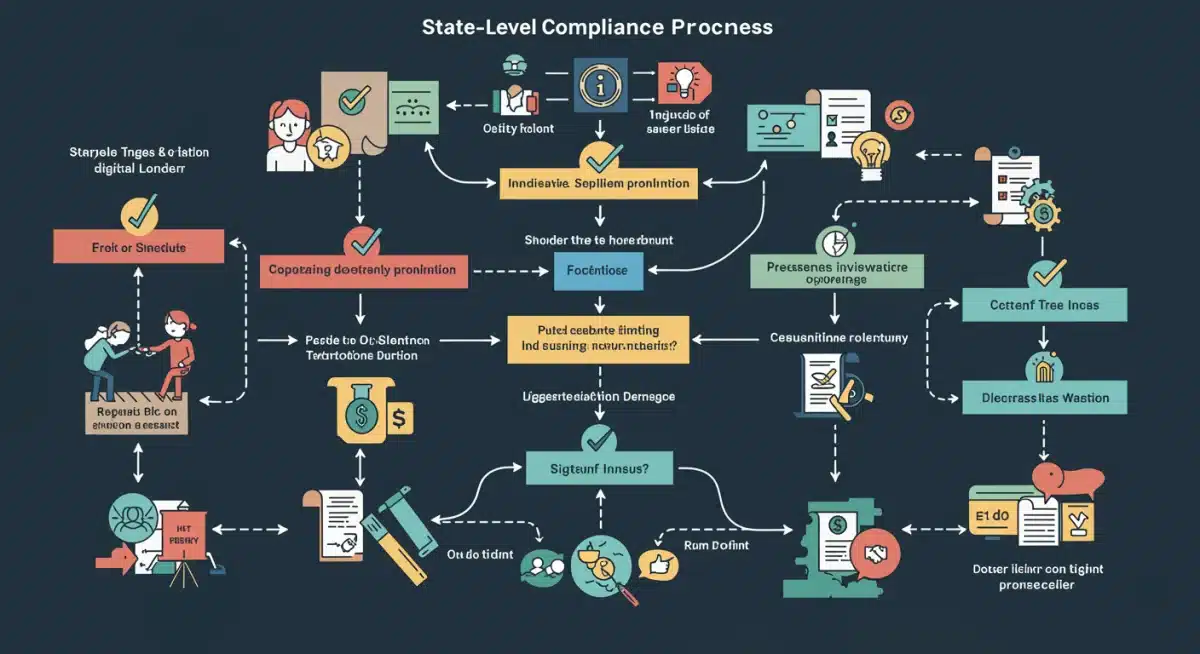
Navigating the complex and escalating state-level compliance mandates requires a proactive and multi-faceted strategic approach. Digital lenders cannot afford to view compliance as a mere afterthought; it must be interwoven into the very fabric of their business operations and strategic planning. A reactive stance will inevitably lead to increased costs, potential penalties, and reputational damage.
One crucial strategy involves investing heavily in regulatory intelligence. This means having dedicated teams or leveraging specialized RegTech platforms that continuously monitor legislative and regulatory developments across all relevant states. Early detection of impending changes allows companies to prepare and adapt their systems and processes before new rules come into effect. This foresight can provide a significant competitive advantage.
Key Compliance Strategies
- Proactive Regulatory Monitoring: Utilize RegTech and legal teams to track state-level legislative changes.
- Localized Compliance Teams: Build or partner with teams possessing expertise in specific state regulations.
- Technology Integration: Implement robust RegTech solutions for automated compliance checks, reporting, and data management.
- Compliance-by-Design: Embed regulatory requirements into product development from the outset.
Another vital component is the development of scalable and modular compliance frameworks. Rather than creating entirely new systems for each state, digital lenders should aim for a core compliance architecture that can be easily customized to meet specific state requirements. This approach reduces duplication of effort and ensures consistency across operations, while still allowing for necessary localization. Furthermore, fostering a strong culture of compliance within the organization, from leadership down, is paramount. Employees at all levels must understand their role in maintaining regulatory adherence.
The Role of RegTech in Mitigating Compliance Risks
As state-level compliance mandates intensify, regulatory technology (RegTech) emerges as an indispensable ally for digital lenders. RegTech solutions offer the tools and capabilities necessary to automate, streamline, and scale compliance efforts, effectively mitigating the risks associated with a fragmented and evolving regulatory landscape. Without robust RegTech, the manual burden of managing compliance across numerous jurisdictions would become unsustainable for many.
RegTech platforms can provide real-time monitoring of regulatory changes, automatically update internal compliance policies, and facilitate accurate and timely reporting to various state authorities. This automation not only reduces the likelihood of human error but also frees up compliance personnel to focus on more complex, strategic tasks rather than routine data entry and verification. From anti-money laundering (AML) checks to consumer data privacy management, RegTech offers comprehensive solutions.
Benefits of Adopting RegTech Solutions
- Automation of Compliance Processes: Reduces manual effort and potential for human error.
- Real-time Regulatory Updates: Ensures immediate awareness and adaptation to new mandates.
- Enhanced Data Management: Centralizes and secures sensitive compliance data for reporting.
- Cost Efficiency: Lowers operational costs associated with compliance over the long term.
Moreover, advanced RegTech solutions leverage artificial intelligence (AI) and machine learning (ML) to identify patterns, predict potential compliance issues, and even assist in the interpretation of complex regulatory texts. This predictive capability allows digital lenders to be proactive rather than reactive, addressing potential non-compliance before it escalates into a costly problem. The integration of RegTech is no longer a luxury but a necessity for any digital lender aiming for sustainable growth and adherence in the 2026 US regulatory environment.
Collaboration and Advocacy: Shaping Future Regulations
Beyond internal compliance strategies and technological adoption, digital lenders have an opportunity, and perhaps a responsibility, to engage in collaboration and advocacy to help shape future regulatory frameworks. A fragmented and overly burdensome regulatory landscape benefits neither the industry nor the consumers it serves. By actively participating in policy discussions, fintech companies can contribute to more effective, harmonized, and innovation-friendly regulations.
This involves engaging with state legislative bodies, regulatory agencies, and industry associations. Digital lenders can share their expertise on the practical implications of proposed rules, offer data-driven insights into market trends, and advocate for balanced regulations that protect consumers without stifling technological advancement. Collective action through industry groups can amplify these voices, leading to more constructive outcomes than individual efforts.
Furthermore, collaboration among digital lenders, even competitors, can lead to the development of industry best practices and self-regulatory standards. When the industry demonstrates a commitment to responsible conduct and high ethical standards, it can reduce the perceived need for overly prescriptive government intervention. This proactive approach can foster an environment where innovation can thrive within a clear and predictable regulatory perimeter.
Avenues for Industry Engagement
- Industry Associations: Joining and actively participating in fintech and lending trade groups.
- Direct Regulatory Dialogue: Engaging with state financial regulators and legislative committees.
- Policy Research and Whitepapers: Contributing data and analysis to inform policy decisions.
- Developing Industry Standards: Collaborating on best practices for data security, consumer protection, and fair lending.
The goal is not to eliminate regulation, but to ensure it is intelligently designed, proportional to the risks, and adaptable to technological evolution. By fostering open communication and demonstrating a commitment to responsible innovation, digital lenders can play a significant role in creating a more coherent and supportive regulatory ecosystem for the years to come, turning potential obstacles into pathways for growth.
Preparing for 2026 and Beyond: Long-Term Outlook
The 2026 US Fintech Regulatory Outlook, with its emphasis on increased state-level mandates, is not an isolated event but rather a precursor to a continually evolving regulatory environment. Digital lenders must adopt a long-term perspective, viewing current challenges as opportunities to build more resilient, adaptable, and ethically sound business models for the future. The ability to anticipate and prepare for ongoing regulatory shifts will be a key determinant of success.
This long-term preparation involves several critical components. Firstly, continuous investment in human capital, ensuring that compliance teams are not only knowledgeable about current regulations but also equipped with the foresight to understand emerging trends. Training and professional development in areas like AI ethics, data governance, and cross-jurisdictional law will become increasingly important. Secondly, technology infrastructure must be designed with flexibility in mind, capable of integrating new RegTech solutions and adapting to changing data requirements without extensive overhauls.
Finally, fostering a culture of ethical innovation will be paramount. As technology advances, new ethical dilemmas will inevitably arise, particularly concerning data usage, algorithmic fairness, and financial inclusion. Digital lenders that proactively address these ethical considerations, often going beyond the letter of the law, will not only build stronger reputations but also gain a competitive edge. The regulatory landscape of 2026 serves as a powerful reminder that sustainable growth in fintech is inextricably linked to robust, forward-thinking compliance and ethical leadership.
Elements of Long-Term Preparedness
- Continuous Learning and Development: Investing in compliance professionals’ expertise.
- Flexible Tech Infrastructure: Building systems capable of rapid adaptation to new rules.
- Ethical Innovation Frameworks: Proactively addressing ethical considerations in product development.
- Scenario Planning: Developing strategies for various potential regulatory futures.
The future of digital lending in the US will be defined not just by technological prowess, but by the ability to master the art of regulatory navigation. Those who embrace this challenge wholeheartedly will not only survive but thrive, setting new benchmarks for responsible innovation in the financial sector.
| Key Point | Brief Description |
|---|---|
| State Mandates Surge | A 15% increase in state-level compliance mandates is projected for digital lenders in 2026. |
| Fragmented Landscape | Digital lenders face a complex patchwork of varying state-specific regulations. |
| RegTech Necessity | Regulatory technology is crucial for automating and scaling compliance efforts efficiently. |
| Proactive Engagement | Industry collaboration and advocacy can help shape more balanced future regulations. |
Frequently Asked Questions About Fintech Regulation in 2026
The increase is primarily driven by state regulators’ growing concerns over consumer protection, data privacy, and fair lending practices in the expanding digital finance sector. States aim to fill perceived gaps in federal oversight with localized regulations.
Smaller digital lenders may face disproportionately heavy compliance burdens due to increased costs for legal, compliance staff, and technology. This could potentially hinder their growth or limit their market reach in certain states.
RegTech is crucial for automating and streamlining compliance processes, offering real-time regulatory monitoring, enhanced data management, and cost efficiencies. It helps digital lenders adapt quickly and accurately to diverse state requirements.
Yes, through active engagement with state legislative bodies, regulatory agencies, and industry associations, digital lenders can advocate for balanced regulations. Collaboration can lead to industry best practices and more innovation-friendly frameworks.
Long-term strategies include continuous investment in human capital for compliance, building flexible technology infrastructure, fostering ethical innovation frameworks, and proactive scenario planning to adapt to ongoing regulatory shifts effectively.
Conclusion
The 2026 US Fintech Regulatory Outlook presents a complex but navigable future for digital lenders. The anticipated 15% increase in state-level compliance mandates underscores the urgent need for strategic adaptation, technological integration, and proactive engagement. By embracing robust RegTech solutions, fostering a culture of compliance, and actively participating in policy dialogue, digital lenders can transform regulatory challenges into opportunities for sustainable growth and enhanced market trust. The ability to navigate this evolving landscape will be the defining characteristic of successful fintech operations in the coming years.