Fintech Supply Chain Cyber Risks: Mitigating Third-Party Vulnerabilities by 2026

Fintechs must proactively implement robust strategies to mitigate escalating supply chain cyber risks and third-party vulnerabilities by 2026, safeguarding sensitive data and maintaining operational integrity amidst evolving threats.
The digital financial landscape is evolving rapidly, bringing unprecedented convenience but also introducing complex challenges. Among the most pressing concerns for financial technology companies is managing Fintech Supply Chain Cyber Risks, particularly those originating from third-party vendors. As we approach 2026, understanding and proactively mitigating these vulnerabilities is not just good practice; it’s a critical imperative for survival and sustained trust in the fintech sector.
The Escalating Threat Landscape for Fintech Supply Chains
Fintech companies operate within an intricate ecosystem, heavily reliant on a vast network of third-party providers for everything from cloud infrastructure and payment processing to customer identity verification and data analytics. This interconnectedness, while enabling agility and innovation, inherently expands the attack surface, creating significant vulnerabilities that malicious actors are increasingly exploiting.
The interconnected nature of modern fintech operations means that a vulnerability in one vendor’s system can create a cascading effect throughout the entire supply chain. Attackers are no longer just targeting the primary fintech entity; they are increasingly focused on the weakest link, often a smaller, less-resourced third-party provider, to gain access to valuable fintech data or operational control.
Understanding the Scope of Third-Party Vulnerabilities
Third-party vulnerabilities encompass a broad spectrum of risks, extending beyond just technical weaknesses. They include issues related to:
- Software and Hardware Flaws: Unpatched systems or insecure configurations within a vendor’s infrastructure.
- Human Error: Phishing attacks, weak passwords, or insider threats originating from a third-party’s employees.
- Operational Inefficiencies: Lack of robust security protocols or inadequate incident response planning by a vendor.
- Regulatory Non-Compliance: Failure of a third-party to meet industry-specific data protection and privacy regulations, leading to potential legal and reputational damage for the fintech.
These varied attack vectors highlight the complexity of managing supply chain risks. Fintechs must move beyond a superficial assessment and delve into the granular details of their vendors’ security postures, understanding that their own reputation and regulatory standing are intrinsically linked to the weakest partner in their digital chain. The stakes are simply too high to leave any stone unturned in this critical area.
Developing Robust Third-Party Risk Management Frameworks
Effective mitigation of fintech supply chain cyber risks begins with the implementation of a comprehensive and dynamic third-party risk management (TPRM) framework. This isn’t a one-time assessment but an ongoing process that adapts to new threats and evolving business relationships. The framework should cover the entire lifecycle of a vendor relationship, from initial onboarding to offboarding.
A well-structured TPRM framework ensures that security considerations are embedded in every stage of vendor engagement. It moves beyond simple contractual agreements to establish a continuous dialogue and oversight mechanism, creating a shared responsibility for cybersecurity across the supply chain.
Key Components of an Effective TPRM Framework
- Due Diligence and Assessment: Thoroughly vet potential vendors before engagement, assessing their cybersecurity maturity, compliance adherence, and incident response capabilities. This goes beyond questionnaires, often involving independent security audits.
- Contractual Agreements and SLAs: Clearly define cybersecurity expectations, incident reporting requirements, and liability clauses within service level agreements (SLAs) and contracts. Ensure these are legally binding and enforceable.
- Continuous Monitoring: Implement tools and processes for ongoing monitoring of third-party security postures, including real-time threat intelligence feeds and regular vulnerability scans.
- Incident Response Planning: Develop integrated incident response plans that clearly delineate roles and responsibilities between the fintech and its third-party vendors in the event of a breach.
By establishing a robust TPRM framework, fintechs can systematically identify, evaluate, and mitigate the risks posed by their extended supply chain. This proactive approach not only protects against potential breaches but also strengthens overall operational resilience and regulatory compliance. It’s about building a foundation of trust and accountability with every partner.
Leveraging Advanced Technologies for Enhanced Security
In the race against sophisticated cybercriminals, fintechs must embrace advanced technologies to fortify their supply chain security. Traditional perimeter defenses are no longer sufficient against the multi-faceted attacks seen today. The integration of AI, machine learning, and blockchain technologies offers promising avenues for enhancing visibility, automating threat detection, and securing data integrity across third-party networks.
These advanced tools provide capabilities that human analysis alone cannot match, enabling faster identification of anomalies, predictive threat intelligence, and more resilient data protection mechanisms. The goal is to create an intelligent defense system that can adapt and respond to threats in real-time, minimizing their potential impact.
AI and Machine Learning in Threat Detection
AI and machine learning algorithms can analyze vast datasets from network traffic, user behavior, and threat intelligence feeds to identify patterns indicative of malicious activity across the supply chain. This includes detecting:
- Anomalous Behavior: Uncharacteristic access patterns or data transfers by a third-party user or system.
- Zero-Day Exploits: Identifying novel attack vectors that haven’t been previously documented.
- Predictive Threat Intelligence: Forecasting potential attack targets and methods based on global threat trends and the specific vulnerabilities of fintech partners.
Furthermore, blockchain technology holds significant potential for enhancing supply chain transparency and data integrity. Distributed ledger technology can create immutable records of transactions and data exchanges between fintechs and their vendors, making it extremely difficult for malicious actors to alter data without detection. This provides a new layer of trust and verification, particularly for critical data flows. Implementing these technologies requires careful planning and integration, but their long-term benefits in mitigating Fintech Supply Chain Cyber Risks are substantial, offering a significant leap forward in defensive capabilities.
Fostering a Culture of Shared Cybersecurity Responsibility
Technology and frameworks alone are not enough to combat the evolving nature of supply chain cyber risks. A fundamental shift towards a culture of shared cybersecurity responsibility across the entire fintech ecosystem is essential. This involves open communication, collaborative training, and a mutual understanding that security is a collective endeavor, not solely the burden of the primary fintech entity.
Building this culture means moving beyond a client-vendor dynamic to one of true partnership, where all parties are invested in maintaining the highest security standards. It requires leadership commitment and active participation from every organization involved.
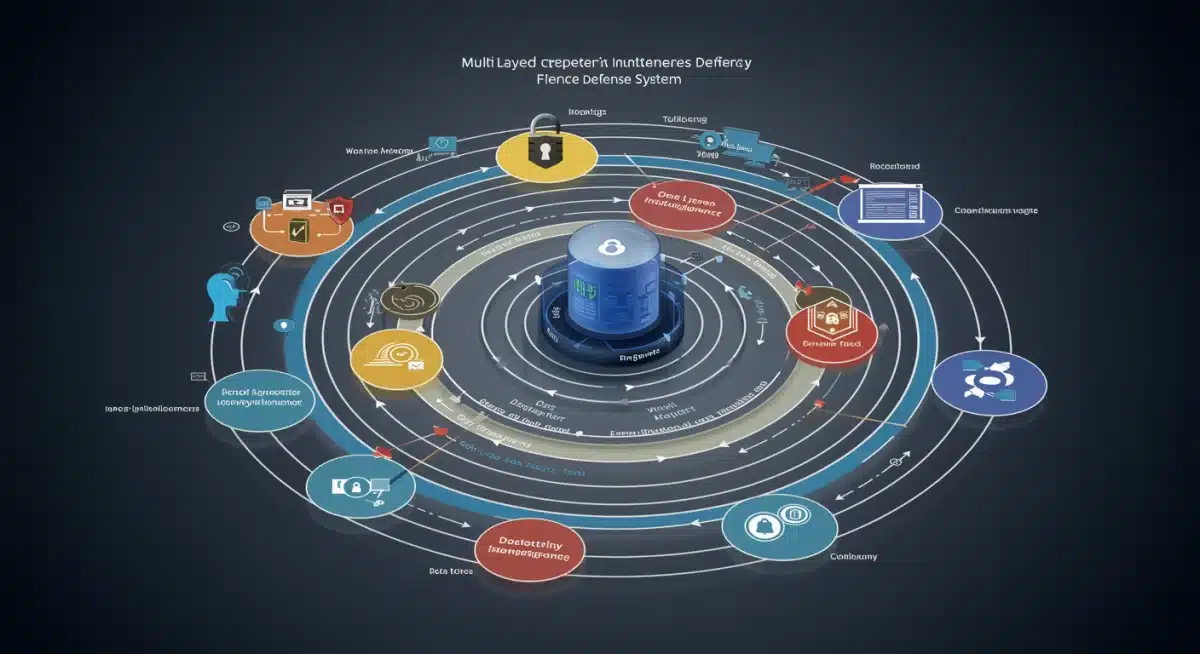
Key Pillars of Collaborative Security
- Regular Communication and Information Sharing: Establish clear channels for sharing threat intelligence, vulnerability alerts, and best practices between fintechs and their third-party vendors.
- Joint Training and Awareness Programs: Conduct shared cybersecurity training sessions to ensure all personnel, regardless of their direct employer, are aware of the latest threats and security protocols.
- Performance Metrics and Audits: Implement shared key performance indicators (KPIs) for security and conduct regular joint audits to assess compliance and identify areas for improvement.
By fostering this collaborative environment, fintechs can transform their supply chains from potential points of weakness into a collective strength. When every partner is actively engaged in upholding security standards, the overall resilience against cyber threats significantly increases, creating a more secure future for the entire financial technology sector. This collaborative approach is paramount for navigating the complexities of Fintech Supply Chain Cyber Risks effectively.
Navigating Regulatory Compliance and Data Privacy in 2026
The regulatory landscape surrounding data privacy and cybersecurity is becoming increasingly stringent, with new mandates and enforcement actions expected to intensify by 2026. For fintechs, this means not only complying with regulations like GDPR, CCPA, and upcoming federal privacy laws but also ensuring that all third-party vendors adhere to these same standards. A lapse in compliance by any link in the supply chain can lead to severe penalties, reputational damage, and loss of customer trust.
The challenge lies in the dynamic nature of these regulations and the global reach of many fintech supply chains. What is compliant in one jurisdiction may not be in another, creating a complex web of requirements that must be meticulously managed.
Key Regulatory Considerations for Fintechs
Fintechs must prioritize several areas to ensure robust compliance across their supply chain:
- Data Mapping and Classification: Understand what data is collected, processed, and stored by each third-party vendor, and classify its sensitivity to apply appropriate protection measures.
- Cross-Border Data Transfer Agreements: Ensure all international data transfers comply with relevant data residency and privacy laws, utilizing standard contractual clauses or similar mechanisms.
- Vendor Compliance Audits: Regularly audit third-party vendors for adherence to contractual obligations and regulatory requirements, validating their security controls and privacy practices.
- Right to Audit Clauses: Include clauses in vendor contracts that grant the fintech the right to conduct independent security audits of the third party’s systems and processes.
Proactive engagement with legal and compliance experts, alongside continuous monitoring of evolving regulations, is crucial. Fintechs that embed compliance into their TPRM framework will be better positioned to navigate the complex regulatory environment of 2026, safeguarding both their operations and their customers’ data from potential legal and financial repercussions. This diligent approach is critical for managing Fintech Supply Chain Cyber Risks effectively.
Future-Proofing Your Fintech Against Emerging Threats
As the digital frontier expands, so do the methods of cybercriminals. Future-proofing a fintech against emerging supply chain cyber risks requires a proactive, adaptive, and forward-thinking strategy. This means not just reacting to current threats but anticipating future ones, investing in research and development, and fostering innovation within the cybersecurity domain.
The landscape of cyber threats is constantly shifting, with new attack vectors and sophisticated techniques emerging regularly. Fintechs must stay ahead of this curve by embracing a mindset of continuous improvement and strategic foresight.
Strategies for Anticipating Future Cyber Risks
- Threat Intelligence and Horizon Scanning: Invest in advanced threat intelligence platforms and engage with cybersecurity research communities to identify nascent threats and vulnerabilities before they become widespread.
- Scenario Planning and Red Teaming: Conduct regular scenario-based exercises and red team simulations to test the resilience of systems and third-party defenses against hypothetical future attacks.
- Investment in Cybersecurity R&D: Support internal or external research and development efforts in areas such as quantum-resistant cryptography, secure multi-party computation, and decentralized identity solutions.
- Talent Development and Retention: Prioritize attracting, training, and retaining top cybersecurity talent, as human expertise remains critical in interpreting data and making strategic decisions.
By adopting these forward-looking strategies, fintechs can build a more resilient and adaptable security posture, capable of withstanding the cyber challenges of 2026 and beyond. This proactive investment in future security is not an expense but a strategic imperative, ensuring the long-term viability and trustworthiness of the financial technology sector in an increasingly digital world. Managing Fintech Supply Chain Cyber Risks effectively demands this foresight.
| Key Strategy | Brief Description |
|---|---|
| Robust TPRM Frameworks | Implement comprehensive processes for continuous vetting, monitoring, and managing third-party security postures. |
| Advanced Security Technologies | Utilize AI, machine learning, and blockchain for enhanced threat detection, automation, and data integrity. |
| Shared Responsibility Culture | Foster collaboration, open communication, and joint training across the entire fintech supply chain. |
| Proactive Regulatory Compliance | Ensure all vendors adhere to evolving data privacy and cybersecurity regulations to avoid penalties. |
Frequently Asked Questions About Fintech Supply Chain Cyber Risks
Primary sources include vulnerabilities in third-party software/hardware, human error at vendor sites, inadequate security protocols from partners, and non-compliance with data protection regulations. The interconnected nature of fintech operations amplifies these risks, making a single weak link a potential entry point for attackers to compromise the entire chain.
Effective vetting involves comprehensive due diligence, including in-depth security assessments, independent audits, and a review of their compliance history. Fintechs should go beyond questionnaires, requiring evidence of robust security controls, incident response plans, and clear data protection policies before any engagement is finalized to minimize future risks.
AI and machine learning are crucial for advanced threat detection by analyzing vast datasets to identify anomalous behavior, predict potential attack vectors, and rapidly respond to emerging threats. These technologies can automate monitoring and enhance forensic capabilities, providing fintechs with a proactive defense against sophisticated cyberattacks across their extended supply chain.
A shared responsibility culture ensures that all entities within the fintech supply chain recognize their role in maintaining security. It promotes open communication, collaborative training, and mutual accountability. This collective approach transforms potential weak links into a unified defense, significantly enhancing overall resilience against cyber threats and fostering trust among partners.
By 2026, fintechs should anticipate increasingly stringent global and national data privacy regulations, complex cross-border data transfer requirements, and intensified enforcement actions. Ensuring third-party vendors comply with evolving mandates like updated GDPR, CCPA, and new federal privacy laws will be critical to avoid significant penalties and maintain trust.
Conclusion
The journey to mitigate Fintech Supply Chain Cyber Risks and third-party vulnerabilities by 2026 is complex but entirely achievable with strategic foresight and unwavering commitment. By implementing robust TPRM frameworks, embracing advanced security technologies, fostering a culture of shared responsibility, and diligently navigating the evolving regulatory landscape, fintechs can transform their supply chains from potential liabilities into resilient assets. The future of financial technology hinges on building secure, trustworthy ecosystems that protect sensitive data and maintain the confidence of users in an increasingly digital world.