Biometric Payments US: 2026 Market Analysis & Implementation Guide
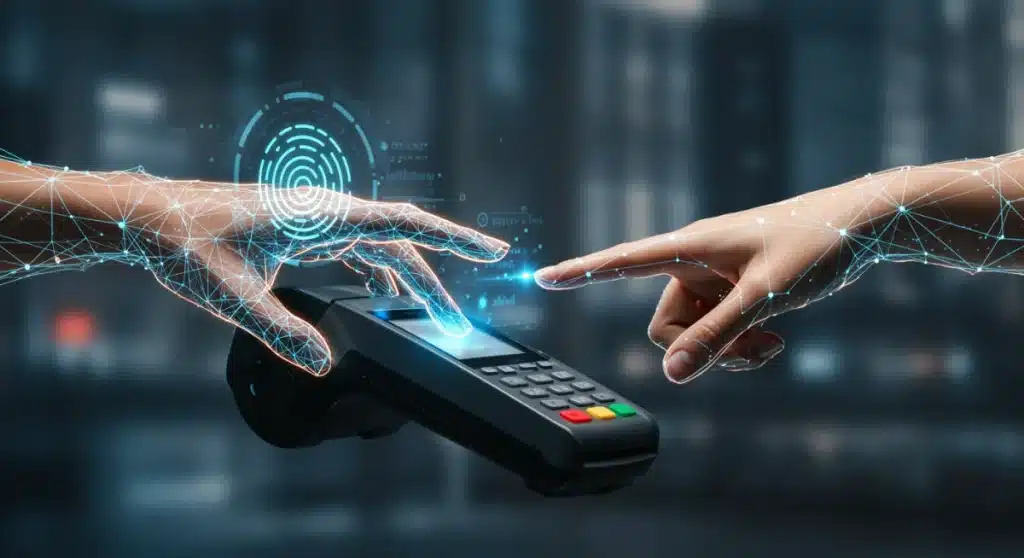
The landscape of financial transactions is undergoing a profound transformation, driven by technological innovation and an ever-increasing demand for security and convenience. At the forefront of this evolution are biometric payments US, a revolutionary method that utilizes unique biological characteristics to authenticate transactions. As we look towards 2026, the United States is poised to witness a significant acceleration in the adoption and integration of biometric payment systems across various sectors. This comprehensive guide delves into the current state, future projections, implementation strategies, and the critical considerations surrounding biometric payments in the US market.
Gone are the days when physical cards and cash were the sole arbiters of financial exchange. Today, fingerprints, facial recognition, iris scans, and even voice authentication are emerging as powerful tools for secure and seamless transactions. This shift is not merely a technological novelty; it represents a fundamental change in how consumers interact with their money and how businesses manage their payment infrastructure. Understanding the nuances of this burgeoning market is crucial for retailers, financial institutions, technology providers, and consumers alike.
The Rise of Biometric Payments US: A 2026 Market Analysis
The trajectory for biometric payments US is undeniably upward. Several factors are converging to create a fertile ground for rapid growth. Consumer demand for speed and ease of use, coupled with an increasing awareness of data security, are primary drivers. Traditional payment methods, while still prevalent, are often perceived as less secure or more cumbersome in comparison to the swift, often touchless, nature of biometric authentication.
By 2026, market analysts predict a substantial increase in the penetration of biometric payment solutions. Reports from various industry leaders suggest that the market for biometric payment systems in North America is expected to grow at a compound annual growth rate (CAGR) exceeding 20% in the coming years. This growth will be fueled by several key segments:
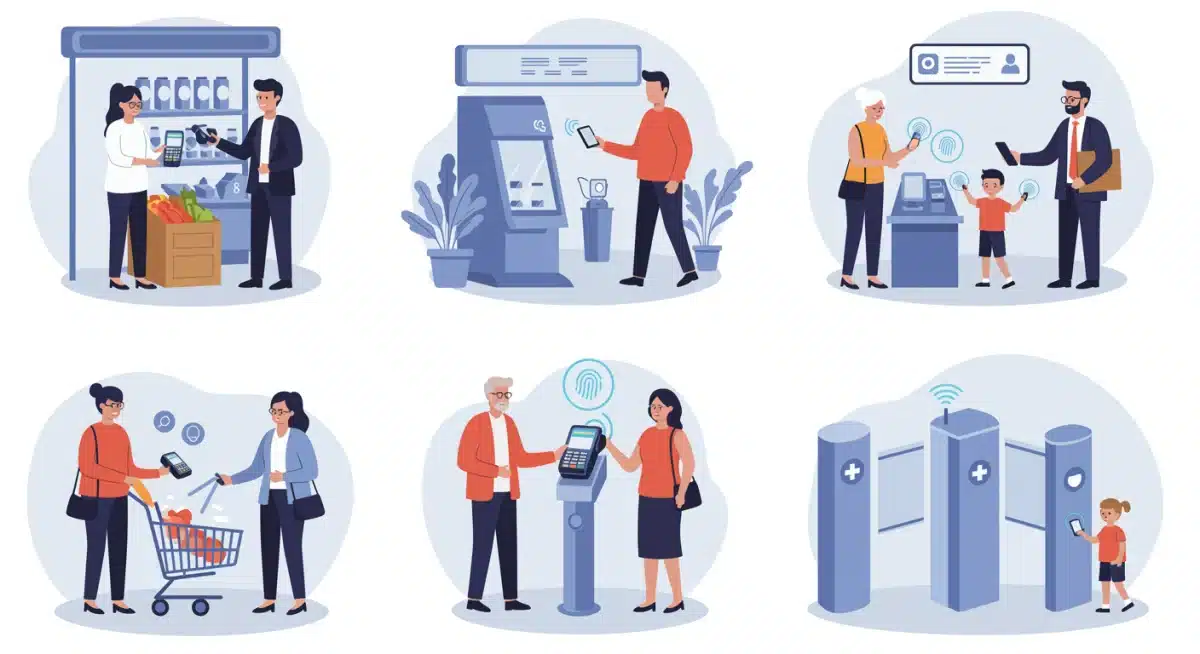
- Retail Sector: Retailers are increasingly adopting biometric point-of-sale (POS) systems to enhance customer experience, reduce checkout times, and mitigate fraud. The seamless nature of a fingerprint or facial scan can significantly improve efficiency, especially in high-volume environments.
- Financial Services: Banks and credit unions are integrating biometrics into mobile banking apps and ATM authentication processes, offering enhanced security and convenience for account access and transactions.
- Healthcare: Biometric authentication is finding applications in healthcare for secure patient identification, payment processing for medical services, and access control to sensitive patient data.
- Transportation: Public transit systems and airlines are exploring biometrics for ticketing, boarding passes, and identity verification, streamlining travel experiences.
- Hospitality: Hotels and resorts are implementing biometric solutions for check-in, room access, and on-premise payments, creating a more personalized and efficient guest experience.
Key Drivers Shaping the Biometric Payments US Market
Several underlying forces are propelling the growth of biometric payments US:
- Enhanced Security: Biometric data is inherently more secure than passwords or PINs, which can be forgotten, stolen, or guessed. The uniqueness of biological traits makes unauthorized access significantly more difficult, reducing instances of fraud and identity theft. This is a major selling point for both consumers and businesses.
- Unparalleled Convenience: The speed and ease of biometric authentication are undeniable. A quick scan of a finger or face eliminates the need to remember multiple passwords or carry physical cards, offering a frictionless payment experience. This convenience is particularly appealing in a fast-paced society.
- Technological Advancements: Continuous improvements in biometric sensor technology, artificial intelligence (AI), and machine learning (ML) algorithms are making biometric systems more accurate, reliable, and cost-effective. The integration of these technologies into smartphones and other devices further accelerates adoption.
- Increased Smartphone Penetration: The widespread ownership of smartphones equipped with biometric capabilities (fingerprint scanners, facial recognition) has normalized the use of biometrics for everyday tasks, making the transition to biometric payments more natural for consumers.
- Demand for Contactless Payments: The recent global health crisis significantly accelerated the demand for contactless payment methods. Biometrics, by their very nature, offer a touchless or minimal-touch transaction experience, aligning perfectly with evolving consumer preferences for hygiene and safety.
- Regulatory Support and Standards: As the technology matures, regulatory bodies are beginning to establish frameworks and standards for biometric data handling and security, fostering greater trust and encouraging wider adoption.
Understanding Biometric Authentication Methods in Payments
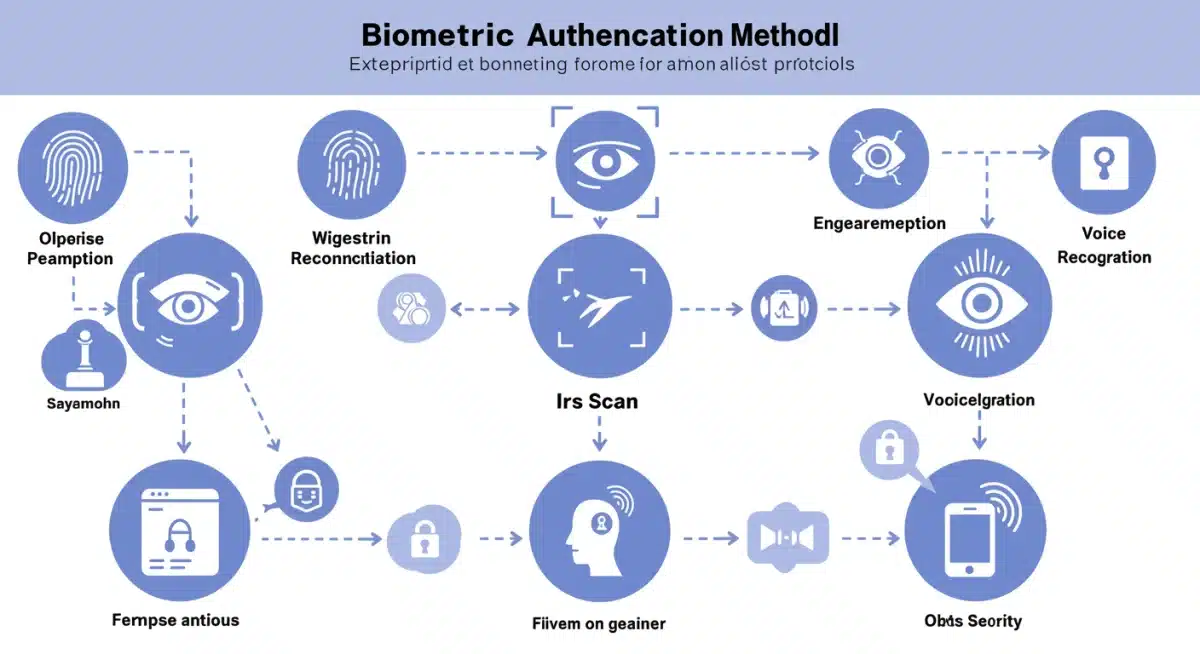
The realm of biometric payments US encompasses a variety of authentication methods, each with its own strengths and applications. Understanding these different types is crucial for businesses considering implementation and for consumers looking to understand how their data is being used.
Fingerprint Recognition
Fingerprint recognition remains one of the most widely adopted and familiar biometric methods. Most modern smartphones incorporate fingerprint scanners, making it a convenient option for mobile payments. The technology works by capturing the unique ridge patterns of a finger and comparing them to a stored template. It offers a good balance of security and convenience.
Facial Recognition
Facial recognition technology has advanced significantly, offering a highly convenient and often passive authentication experience. Systems analyze unique facial features to verify identity. While offering a high level of convenience, concerns around privacy and accuracy in diverse conditions (e.g., lighting, angles) are ongoing areas of development and public discussion.
Iris and Retina Scans
Iris and retina scans are considered among the most secure biometric methods due to the high uniqueness and complexity of these patterns. While less common in everyday consumer-facing payment systems due to hardware requirements, they are utilized in high-security environments and are being explored for more widespread applications as technology miniaturizes.
Voice Recognition
Voice biometrics analyze unique vocal characteristics to verify identity. This method is particularly useful for phone-based transactions or interactions with AI assistants. While convenient, factors like background noise or changes in voice due to illness can sometimes affect accuracy, though advancements are continually improving its reliability.
Vein Pattern Recognition
This method involves scanning the unique patterns of blood vessels beneath the skin, typically in the palm or finger. Vein pattern recognition is highly secure because the patterns are internal and difficult to spoof. It is gaining traction in various high-security applications and is poised for greater integration into payment systems.
Implementation Guide for Businesses: Adopting Biometric Payments US
For businesses looking to capitalize on the growing trend of biometric payments US, a strategic and well-planned implementation is critical. This involves more than just installing new hardware; it requires a holistic approach that considers technology, security, customer experience, and compliance.
1. Assess Your Needs and Infrastructure
Before diving in, businesses must evaluate their current payment infrastructure, customer demographics, and specific operational needs. Consider:
- Transaction Volume: High-volume businesses might benefit most from expedited checkout processes.
- Customer Base: Are your customers tech-savvy? What are their comfort levels with new technologies?
- Existing POS Systems: Can your current systems be upgraded or integrated with biometric readers, or will new hardware be required?
- Budget: What is the allocated budget for new technology, training, and potential infrastructure upgrades?
2. Choose the Right Biometric Technology
Based on your assessment, select the most appropriate biometric method(s). Fingerprint and facial recognition are currently the most consumer-friendly and widely adopted for payment terminals. Consider factors like accuracy, speed, cost, and ease of use for both customers and staff.
3. Partner with Secure and Reputable Providers
The security of biometric data is paramount. Choose vendors and payment processors with a strong track record in data encryption, privacy protection, and compliance with industry standards (e.g., PCI DSS). Ensure their solutions offer robust fraud detection capabilities.
4. Integrate with Existing Systems
Seamless integration with your existing POS, inventory management, and customer relationship management (CRM) systems is crucial to avoid operational disruptions. A well-integrated system will provide a cohesive experience for both staff and customers.
5. Prioritize Data Security and Privacy
This is arguably the most critical aspect. Implement robust encryption for biometric data, ensure data anonymization where possible, and adhere to all relevant privacy regulations (e.g., GDPR, CCPA, specific state biometric privacy laws). Clearly communicate your data handling policies to customers to build trust.
6. Conduct Pilot Programs
Before a full-scale rollout, implement a pilot program in a limited number of locations or with a select group of customers. This allows you to identify and address any technical glitches, user experience issues, or training needs before wider deployment.
7. Staff Training and Customer Education
Thoroughly train your staff on how to operate the new biometric payment systems, troubleshoot common issues, and explain the benefits and security features to customers. Develop clear and concise educational materials for customers, explaining how to enroll and use the new payment method.
8. Monitor and Optimize
After implementation, continuously monitor the performance of your biometric payment systems. Collect feedback from both staff and customers. Analyze transaction data to identify areas for improvement and optimize the system for maximum efficiency and user satisfaction.
Challenges and Considerations for Biometric Payments US
While the benefits of biometric payments US are substantial, there are important challenges and considerations that need to be addressed for successful and ethical adoption.
Privacy Concerns
The collection and storage of unique biological data raise significant privacy concerns. Consumers worry about how their data is stored, who has access to it, and the potential for misuse or breaches. Businesses must be transparent about their data practices and implement stringent security measures to protect this sensitive information.
Security Vulnerabilities and Spoofing
While highly secure, no system is entirely impervious to attack. Researchers continuously explore methods to spoof biometric sensors. Advanced liveness detection technologies and multi-factor authentication are crucial to mitigate these risks and ensure the authenticity of the biometric input.
Regulatory Landscape
The legal and regulatory framework for biometric data is still evolving, particularly at the state level in the US. Businesses must stay abreast of changing laws (e.g., Illinois BIPA, Texas CIGA) and ensure compliance to avoid legal repercussions and maintain consumer trust.
Inclusivity and Accessibility
Biometric systems must be designed to be inclusive and accessible to all individuals, regardless of age, ethnicity, or physical condition. For example, some fingerprint scanners may struggle with certain skin conditions, or facial recognition might face challenges with diverse facial features or assistive devices. Redundancy with alternative payment methods is essential.
Cost of Implementation
The initial investment in biometric hardware, software, and integration can be significant, especially for smaller businesses. However, the long-term benefits of reduced fraud, increased efficiency, and enhanced customer satisfaction can often outweigh these upfront costs.
Public Perception and Trust
Building public trust is paramount. Some consumers may be hesitant to adopt biometric payments due to concerns about surveillance, data breaches, or simply a lack of understanding. Clear communication, robust security, and demonstrable benefits are key to overcoming this apprehension.
The Future of Biometric Payments US: Beyond 2026
Looking beyond 2026, the evolution of biometric payments US is expected to continue at a rapid pace. Several trends and innovations are likely to shape its future:
- Multi-modal Biometrics: Combining two or more biometric methods (e.g., fingerprint and facial recognition) will become more common, offering enhanced security and flexibility.
- Behavioral Biometrics: Analyzing unique behavioral patterns, such as typing cadence, gait, or mouse movements, will increasingly be used for continuous authentication and fraud detection, often operating seamlessly in the background.
- Integration with IoT Devices: Biometric payments will extend beyond smartphones and POS terminals to a wider array of Internet of Things (IoT) devices, enabling payments through smartwatches, smart home devices, and even connected cars.
- Decentralized Biometric Data Storage: Technologies like blockchain may play a role in decentralizing the storage of biometric templates, giving individuals greater control over their data and potentially enhancing security.
- Hyper-Personalized Experiences: Biometric authentication, combined with AI, could lead to highly personalized shopping experiences, where preferences are recognized, and offers are tailored in real-time.
- Global Standardization: As biometric payments gain traction globally, there will be a greater push for international standards and interoperability, simplifying cross-border transactions.
The underlying principle driving these advancements will remain the pursuit of a frictionless, highly secure, and convenient payment experience. As technology matures and public acceptance grows, biometric payments are set to become an indispensable part of the financial ecosystem.
Conclusion: Embracing the Biometric Future
The journey of biometric payments US from niche technology to mainstream adoption is well underway, with 2026 serving as a critical inflection point. The undeniable advantages of enhanced security, unparalleled convenience, and increased efficiency are compelling businesses and consumers alike to embrace this transformative payment method.
However, successful integration hinges on a thoughtful approach that prioritizes data privacy, adheres to evolving regulatory landscapes, and ensures inclusivity. By addressing these challenges proactively, businesses can harness the full potential of biometrics to streamline operations, reduce fraud, and deliver a superior customer experience.
As we move deeper into the digital age, the unique biological characteristics that define us are becoming the ultimate key to our financial lives. The future of payments in the US is increasingly personal, secure, and touchless, and biometric technology is leading the charge. Businesses that strategically invest in and implement these solutions now will be well-positioned to thrive in the evolving financial landscape of tomorrow.