
Insider Threat Management: Cutting Fintech Data Exfiltration by 35%
Effective insider threat management is crucial for US fintechs aiming to reduce data exfiltration by 35% by 2026. This requires a multi-faceted approach, integrating technology, policy, and human factors to safeguard sensitive financial data.

US Open Banking Adoption: 2026 Push for Standardized API Access
The US financial sector is rapidly advancing towards widespread US Open Banking Adoption by 2026, driven by a crucial push for standardized API access and robust data portability, revolutionizing how consumers interact with financial services.

Fintech Startup Exits 2026: Key Acquisition Factors
Fintech startup exits in 2026 are primarily driven by strategic alignment, technological innovation, regulatory compliance, market penetration, and strong financial performance, offering a clearer path for successful acquisitions.

Contactless Payments in 2026: Boosting Conversion 7% with New POS Integrations
By 2026, contactless payments, enhanced by seamless new POS integrations, are projected to significantly increase customer conversion rates by 7% across various retail and service sectors, representing a pivotal shift in transaction efficiency and consumer experience.

Quantum-Resistant Cryptography: US Fintech’s 2026 Imperative
US fintech infrastructure faces an urgent deadline to adopt quantum-resistant cryptography by 2026, safeguarding sensitive financial data against the imminent threat of quantum computing attacks and ensuring future-proof cyber resilience.
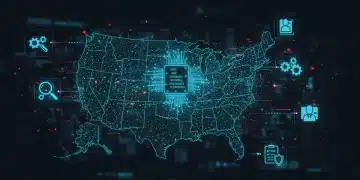
AI in US Fintech: 20% Boost in Fraud Detection & Personalized Services by 2026
By 2026, AI is set to propel US fintech forward, delivering a predicted 20% increase in fraud detection efficiency and remarkably advanced personalized financial services, reshaping the industry landscape.

Strategic Partnerships for US Fintech Startups: Boosting Valuation by 25% by Dec 2026
Strategic partnerships are becoming the essential catalyst for US fintech startups aiming for significant valuation growth, with projections indicating a 25% increase by December 2026 through enhanced market reach and innovative offerings.

Tokenization Trends: Protecting 95% of US Digital Transactions from Fraud by 2026
Tokenization is set to protect 95% of US digital transactions from fraud by 2026, transforming payment security by replacing sensitive data with unique, non-sensitive tokens, a crucial advancement for digital payments and cybersecurity.

Fintech Supply Chain Cyber Risks: Mitigating Third-Party Vulnerabilities by 2026
Fintechs must proactively implement robust strategies to mitigate escalating supply chain cyber risks and third-party vulnerabilities by 2026, safeguarding sensitive data and maintaining operational integrity amidst evolving threats.

US Neobank Evolution: New Charters Reshaping 2026 Banking
The US neobank evolution, fueled by new banking charters, is fundamentally transforming the competitive landscape, pushing traditional institutions to innovate and setting the stage for a dynamic financial future beyond 2026.