FedNow Expansion: 3 Key Fintech Opportunities by Mid-2026
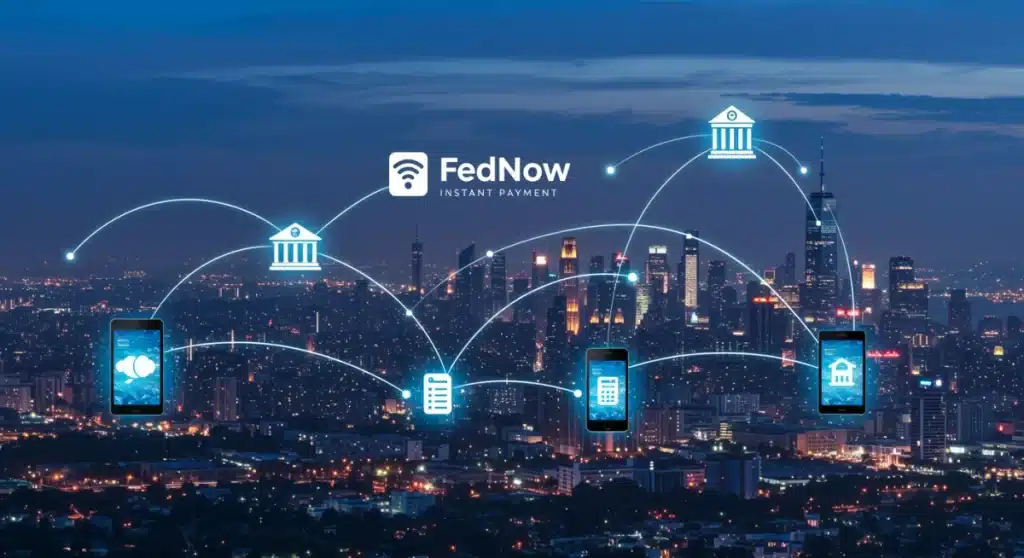
The expansion of FedNow by mid-2026 is set to profoundly impact US fintechs, offering critical opportunities for instant payment innovation, fostering greater financial inclusion, and driving new product development within the evolving digital payment landscape.
The financial world in the United States is on the cusp of a significant transformation with the impending expansion of FedNow. By mid-2026, the widespread adoption and enhanced capabilities of this instant payment system are set to redefine how money moves, creating unparalleled opportunities for innovation within the fintech sector. Understanding FedNow expansion fintech implications is crucial for any company looking to thrive in this evolving environment.
Understanding FedNow and its growing influence
FedNow, the Federal Reserve’s instant payment service, represents a monumental shift in the US financial infrastructure. Launched to enable financial institutions to offer real-time, 24/7/365 payment services, it eliminates the traditional delays associated with conventional payment rails. Its continued expansion is not merely an incremental upgrade but a foundational change, promising to unlock new efficiencies and capabilities across the financial ecosystem.
The initial rollout laid the groundwork, and the phase leading up to mid-2026 will focus on broader adoption and deeper integration. This period is expected to see a critical mass of financial institutions, from large banks to smaller credit unions, connecting to the network. This widespread connectivity is what truly empowers fintechs, providing a robust and ubiquitous platform for their innovative solutions.
The journey of instant payments in the US
The concept of instant payments has been a long-standing goal for the US financial system. Before FedNow, various proprietary solutions existed, but none offered the same level of reach and interoperability. FedNow aims to standardize and democratize instant payments, making them accessible to a much broader segment of the population and businesses.
- Early adoption challenges: Initial hurdles included technical integration complexities and a ‘chicken-and-egg’ problem regarding network participants.
- Phased rollout strategy: The Federal Reserve adopted a deliberate, phased approach to ensure stability and address evolving needs.
- Growing participant network: Continuous efforts are being made to onboard more financial institutions, expanding the reach of instant payments.
The influence of FedNow extends beyond just speed. It also brings enhanced data capabilities, allowing for more detailed payment information to accompany transactions, which can be invaluable for reconciliation and fraud prevention. Furthermore, its irrevocability for credit transfers adds a layer of certainty that can streamline business operations.
In conclusion, FedNow’s journey from concept to widespread adoption signifies a pivotal moment for US finance. Its growing influence is setting the stage for a new era of instant, data-rich, and secure payment transactions, upon which fintechs can build transformative services.
Opportunity 1: revolutionizing consumer and business payments
The most immediate and apparent impact of FedNow’s expansion is the profound revolution it brings to how consumers and businesses conduct payments. The ability to send and receive money instantly, at any time, fundamentally alters expectations and opens doors for entirely new service models. Fintechs are uniquely positioned to capitalize on this shift, developing applications that leverage real-time capabilities for everyday transactions and complex business processes alike.
For consumers, this means an end to waiting periods for paychecks, instant bill payments, and immediate access to funds. For businesses, it translates into improved cash flow management, faster vendor payments, and enhanced liquidity. These benefits are not merely theoretical; they are tangible improvements that solve long-standing pain points in the financial ecosystem.
Enhancing consumer financial experiences
Fintechs can design user-friendly applications that seamlessly integrate FedNow capabilities, offering consumers unparalleled convenience and control over their finances. This could include:
- Instant wage access: Allowing employees to access earned wages before traditional payday.
- Real-time budgeting tools: Providing immediate updates on spending and balances.
- P2P payments with added features: Integrating instant transfers with social functionalities or micro-lending options.
The demand for instant gratification extends to financial services, and FedNow provides the rails to meet this expectation. Fintechs that can package these capabilities into intuitive and secure platforms will gain a significant competitive edge.
On the business front, the implications are equally transformative. Small businesses, often constrained by cash flow cycles, can benefit immensely from instant invoice payments and immediate access to sales revenue. This drastically reduces the need for expensive short-term financing and improves overall operational efficiency. Larger enterprises can optimize supply chain payments, reducing settlement times and fostering stronger vendor relationships.
The expansion of FedNow by mid-2026 will create a fertile ground for fintechs to innovate in consumer and business payment solutions. By focusing on user experience, security, and leveraging the real-time nature of FedNow, they can capture significant market share and redefine traditional payment paradigms.
Opportunity 2: fostering financial inclusion and access
A less obvious, but equally significant, opportunity presented by the FedNow expansion fintech implications is its potential to dramatically advance financial inclusion in the United States. Instant payments can bridge gaps for underserved populations, providing them with faster, more reliable, and often more affordable ways to manage their money. Fintechs, with their agility and focus on user-centric design, are perfectly suited to develop solutions that reach these segments.
Many individuals and small businesses operate outside the traditional banking system or rely heavily on costly alternatives like check cashing services and predatory lenders. The delays inherent in traditional payment systems often exacerbate their financial precarity. FedNow offers a pathway to economic empowerment by making financial services more accessible and efficient for everyone.
Reaching the unbanked and underbanked
Fintechs can develop specialized products and services tailored to the needs of the unbanked and underbanked, leveraging FedNow for:
- Lower-cost alternatives to traditional services: Offering instant transfers that are cheaper than money orders or check cashing.
- Faster access to government benefits: Ensuring immediate receipt of crucial funds like unemployment or disaster relief.
- Micro-lending and credit building: Facilitating rapid disbursement and repayment of small loans, helping build credit histories.
The ability to receive funds instantly can significantly improve the financial stability of individuals living paycheck to paycheck. It reduces the need for high-interest loans to cover immediate expenses and allows for more effective budgeting and financial planning.
Beyond individuals, small and micro-businesses, particularly those in marginalized communities, stand to gain immensely. Instant payments mean they can pay suppliers on time, receive customer payments instantly, and manage cash flow with unprecedented precision. This can be a game-changer for their viability and growth, contributing to local economic development.


In essence, FedNow provides the technological backbone for a more equitable financial system. Fintechs that prioritize social impact alongside profitability can innovate around this infrastructure to build services that genuinely empower financially vulnerable segments, proving that innovation and inclusion can go hand-in-hand.
Opportunity 3: driving innovation in fraud prevention and security
While the speed of instant payments is a significant advantage, it also introduces new challenges, particularly in the realm of fraud prevention and security. The irrevocability of FedNow transactions means that once a payment is sent, it cannot be easily clawed back. This demands sophisticated, real-time fraud detection and prevention mechanisms. This challenge, however, presents a massive opportunity for fintechs specializing in cybersecurity and advanced analytics.
As FedNow expands and transaction volumes increase, the need for robust security solutions will become paramount. Financial institutions, already grappling with existing fraud threats, will require innovative tools to protect their customers and maintain trust in the instant payment ecosystem. Fintechs can step in to fill this critical gap, offering cutting-edge solutions that leverage AI, machine learning, and behavioral analytics.
Advanced fraud detection techniques
Fintechs can develop and integrate solutions that go beyond traditional fraud prevention methods, including:
- Real-time anomaly detection: Using AI to identify unusual transaction patterns as they occur, before funds are irrevocably transferred.
- Behavioral biometrics: Analyzing user behavior (e.g., typing speed, device usage) to verify identity and detect account takeover attempts.
- Network-level threat intelligence: Sharing anonymized fraud data across the FedNow network to identify emerging threats quickly.
The speed of FedNow necessitates a shift from reactive fraud management to proactive, real-time prevention. This requires algorithms that can process vast amounts of data in milliseconds and make accurate decisions under pressure. Fintechs with expertise in these areas will find a significant market for their services.
Beyond fraud, the security of the underlying infrastructure is also critical. Fintechs can contribute by offering enhanced authentication methods, secure API integrations, and robust data encryption solutions. Ensuring the integrity and confidentiality of instant payment data is crucial for widespread adoption and consumer confidence.
The FedNow expansion fintech landscape will undoubtedly see a surge in demand for innovative security solutions. Companies that can provide reliable, scalable, and intelligent fraud prevention and cybersecurity tools will not only protect the integrity of instant payments but also establish themselves as indispensable partners in this new financial era.
Navigating regulatory shifts and compliance in instant payments
The rapid evolution of instant payments, driven by FedNow, brings with it a complex and dynamic regulatory landscape. Fintechs operating in this space must be acutely aware of and responsive to changing compliance requirements. Regulatory bodies, including the Federal Reserve, FinCEN, and state-level financial regulators, are continuously adapting their frameworks to address the unique characteristics of real-time transactions, such as irrevocability and enhanced data flows.
Maintaining compliance is not just about avoiding penalties; it’s about building trust and ensuring the long-term viability of instant payment solutions. Fintechs that can effectively navigate these regulatory waters, integrating compliance by design into their products, will gain a significant competitive advantage and foster stronger relationships with financial institution partners.
Key compliance considerations for fintechs
As instant payments become more prevalent, fintechs must focus on several critical compliance areas:
- Anti-Money Laundering (AML) and Know Your Customer (KYC): Enhanced real-time monitoring and verification processes are essential to prevent illicit financial activities.
- Data privacy and security: Adhering to regulations like CCPA and evolving federal data protection standards, especially with richer payment data.
- Consumer protection: Ensuring transparency, dispute resolution mechanisms, and fair practices are in place for instant payment users.
The speed of FedNow transactions means that traditional, batch-oriented compliance checks may no longer be sufficient. Fintechs need to develop solutions that can perform real-time risk assessments and flag suspicious activities instantaneously, without impeding legitimate transactions.
Furthermore, the interoperability of FedNow means that fintechs’ solutions will interact with a broader network of financial institutions, each with its own compliance obligations. This necessitates a collaborative approach to regulatory adherence, where fintechs work closely with their partners to ensure end-to-end compliance across the payment chain.
The expansion of FedNow by mid-2026 will compel fintechs to prioritize robust compliance strategies. Those that can seamlessly integrate regulatory adherence into their innovative services will not only mitigate risks but also enhance their credibility and market position in the instant payment ecosystem.
Strategic partnerships and ecosystem building
The transformative potential of FedNow’s expansion is best realized through strategic partnerships and the collaborative building of a robust instant payment ecosystem. No single entity, whether a large bank or a nimble fintech, can fully harness the opportunities alone. Fintechs have a unique role to play in this ecosystem, often acting as the innovation engine that drives new use cases and enhances existing services, but they need strong alliances to scale and integrate.
Traditional financial institutions bring established customer bases, regulatory expertise, and deep capital resources. Fintechs, on the other hand, offer agility, technological prowess, and a customer-centric design philosophy. The synergy between these two types of organizations is crucial for the widespread adoption and success of instant payments powered by FedNow.
Types of beneficial partnerships
Fintechs should actively seek out and cultivate various types of partnerships:
- Bank-fintech collaborations: Integrating innovative fintech solutions directly into traditional banking platforms to offer instant payment services to a wider audience.
- Technology providers: Partnering with cloud service providers, AI/ML specialists, and cybersecurity firms to enhance product capabilities and infrastructure.
- Industry consortia: Joining groups focused on developing best practices, interoperability standards, and advocating for regulatory clarity in the instant payment space.
These partnerships can range from simple API integrations to co-development agreements, allowing fintechs to gain access to resources and scale that might otherwise be out of reach. For traditional banks, partnering with fintechs is often the fastest way to bring cutting-edge instant payment solutions to their customers without extensive in-house development.
Building a thriving ecosystem also involves fostering an environment of shared knowledge and mutual support. This includes participating in industry forums, contributing to open-source initiatives, and collaborating on solutions to common challenges, such as fraud prevention or cross-border instant payments. The collective effort will accelerate innovation and ensure the long-term success of instant payment rails.
By mid-2026, the success of the FedNow expansion fintech landscape will heavily depend on how effectively strategic partnerships are forged and how collaboratively the instant payment ecosystem is built. Fintechs that embrace this collaborative spirit will be at the forefront of driving innovation and shaping the future of payments.
The future outlook: beyond mid-2026 for instant payments
While mid-2026 marks a significant milestone for FedNow expansion and its immediate opportunities, the trajectory of instant payments extends far beyond this horizon. The foundational infrastructure being established now will serve as a springboard for continuous innovation, pushing the boundaries of what’s possible in financial transactions. The future outlook involves not just broader adoption but also deeper integration into daily life and the emergence of entirely new financial products and services.
We can anticipate a future where instant payments are not just a feature but the default, woven seamlessly into every aspect of commerce and personal finance. This will necessitate ongoing development from fintechs, focusing on enhanced user experiences, greater interoperability, and the exploration of new frontiers like cross-border instant payments and the integration with emerging technologies.
Emerging trends and technologies
Looking beyond the immediate future, several trends and technologies are likely to converge with instant payments:
- AI-driven personalized finance: Instant data from FedNow can fuel more sophisticated AI models for personalized financial advice, automated savings, and predictive spending.
- Embedded finance: Instant payment capabilities will be seamlessly integrated into non-financial platforms, making transactions invisible within other services.
- Digital identity solutions: Secure digital identities will become crucial for instant payments, further enhancing security and streamlining KYC processes.
The evolution of instant payments will also be influenced by global trends. As other countries develop their own real-time payment systems, the demand for cross-border instant transfers will grow. Fintechs that can navigate the complexities of international regulations and currency exchange, leveraging FedNow’s domestic capabilities, will unlock significant new markets.
Furthermore, the potential for instant payments to integrate with nascent technologies like blockchain and distributed ledger technology (DLT) remains an exciting, albeit longer-term, prospect. While FedNow operates on traditional rails, its principles of speed and finality align with some of the promises of DLT, suggesting potential future interoperability or complementary solutions.
The future of instant payments, propelled by the FedNow expansion fintech landscape, is one of continuous innovation and integration. Fintechs that remain agile, forward-thinking, and committed to solving complex financial challenges will be instrumental in shaping this exciting future, making financial services faster, more accessible, and more intelligent for everyone.
| Key Opportunity | Brief Description |
|---|---|
| Revolutionizing Payments | Fintechs can build instant consumer and business payment apps, improving cash flow and convenience. |
| Fostering Financial Inclusion | Instant payments offer faster, cheaper options for underserved populations, boosting economic empowerment. |
| Innovation in Security | Demand for real-time fraud prevention and cybersecurity solutions will surge with instant transactions. |
| Strategic Partnerships | Collaboration between fintechs and traditional FIs is crucial for scaling and ecosystem growth. |
Frequently asked questions about FedNow and fintech
FedNow is the Federal Reserve’s instant payment service, enabling 24/7/365 real-time money transfers. For fintechs, it provides a robust infrastructure to build innovative applications, offering faster, more efficient, and data-rich payment solutions for consumers and businesses.
By mid-2026, FedNow’s expansion will lead to widespread instant access to funds, immediate bill payments, and faster P2P transfers. Fintechs will develop user-friendly apps that integrate these real-time capabilities, enhancing convenience and financial control for consumers.
FedNow can significantly boost financial inclusion by offering cheaper, faster alternatives to traditional banking services for the unbanked and underbanked. Fintechs can leverage this to provide instant wage access, micro-lending, and efficient government benefit distribution.
The irrevocability of instant payments demands advanced, real-time fraud prevention. Fintechs have an opportunity to innovate with AI-driven anomaly detection, behavioral biometrics, and secure API integrations to protect transactions and maintain trust in the system.
Absolutely. Strategic partnerships between fintechs and traditional financial institutions are crucial. Fintechs offer innovation and agility, while banks provide scale and regulatory expertise, together building a robust and comprehensive instant payment ecosystem.
Conclusion
The expansion of FedNow by mid-2026 is far more than a technical upgrade; it’s a catalyst for profound transformation across the US financial landscape. For fintechs, this presents not just challenges, but three distinct and powerful opportunities: revolutionizing consumer and business payments, fostering greater financial inclusion, and driving unparalleled innovation in fraud prevention and security. Companies that strategically embrace these shifts, navigate the evolving regulatory environment, and forge strong partnerships will not only thrive but actively shape the future of instant payments. The era of real-time finance is here, and the agility of fintechs will be key to unlocking its full potential, making financial services faster, smarter, and more equitable for all.