Fintech Funding 2026: Navigating Early-Stage Capital in the US

The financial technology (fintech) sector continues its relentless evolution, pushing the boundaries of traditional banking and financial services. For nascent US fintech companies, securing capital beyond the initial seed round is a pivotal, often challenging, step towards sustained growth and market penetration. As we look towards early 2026, the landscape for Fintech Early-Stage Funding is dynamic, influenced by macroeconomic shifts, technological advancements, and changing investor appetites. This comprehensive guide will navigate the intricacies of securing early-stage capital, offering insights and strategies for fintech innovators.
The Evolving Landscape of Fintech Early-Stage Funding in 2026
The venture capital (VC) ecosystem, particularly for fintech, has experienced significant recalibration. While 2021 and 2022 saw unprecedented levels of investment, 2023 and 2024 brought a more cautious approach, with investors prioritizing profitability and sustainable growth over rapid expansion at all costs. This trend is expected to mature further into early 2026, making the pursuit of Fintech Early-Stage Funding a more strategic and competitive endeavor.
Key Trends Shaping Early-Stage Fintech Investment
- Flight to Quality: Investors are increasingly focusing on companies with proven traction, strong unit economics, and clear paths to profitability. The days of funding ambitious ideas without substantial market validation are largely behind us. Fintechs seeking early-stage capital must demonstrate a robust business model and a compelling value proposition.
- Increased Due Diligence: Expect more rigorous scrutiny from VCs. This includes deeper dives into financial projections, regulatory compliance, cybersecurity measures, and the experience of the founding team. Transparency and meticulous preparation are paramount.
- Sector Specialization: While broad fintech remains attractive, investors are often specializing in particular sub-sectors such as embedded finance, B2B fintech, sustainable finance, regulatory technology (RegTech), and AI-driven financial solutions. Understanding which investors focus on your niche can significantly streamline your fundraising efforts for Fintech Early-Stage Funding.
- Emphasis on AI and Machine Learning: The integration of Artificial Intelligence and Machine Learning is no longer a differentiator but a fundamental expectation in many fintech solutions. Companies leveraging AI for efficiency, personalization, fraud detection, or risk management will find a more receptive audience.
- Regulatory Scrutiny: The regulatory environment for fintechs is continually evolving. Companies demonstrating a proactive approach to compliance and a clear understanding of relevant regulations (e.g., data privacy, consumer protection, anti-money laundering) will be viewed more favorably.
- Global Macroeconomic Factors: Interest rate fluctuations, inflation concerns, and geopolitical events can influence investor sentiment and the availability of capital. Staying abreast of these broader economic trends is crucial for any fintech seeking early-stage funding.
Understanding these prevailing trends is the first step in crafting a successful fundraising strategy for Fintech Early-Stage Funding. It allows founders to tailor their pitches, refine their business models, and anticipate investor questions.
Beyond the Seed Round: What Early-Stage Investors Look For
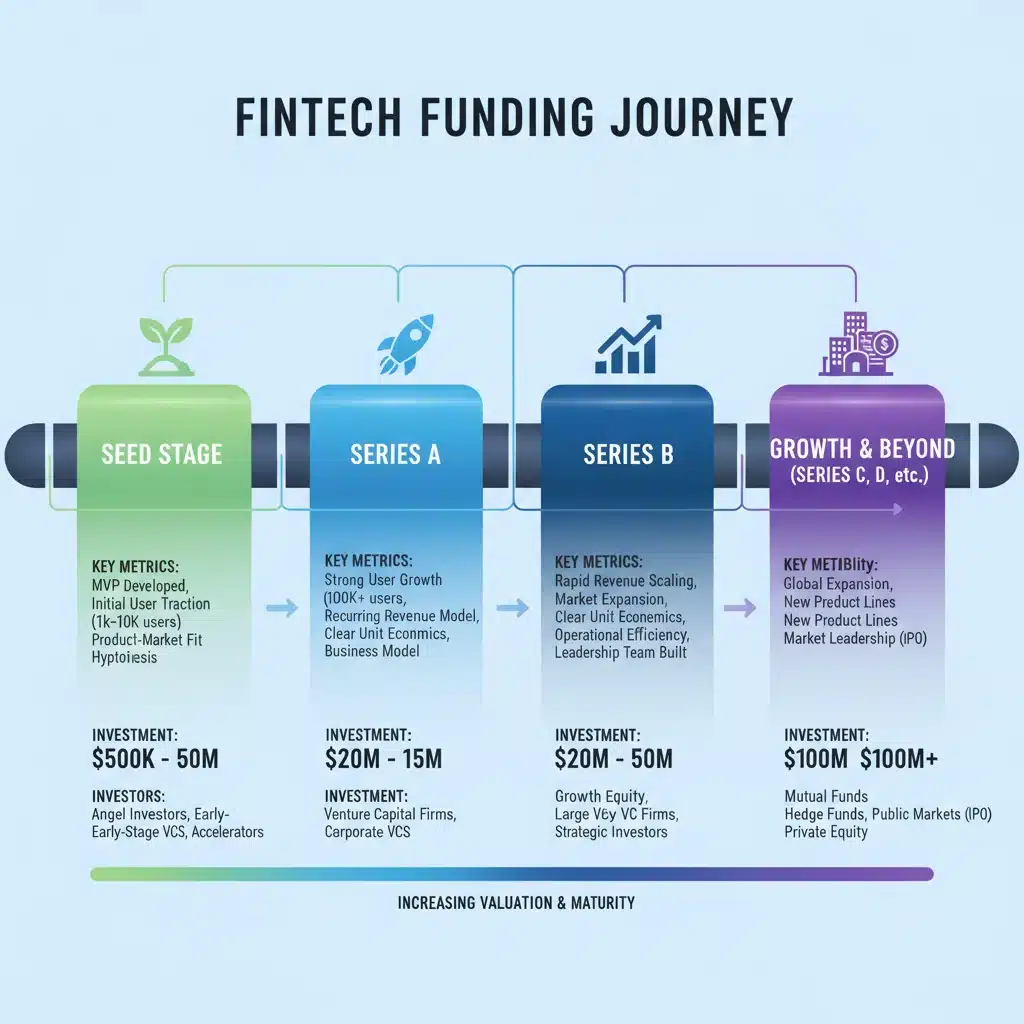
The transition from seed funding to Series A and beyond represents a significant leap. Seed funding often validates an idea and initial product-market fit, but early-stage capital (typically Series A and Series B) demands more substantial evidence of scalability, market traction, and a clear path to becoming a significant player. Here’s what investors are actively seeking:
1. Demonstrated Product-Market Fit and Traction
It’s no longer enough to have a great idea. Early-stage investors for Fintech Early-Stage Funding want to see a product that customers are actively using and, ideally, paying for. Key metrics include:
- Customer Acquisition Cost (CAC): How efficiently are you acquiring new users or clients?
- Lifetime Value (LTV): What is the long-term value derived from each customer? A healthy LTV:CAC ratio is critical.
- Retention Rates: Are users sticking with your product? High churn rates are a major red flag.
- Engagement Metrics: How frequently and deeply are users interacting with your platform?
- Revenue Growth: While profitability might still be some way off, a clear trajectory of increasing revenue is essential.
Provide concrete data and case studies to substantiate your claims. Anecdotal evidence alone will not suffice at this stage.
2. A Scalable Business Model
Investors want to see how your fintech can grow exponentially without a proportional increase in costs. This means:
- Clear Path to Profitability: Even if not profitable now, there needs to be a credible plan for achieving it.
- Operational Efficiency: How can you automate processes and leverage technology to scale?
- Market Opportunity: Is the total addressable market (TAM) large enough to support significant growth?
- Defensibility: What makes your solution unique and difficult for competitors to replicate? This could be proprietary technology, network effects, strong brand loyalty, or regulatory moats.
3. Exceptional Team and Leadership
The team remains one of the most critical factors in early-stage investment decisions. Investors are backing people as much as ideas. They look for:
- Relevant Experience: Does the team have direct experience in finance, technology, or the specific problem domain they are addressing?
- Complementary Skill Sets: A balanced team with expertise in product, technology, marketing, and operations is ideal.
- Vision and Execution: Can the team articulate a compelling long-term vision and demonstrate the ability to execute on short-term milestones?
- Grit and Adaptability: Startup life is tough. Investors want to see resilience and the ability to pivot when necessary.
4. Robust Technology and Product Roadmap
For fintechs, technology is the core. Investors will assess:
- Technical Architecture: Is the technology robust, secure, and scalable?
- Innovation: Does the product offer a truly innovative solution or a significant improvement over existing ones?
- Security and Compliance: Given the sensitive nature of financial data, stringent security protocols and a clear understanding of regulatory requirements are non-negotiable.
- Product Roadmap: A clear vision for future features and product evolution demonstrates foresight and long-term planning.
5. Clear Go-to-Market Strategy
How will you reach your target customers and acquire them efficiently? This includes:
- Target Market Definition: Who are your ideal customers?
- Sales and Marketing Channels: What strategies will you use to acquire customers (e.g., B2B partnerships, direct-to-consumer, digital marketing)?
- Competitive Advantage: What makes your go-to-market strategy superior or more cost-effective than competitors?
Strategic Approaches to Securing Fintech Early-Stage Funding in 2026
With the intensified competition and increased investor scrutiny, a well-thought-out strategy is indispensable. Here’s how to position your fintech for success in securing Fintech Early-Stage Funding:
1. Build a Compelling Data Room
Before even engaging with investors, ensure your data room is impeccable. This digital repository should contain all critical documents, including:
- Detailed Financial Model: Three to five-year projections, including revenue, expenses, cash flow, and key assumptions. Be prepared to defend every assumption.
- Pitch Deck: A concise yet comprehensive overview of your company, problem, solution, market, team, and ask.
- Product Demos and Case Studies: Visual evidence of your product in action and testimonials from satisfied customers.
- Legal and Regulatory Documents: Incorporation papers, intellectual property documentation, terms of service, privacy policy, and compliance frameworks.
- Team Biographies: Detailed resumes highlighting relevant experience.
A well-organized and thorough data room signals professionalism and preparedness, saving valuable time during due diligence.
2. Network Strategically and Early
Fundraising is a relationship business. Start building connections with potential investors, advisors, and other founders long before you need the capital. Attend industry conferences, participate in accelerator programs, and leverage your existing network.
- Targeted Outreach: Research VCs and angel investors who have a history of investing in your specific fintech niche or at your stage.
- Warm Introductions: Cold emails are rarely effective. Seek warm introductions from mutual connections.
- Advisor Network: Cultivate relationships with experienced advisors who can provide guidance and introductions.
3. Master Your Story and Pitch
Your ability to articulate your vision, problem, solution, and market opportunity concisely and compellingly is crucial. Your pitch should:
- Be Clear and Concise: Avoid jargon and get straight to the point.
- Highlight the Problem: Clearly define the pain point you are solving.
- Showcase Your Solution: Explain how your fintech uniquely addresses this problem.
- Emphasize Market Opportunity: Demonstrate the size and growth potential of your target market.
- Present Your Team: Highlight their expertise and passion.
- Detail Your Traction: Back up claims with data.
- State Your Ask Clearly: What are you raising, and what will you achieve with it?
Practice your pitch relentlessly, and be ready to adapt it based on investor feedback.
4. Understand Valuation and Term Sheets
Valuation is a complex topic, especially for early-stage fintechs. While it’s tempting to aim for the highest valuation, a more realistic approach often leads to better outcomes. Be prepared to negotiate term sheets, understanding key clauses such as:
- Valuation Cap/Discount (for convertible notes): Understand how future equity will be priced.
- Liquidation Preferences: How will investors be paid out in an acquisition or liquidation event?
- Protective Provisions: What rights do investors have to veto certain company actions?
- Board Representation: Will investors have a seat on your board?
Seek legal counsel experienced in venture capital deals to navigate these complexities and ensure favorable terms for your company and future Fintech Early-Stage Funding rounds.
5. Leverage Non-Dilutive Funding Options
While venture capital is a primary source for Fintech Early-Stage Funding, consider non-dilutive options that can extend your runway and reduce the amount of equity you give away:
- Grants: Government grants or industry-specific programs (e.g., Small Business Innovation Research – SBIR).
- Debt Financing: Revenue-based financing, venture debt, or lines of credit, particularly if you have predictable revenue streams.
- Strategic Partnerships: Collaborations with larger financial institutions or tech companies can provide capital, resources, and market access without equity dilution.

Recent Updates and What to Expect in Early 2026
The early 2026 funding environment for US fintechs will likely continue the trend of selectivity and strategic investment. Here are some specific updates and expectations:
Regulatory Clarity and Its Impact
Expect further clarity, and potentially stricter enforcement, from regulatory bodies like the CFPB, OCC, and state banking departments. Fintechs that have already built robust compliance frameworks and have a dedicated compliance officer or team will be at a significant advantage. The focus will be on consumer protection, data privacy (especially with potential new federal data privacy laws), and preventing systemic risks.
Consolidation and M&A Activity
A more mature fintech market often leads to increased merger and acquisition (M&A) activity. Larger financial institutions may look to acquire innovative early-stage fintechs to enhance their digital capabilities, while successful fintechs might acquire smaller players to expand their product offerings or market share. This presents both an exit opportunity and a potential competitive threat for early-stage companies.
Rise of Impact Investing in Fintech
Environmental, Social, and Governance (ESG) factors are gaining more prominence across all investment sectors, and fintech is no exception. Fintechs focusing on financial inclusion, sustainable finance, ethical AI, or community development may find a growing pool of impact investors looking to deploy capital. Highlighting your social impact alongside your financial projections can be a powerful differentiator when seeking Fintech Early-Stage Funding.
The Role of Corporate Venture Capital (CVC)
Corporate Venture Capital arms of large financial institutions (e.g., bank-backed VCs) are becoming increasingly active. These CVCs often bring not only capital but also strategic partnerships, industry expertise, and distribution channels. For early-stage fintechs, a CVC investment can be a significant validation and accelerator, though it often comes with strategic alignment expectations.
Focus on Unit Economics and Profitability
The narrative has definitively shifted from ‘growth at all costs’ to ‘profitable growth.’ Investors in early 2026 will demand clear evidence of healthy unit economics (e.g., positive gross margins, efficient CAC) and a credible path to sustainable profitability. Fintechs that can demonstrate this discipline early on will stand out.
Common Pitfalls to Avoid in Early-Stage Fundraising
Even the most promising fintechs can stumble during the fundraising process. Be aware of these common pitfalls:
- Lack of Data: Making bold claims without supporting data is a quick way to lose investor confidence.
- Unrealistic Valuation Expectations: Overvaluing your company can deter investors or lead to difficult down rounds later.
- Poor Communication: Failing to follow up promptly, being unclear in your communication, or not addressing investor concerns can be detrimental.
- Ignoring Regulatory Risks: Underestimating or failing to address potential regulatory hurdles can be a deal-breaker for investors in the highly regulated financial sector.
- Weak Team Dynamics: Any signs of internal conflict or lack of cohesion within the founding team can be a major red flag.
- Lack of Market Understanding: Failing to demonstrate a deep understanding of your target market, competitive landscape, and customer needs.
- Burn Rate Mismanagement: Running out of cash before securing the next round is a common, and often fatal, mistake. Always have a realistic runway and contingency plans.
Preparing for the Long Haul
Securing Fintech Early-Stage Funding is rarely a quick process. It requires persistence, adaptability, and a willingness to learn from feedback. Even in a challenging market, truly innovative fintechs with strong teams and compelling solutions will find the capital they need to grow. Focus on building a great product, acquiring satisfied customers, and demonstrating a clear path to sustainable success. By understanding the trends, anticipating investor expectations, and executing a meticulous fundraising strategy, US fintechs can confidently navigate the waters of early-stage capital in early 2026 and beyond.
The journey from a seed-funded startup to a Series A or Series B company is transformative. It requires a fundamental shift in focus from proving an idea to scaling a business. This transition is not merely about securing more capital; it’s about validating your market position, refining your operational efficiencies, and solidifying your leadership within a competitive industry. The investors you attract at this stage often become long-term partners, bringing not just funds but also strategic guidance, industry connections, and invaluable experience.
The Importance of Strategic Partnerships and Alliances
Beyond direct equity investment, early-stage fintechs in 2026 should increasingly consider the power of strategic partnerships. Collaborating with established financial institutions, technology providers, or even other complementary fintechs can significantly de-risk your business model, accelerate market entry, and provide synergistic growth opportunities. These alliances can lead to:
- Accelerated Customer Acquisition: Tapping into a partner’s existing customer base.
- Enhanced Product Offerings: Integrating complementary services to create a more comprehensive solution.
- Credibility and Validation: A partnership with a reputable entity can boost investor confidence and market trust.
- Resource Sharing: Gaining access to technology, infrastructure, or expertise that might be costly to build in-house.
When seeking Fintech Early-Stage Funding, highlighting potential or existing strategic partnerships can significantly strengthen your value proposition to investors, demonstrating a thoughtful approach to scaling and market penetration.
Building a Culture of Data-Driven Decision Making
In the current investment climate, data is king. Every claim, every projection, and every strategic decision should be underpinned by robust data analysis. This means:
- Implementing Strong Analytics: Establishing clear key performance indicators (KPIs) and systems to track them from day one.
- Regular Reporting: Internally and externally, be prepared to present clear, concise reports on your progress against these KPIs.
- A/B Testing and Iteration: Demonstrate a scientific approach to product development and marketing, constantly testing hypotheses and iterating based on results.
- Understanding Your Unit Economics Deeply: Beyond just CAC and LTV, understand the cost structure of every transaction, every customer interaction, and every feature. This granular understanding is crucial for proving a scalable and profitable business model to early-stage investors.
A data-driven culture not only impresses investors but also empowers your team to make more informed decisions, leading to more sustainable growth and a stronger foundation for future Fintech Early-Stage Funding rounds.
Navigating the Competitive Landscape
The fintech sector is inherently competitive. As you seek early-stage capital, investors will want to understand your competitive advantages and how you plan to sustain them. This involves:
- Clear Differentiation: What makes your solution truly different and better than existing alternatives? Is it technology, business model, customer experience, or a unique niche?
- Competitive Analysis: A thorough understanding of your direct and indirect competitors, including their strengths, weaknesses, and market positioning.
- Defensibility Strategy: How will you protect your market share as you grow? This could involve patents, network effects, strong brand loyalty, or superior data insights.
Demonstrating that you not only understand the competitive landscape but also have a clear strategy to thrive within it is vital for securing significant Fintech Early-Stage Funding.
The Psychological Aspect of Fundraising
Beyond the spreadsheets and pitch decks, fundraising is also a deeply psychological process. Founders must be prepared for rejection, long cycles, and intense scrutiny. Maintaining resilience, a positive attitude, and the ability to learn from every interaction is crucial. Investors are not just evaluating your business; they are evaluating you and your team’s ability to lead and adapt.
- Be Prepared for ‘No’: Not every investor will be a fit, and not every meeting will lead to an offer. Learn from the feedback and move on.
- Build Rapport: Investors are more likely to fund people they like and trust. Authenticity and genuine enthusiasm go a long way.
- Manage Your Time: Fundraising can be a full-time job. Delegate operational tasks where possible to ensure you can dedicate the necessary time to investor relations.
- Celebrate Small Wins: The fundraising journey can be arduous. Acknowledge and celebrate milestones, no matter how small, to maintain team morale.
The process of securing Fintech Early-Stage Funding in early 2026 is undoubtedly challenging, but it is also an incredible opportunity to validate your vision and secure the resources needed to build a truly impactful company. By meticulously preparing, strategically networking, and demonstrating a deep understanding of your market and business, US fintech founders can successfully navigate this critical phase and propel their ventures to new heights.