Insider Threat Management: Cutting Fintech Data Exfiltration by 35%

Effective fintech insider threat management is critical for US fintechs to achieve a 35% reduction in data exfiltration by 2026, necessitating robust strategies combining technology, policy, and human vigilance.
In the dynamic landscape of US financial technology, the imperative for robust cybersecurity has never been clearer. A significant challenge facing this sector is insider threat management: reducing data exfiltration by 35% in US fintechs by 2026. This ambitious goal reflects the growing recognition that threats aren’t just external; they often originate from within, posing unique and complex risks to sensitive financial data.
Understanding the Evolving Insider Threat Landscape in Fintech
The fintech sector, by its very nature, handles vast amounts of highly sensitive personal and financial data, making it an attractive target for both malicious and unintentional insider actions. Understanding the nuances of these threats is the first step toward effective mitigation and achieving the ambitious target of reducing data exfiltration.
Insider threats are not monolithic; they encompass a spectrum from disgruntled employees intentionally stealing data to negligent staff inadvertently exposing sensitive information. The rapid pace of innovation within fintech, coupled with remote work trends and complex third-party integrations, further complicates this landscape, creating more potential points of vulnerability.
The Human Element: Intentional vs. Unintentional Threats
Distinguishing between different types of insider threats is crucial for tailoring appropriate responses. Malicious insiders act with intent, often driven by financial gain, revenge, or corporate espionage. Unintentional insiders, however, pose a threat due to carelessness, lack of awareness, or falling victim to social engineering tactics.
- Malicious Insiders: Individuals actively seeking to compromise data for personal benefit or to harm the organization.
- Negligent Insiders: Employees who, due to human error or insufficient training, unintentionally expose or compromise data.
- Compromised Insiders: Accounts or systems belonging to legitimate users that have been taken over by external attackers.
The challenge lies in identifying the behavioral patterns and technical indicators associated with each type of threat. A comprehensive insider threat program must be designed to detect and respond to both deliberate and accidental data exfiltration attempts, ensuring that the necessary controls are in place to protect valuable assets.
Technological Shifts and Vulnerabilities
Fintech’s reliance on cloud computing, APIs, and microservices introduces new attack surfaces. While these technologies drive innovation, they also expand the perimeter that needs to be secured. Data often moves fluidly across various platforms and third-party services, making it harder to track and control.
In conclusion, the insider threat landscape in fintech is dynamic and multifaceted. It demands a holistic approach that not only addresses the human factor but also acknowledges the technological complexities inherent in modern financial innovation. Only by understanding these evolving threats can US fintechs hope to significantly reduce data exfiltration.
Proactive Detection Strategies: Leveraging AI and ML in 2026
To achieve a 35% reduction in data exfiltration by 2026, US fintechs must move beyond reactive security measures and embrace proactive detection strategies. Artificial intelligence (AI) and machine learning (ML) are at the forefront of this evolution, offering unprecedented capabilities to identify anomalous behavior and potential insider threats before they escalate.
Traditional security systems often rely on rule-based detections, which can be easily circumvented by sophisticated insiders. AI and ML, conversely, can learn normal user behavior patterns and flag deviations that might indicate a threat. This includes unusual access times, large data downloads, or attempts to bypass security controls.
Behavioral Analytics and User Entity Behavior Analytics (UEBA)
One of the most powerful applications of AI and ML in insider threat detection is User Entity Behavior Analytics (UEBA). UEBA solutions collect and analyze data across various sources, such as network logs, endpoint activities, and application usage, to build a comprehensive profile of each user’s typical behavior.
- Anomaly Detection: Identifying deviations from established baselines, like an employee accessing sensitive files they don’t usually interact with.
- Peer Group Analysis: Comparing an individual’s behavior against their peers to spot unusual activities.
- Risk Scoring: Assigning a risk score to user activities, allowing security teams to prioritize investigations.
By continuously monitoring and analyzing these patterns, UEBA can detect subtle indicators of malicious intent or accidental data exposure that would otherwise go unnoticed. This proactive approach allows security teams to intervene swiftly, preventing data exfiltration before it occurs.
Integration with Security Orchestration, Automation, and Response (SOAR)
The effectiveness of AI/ML-driven detection is significantly amplified when integrated with SOAR platforms. SOAR automates the response to identified threats, reducing manual intervention and accelerating incident resolution. When a UEBA system flags a high-risk activity, SOAR can automatically initiate actions like isolating a user account, blocking network access, or triggering an alert for human review.
In essence, proactive detection strategies, powered by advanced AI and ML, are indispensable for US fintechs aiming to significantly curb data exfiltration. These technologies enable organizations to anticipate and neutralize threats, moving closer to the ambitious 2026 reduction target.
Implementing Robust Data Loss Prevention (DLP) Measures
Data Loss Prevention (DLP) forms a critical pillar of any comprehensive insider threat management strategy. For US fintechs, effective DLP measures are essential to prevent sensitive financial data from leaving the organization’s control, whether intentionally or unintentionally. By 2026, DLP systems will be even more sophisticated, integrating deeper with cloud environments and user behavior analytics.
DLP solutions work by identifying, monitoring, and protecting data in use, in motion, and at rest. This involves defining policies that specify what data is considered sensitive and how it should be handled. When these policies are violated, DLP systems can block the action, alert security teams, or encrypt the data.
Granular Control and Contextual Awareness
Modern DLP goes beyond simple keyword matching. It employs advanced techniques like content inspection, contextual analysis, and machine learning to accurately classify sensitive data. This allows for more granular control over data access and transfer, minimizing false positives and ensuring that legitimate business operations are not hindered.
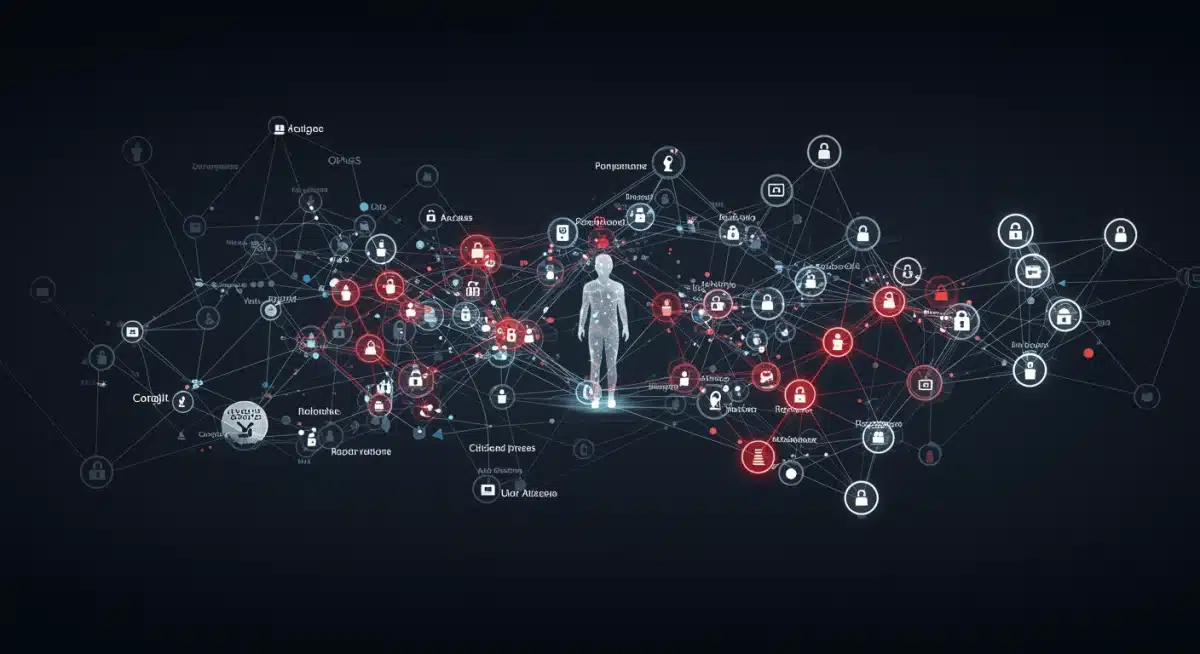
For instance, a DLP system might be configured to prevent the transfer of customer Social Security numbers via unencrypted email, while allowing internal transfers over secure channels. The key is to understand the context of the data movement to make intelligent prevention decisions.
Cloud-Native DLP and Endpoint Protection
Given the widespread adoption of cloud services in fintech, cloud-native DLP solutions are increasingly important. These solutions integrate directly with cloud applications and storage platforms, extending data protection policies to distributed environments. Simultaneously, robust endpoint DLP ensures that data cannot be exfiltrated through USB drives, personal cloud storage, or other unauthorized channels from employee devices.
- Cloud DLP: Securing data within SaaS applications, IaaS, and PaaS environments.
- Network DLP: Monitoring and controlling data moving across network egress points.
- Endpoint DLP: Preventing data loss from devices such as laptops, desktops, and mobile phones.
Implementing a multi-layered DLP strategy that covers all potential data exfiltration points is vital. This holistic approach ensures that sensitive fintech data remains secure across its entire lifecycle, significantly contributing to the goal of reducing data exfiltration by 35% by 2026.
Cultivating a Strong Security Culture and Employee Training
Technology alone cannot fully address the insider threat; human factors play an equally critical role. Cultivating a strong security culture and providing continuous, effective employee training are paramount for US fintechs aiming to reduce data exfiltration. A well-informed workforce acts as the first line of defense, recognizing and reporting potential threats.
Many insider incidents stem from a lack of awareness or understanding of security policies. Employees might accidentally expose data through phishing scams, insecure file sharing, or using unauthorized applications. Educating staff on these risks and best practices can significantly mitigate unintentional data loss.
Ongoing Security Awareness Programs
Security awareness should not be a one-time event but an ongoing program that adapts to evolving threats. Training modules should be engaging and relevant to the specific roles and responsibilities within a fintech organization, addressing topics like phishing, social engineering, data handling, and acceptable use policies.
- Regular Phishing Simulations: Testing employee vigilance against common social engineering attacks.
- Interactive Training Modules: Using gamification and real-world scenarios to enhance learning retention.
- Clear Policy Communication: Ensuring all employees understand their roles and responsibilities in protecting sensitive data.
Beyond formal training, fostering an open environment where employees feel comfortable reporting suspicious activities without fear of reprisal is essential. This encourages a proactive stance against potential insider threats, transforming employees into active participants in the organization’s security posture.
Leadership Buy-in and Accountability
A strong security culture starts at the top. When leadership actively champions security initiatives and demonstrates a commitment to data protection, it cascades throughout the organization. Establishing clear lines of accountability for security, from the C-suite down to individual contributors, reinforces the importance of every employee’s role.
In summary, investing in human capital through comprehensive training and fostering a robust security culture is as crucial as technological investments. This dual approach ensures that both technical controls and human vigilance work in concert to achieve the target reduction in data exfiltration.
Incident Response and Forensic Capabilities for Fintechs
Even with the most advanced proactive measures, insider threats can sometimes materialize. Therefore, having robust incident response and forensic capabilities is indispensable for US fintechs. Swift and effective response not only minimizes damage but also provides critical insights to prevent future occurrences, contributing to the 2026 data exfiltration reduction goal.
An effective incident response plan for insider threats should outline clear procedures for detection, containment, eradication, recovery, and post-incident analysis. This ensures that when a breach occurs, the organization can react systematically, preventing widespread data compromise.
Developing a Specialized Incident Response Team
Fintechs should consider establishing a dedicated incident response team, or at least assigning clear roles and responsibilities within existing security teams. This team needs specialized training in handling insider-related incidents, which often involve sensitive HR and legal considerations in addition to technical challenges.
- Clear Communication Protocols: Defining how and when to communicate during an incident, both internally and externally.
- Legal and HR Integration: Collaborating closely with legal counsel and human resources to navigate the complexities of insider investigations.
- Pre-defined Playbooks: Creating detailed guides for various insider threat scenarios to ensure consistent and efficient responses.
Regular drills and tabletop exercises are crucial for testing the effectiveness of the incident response plan and ensuring that all stakeholders are prepared to act decisively under pressure. This preparedness is key to mitigating the impact of any data exfiltration event.
Advanced Forensic Tools and Techniques
Post-incident forensics are vital for understanding how a data exfiltration event occurred, identifying the perpetrator, and gathering evidence for potential legal action. Fintechs should invest in advanced forensic tools capable of analyzing digital evidence from endpoints, networks, and cloud environments.
The ability to quickly and thoroughly investigate an incident, reconstruct events, and identify vulnerabilities is paramount. This not only aids in recovery but also strengthens future security postures, making it harder for subsequent insider threats to succeed. Ultimately, strong incident response and forensic capabilities are fundamental to achieving and sustaining the target reduction in data exfiltration by 2026.
Regulatory Compliance and Trust in the Fintech Ecosystem
For US fintechs, managing insider threats and reducing data exfiltration by 35% by 2026 is not solely an operational goal; it is deeply intertwined with regulatory compliance and maintaining customer trust. The financial industry is heavily regulated, and any data breach, especially one involving insider actions, can lead to severe penalties, reputational damage, and a significant erosion of trust.
Compliance with regulations such as GLBA, PCI DSS, and increasingly state-specific privacy laws like CCPA and CPRA, mandates robust security controls, including those designed to protect against insider threats. Failing to meet these standards can result in hefty fines and legal repercussions, directly impacting a fintech’s viability.
Evolving Regulatory Landscape
The regulatory environment is constantly evolving, with new requirements often emerging in response to increasing cyber threats. Fintechs must stay abreast of these changes and proactively adapt their insider threat management programs to ensure continuous compliance. This includes regular audits and assessments to identify gaps and areas for improvement.
Moreover, demonstrating a strong commitment to data security and compliance can be a competitive advantage. Customers are increasingly aware of data privacy issues and are more likely to trust financial institutions that can prove their dedication to protecting sensitive information.
Building and Maintaining Customer Trust
Trust is the bedrock of the financial services industry. A single data exfiltration incident, particularly one caused by an insider, can shatter years of trust building. Fintechs must not only implement strong security measures but also communicate their commitment to data protection transparently to their customers.
- Transparent Communication: Openly discussing security measures and privacy policies with users.
- Prompt Incident Disclosure: Adhering to regulatory requirements for notifying affected parties in the event of a breach.
- Demonstrating Due Diligence: Providing evidence of robust security practices during audits and to partners.
By effectively managing insider threats and preventing data exfiltration, US fintechs can reinforce their commitment to regulatory compliance and, more importantly, solidify the trust of their customer base. This dual benefit underscores the critical importance of achieving the 2026 target.
| Key Point | Brief Description |
|---|---|
| Evolving Threats | Insider threats vary from malicious intent to accidental exposure, complicated by fintech’s rapid tech adoption. |
| AI/ML Detection | Proactive use of AI and ML, especially UEBA, helps detect anomalous behavior before data exfiltration occurs. |
| Robust DLP | Implementing granular Data Loss Prevention (DLP) across cloud and endpoints is crucial for data protection. |
| Security Culture | Continuous employee training and strong security culture are vital for preventing human-factor related data breaches. |
Frequently Asked Questions About Fintech Insider Threats
An insider threat in fintech refers to a security risk that originates from within the organization. This can involve current or former employees, contractors, or business partners who have access to sensitive systems or data and use that access to harm the organization, either maliciously or unintentionally, leading to data exfiltration.
AI and ML, particularly through User Entity Behavior Analytics (UEBA), analyze vast amounts of data to establish normal user behavior patterns. They can then detect anomalies that might indicate an insider threat, such as unusual data access or transfers, allowing for proactive intervention before data is fully exfiltrated.
DLP is a set of tools and processes designed to ensure that sensitive data is not lost, misused, or accessed by unauthorized users. For fintechs, DLP is crucial because it helps protect highly regulated financial and personal data, preventing breaches, ensuring compliance, and maintaining customer trust by controlling data movement.
A strong security culture, fostered through continuous training and leadership commitment, significantly reduces the risk of insider threats. Employees who are well-informed about security risks and best practices are less likely to make accidental errors and more likely to report suspicious activities, acting as a critical human firewall.
Regulatory compliance, governed by laws like GLBA and PCI DSS, mandates robust security controls that directly contribute to preventing data exfiltration. Adherence to these regulations ensures that fintechs implement necessary safeguards, reducing the likelihood of breaches and avoiding legal penalties and reputational damage.
Conclusion
Achieving the ambitious goal of insider threat management: reducing data exfiltration by 35% in US fintechs by 2026 requires a concerted, multi-pronged effort. It means embracing advanced technologies like AI and ML for proactive detection, implementing robust DLP solutions across all data environments, fostering a strong security culture through continuous employee training, and establishing resilient incident response capabilities. Beyond technical safeguards, it underscores the critical link between security, regulatory compliance, and the invaluable trust of customers. By integrating these strategies, US fintechs can not only meet but exceed their data protection objectives, securing the future of financial innovation.