US Fintechs Reshaping B2B Payments by 2026
Five leading US fintechs are on track to significantly transform US B2B Payment Fintechs infrastructures by early 2026, bringing unprecedented levels of efficiency, security, and automation to corporate transactions.
The landscape of business-to-business (B2B) payments is undergoing a dramatic overhaul, largely driven by innovative fintech companies. By early 2026, the influence of US B2B Payment Fintechs will be undeniable, as their advanced solutions redefine how enterprises manage their financial flows. This article delves into how five specific US fintechs are at the forefront of this revolution, promising a future of faster, more secure, and highly automated B2B transactions.
The evolving landscape of B2B payments
For decades, B2B payments have been characterized by manual processes, lengthy reconciliation times, and high costs. Traditional methods, such as checks and wire transfers, often lack transparency and real-time visibility, leading to operational inefficiencies and delayed cash flows for businesses. This inertia has created a fertile ground for disruption, attracting fintech innovators eager to modernize an essential, yet often overlooked, facet of the global economy.
The demand for more agile and integrated payment solutions has never been higher. Businesses are increasingly seeking ways to streamline their financial operations, reduce errors, and enhance security in an interconnected digital world. The shift towards remote work and global supply chains has further accelerated the need for digital-first payment infrastructures that can support complex, cross-border transactions with ease and reliability.
Challenges in traditional B2B payments
- Manual processes: Reliance on paper checks and manual data entry leads to errors and delays.
- Lack of transparency: Difficulty tracking payment status and identifying discrepancies.
- High transaction costs: Fees associated with wire transfers and international payments can accumulate.
- Security risks: Vulnerabilities in traditional systems expose businesses to fraud and cyber threats.
The transformation is not merely about digitizing existing processes; it’s about fundamentally rethinking the underlying infrastructure. Fintechs are leveraging cutting-edge technologies like AI, machine learning, and blockchain to build payment systems that are not only faster and more secure but also intelligent and predictive. This evolution promises to unlock significant value for businesses, allowing them to focus more on growth and less on administrative burdens. The goal is to create a seamless, integrated financial ecosystem where payments are executed effortlessly and transparently, regardless of geographical boundaries or currency differences.
Fintech 1: Transforming accounts payable with AI
One prominent US fintech is leading the charge in automating accounts payable (AP) processes through sophisticated artificial intelligence (AI) and machine learning (ML) algorithms. This company recognizes that AP departments often grapple with mountains of invoices, manual data entry, and complex approval workflows, all of which are ripe for technological intervention. Their platform is designed to ingest invoices in various formats, extract relevant data with high accuracy, and route them for approval based on predefined rules, significantly reducing human effort and error.
The core innovation lies in the platform’s ability to learn from past transactions and adapt to evolving business needs. This means that as more invoices are processed, the system becomes even more efficient and accurate, minimizing the need for manual review. Furthermore, the integration with existing enterprise resource planning (ERP) systems ensures a smooth transition and a unified financial overview for businesses. This level of automation is not just about cost savings; it’s about freeing up valuable human resources to focus on more strategic financial analysis and decision-making.
Key features of their AP automation platform
- Intelligent invoice capture: AI-powered data extraction from diverse invoice types.
- Automated workflow routing: Customizable approval flows based on business rules.
- Real-time reconciliation: Instant matching of payments with invoices and purchase orders.
- Fraud detection: ML algorithms identify suspicious activities and potential fraud.
By early 2026, this fintech’s solution is projected to be a cornerstone for many large and medium-sized enterprises seeking to optimize their AP functions. The impact extends beyond mere efficiency, offering enhanced financial control, improved vendor relationships through timely payments, and better compliance with financial regulations. Their vision is to create a fully autonomous AP cycle, where invoices are processed from receipt to payment with minimal human intervention, thereby setting a new standard for operational excellence in B2B finance.
Fintech 2: Enabling real-time payments and liquidity management
Another US fintech is making significant strides in the realm of real-time B2B payments and advanced liquidity management. Recognizing the critical need for immediate fund transfers and improved cash flow visibility, this company has developed a network that facilitates instant payments between businesses, effectively eliminating the traditional delays associated with ACH or wire transfers. This capability is particularly crucial for businesses operating with tight margins or those requiring quick payment settlements to manage their supply chains effectively.
Their platform goes beyond mere speed; it integrates sophisticated tools for real-time cash position monitoring and predictive analytics. This allows businesses to gain unprecedented insights into their current and future liquidity, enabling more informed financial decisions. By providing a clear, up-to-the-minute view of their financial health, companies can optimize working capital, reduce borrowing costs, and mitigate risks associated with cash flow fluctuations.
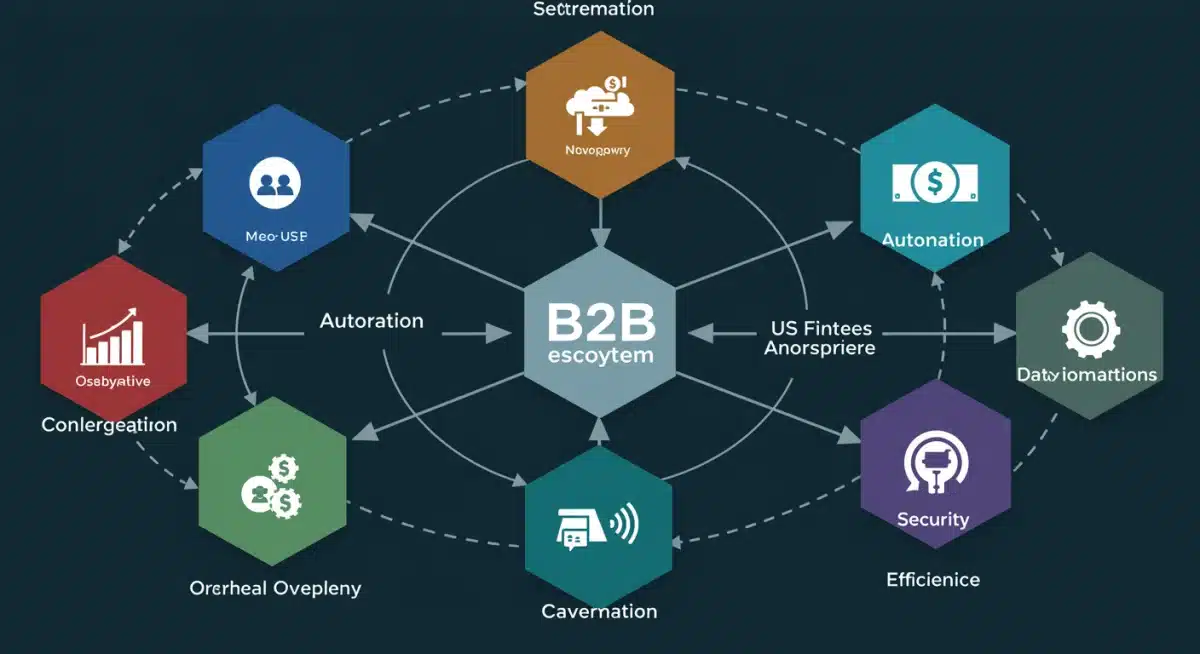
The ability to execute and confirm payments in real-time also opens up new possibilities for dynamic pricing and just-in-time inventory management. Suppliers can be paid immediately upon delivery, fostering stronger relationships and potentially leading to better terms. This fintech’s solution is not just a payment rail; it’s a comprehensive financial management ecosystem designed to empower businesses with greater control and agility in their financial operations.
Impact of real-time payments
- Improved cash flow: Immediate access to funds for better liquidity management.
- Enhanced supplier relationships: Faster payments can lead to better terms and stronger partnerships.
- Reduced operational costs: Fewer manual reconciliation efforts and expedited processes.
- Better financial forecasting: Real-time data supports more accurate financial planning.
By early 2026, this fintech is poised to become a key player in accelerating the adoption of real-time payments across the US B2B sector. Their focus on both speed and intelligent liquidity management addresses two of the most pressing challenges faced by businesses today, promising a future where financial transactions are as fluid and dynamic as the market itself.
Fintech 3: Securing cross-border transactions with blockchain
Cross-border B2B payments have historically been plagued by high costs, slow processing times, and a lack of transparency, often involving multiple intermediaries and complex foreign exchange conversions. A third US fintech is tackling these issues head-on by leveraging blockchain technology to create a more secure, efficient, and transparent global payment infrastructure. Their distributed ledger technology (DLT) based solution is designed to bypass traditional correspondent banking networks, reducing both cost and settlement times.
The fundamental advantage of using blockchain in this context is its inherent immutability and cryptographic security. Every transaction is recorded on an unchangeable ledger, providing an auditable trail and significantly reducing the risk of fraud or manipulation. This level of transparency is revolutionary for international trade, allowing all parties to track the status of payments in real-time and have complete confidence in the integrity of the transaction. Furthermore, smart contracts embedded within the blockchain can automate payment releases based on predefined conditions, such as the successful delivery of goods or services.
This fintech’s approach also addresses the complexities of foreign exchange. By utilizing digital assets or stablecoins, they aim to minimize currency conversion fees and volatility, making international payments more predictable and cost-effective for businesses. Their platform facilitates direct peer-to-peer transactions between companies in different countries, significantly streamlining the process and fostering greater trust between trading partners.
Blockchain’s advantages in B2B payments
- Enhanced security: Cryptographic protection and immutable ledger prevent fraud.
- Reduced costs: Elimination of intermediaries and lower FX fees.
- Faster settlements: Near-instantaneous cross-border transactions.
- Increased transparency: Real-time tracking and auditability of all payments.
By early 2026, this fintech is expected to be a major catalyst in the widespread adoption of blockchain for cross-border B2B payments. Their innovative infrastructure promises to democratize global trade, making it more accessible and efficient for businesses of all sizes, fundamentally reshaping how international financial obligations are met.
Fintech 4: Streamlining supply chain finance
Supply chain finance, which involves optimizing the financing of transactions between buyers and suppliers, is another area ripe for fintech innovation. A fourth US fintech is specializing in creating platforms that provide greater visibility and flexibility within supply chains, benefiting both large corporate buyers and their smaller suppliers. Their solutions address the common challenge of extended payment terms, which can strain suppliers’ cash flow and hinder their ability to grow.
This fintech’s platform offers various financing options, such as early payment programs and dynamic discounting, enabling suppliers to get paid faster while buyers can optimize their working capital. By leveraging data analytics and AI, the platform assesses risk and provides tailored financing solutions, ensuring that both parties in the supply chain can operate more efficiently. The transparency offered by their system allows all stakeholders to view the status of invoices and payments, fostering trust and improving collaboration.
Furthermore, their solutions often integrate with existing procurement and ERP systems, making the adoption process seamless for businesses. This integration allows for automated reconciliation and reduces the administrative burden associated with managing complex supply chain financing arrangements. The focus is on creating a win-win situation, where suppliers gain access to much-needed liquidity, and buyers can strengthen their supply chain relationships while optimizing their own cash management.
Benefits of advanced supply chain finance
- Improved supplier liquidity: Early payment options help suppliers manage cash flow.
- Optimized buyer working capital: Extended payment terms can be balanced with dynamic discounting.
- Enhanced supply chain stability: Stronger financial health across the ecosystem.
- Greater transparency: Real-time visibility into invoice and payment statuses.
By early 2026, this fintech’s platforms are anticipated to be instrumental in building more resilient and financially robust supply chains across various industries. Their innovative approach to financing is not just about transactions; it’s about fostering a healthier, more collaborative ecosystem where all participants can thrive.
Fintech 5: Integrating embedded payments and financial services
The concept of embedded finance, where financial services are seamlessly integrated into non-financial platforms, is set to revolutionize B2B interactions. Our fifth US fintech is at the forefront of this trend, developing infrastructure that allows businesses to offer payment and financial services directly within their own applications and workflows. This means that instead of navigating to a separate banking portal or payment gateway, businesses can initiate and manage payments directly from their operational software, such as CRM or ERP systems.
This approach significantly reduces friction in B2B transactions, making the payment process an invisible, yet integral, part of the overall business operation. For example, a procurement platform could embed payment capabilities, allowing buyers to pay suppliers directly within the platform, or a field service management tool could enable technicians to process payments on-site. This level of integration not only enhances user experience but also improves data accuracy and streamlines reconciliation processes.
The fintech provides robust APIs and SDKs that enable easy integration, allowing businesses to customize the embedded payment experience to their specific needs. Beyond payments, they are also exploring embedding other financial services, such as lending or insurance, directly into business workflows, creating a truly holistic financial ecosystem. This strategy transforms how businesses interact with financial services, making them more contextual and accessible.
Advantages of embedded B2B payments
- Seamless user experience: Payments integrated directly into business workflows.
- Increased efficiency: Reduced context switching and manual data entry.
- Enhanced data insights: Better integration of financial and operational data.
- New revenue opportunities: Businesses can offer financial services as part of their core offering.
By early 2026, this fintech is expected to drive significant adoption of embedded payments, making financial functionalities an intrinsic part of everyday business operations. Their vision is to create a world where financial services are not just tools but are seamlessly woven into the fabric of business, enabling greater efficiency, innovation, and strategic advantage.
The future impact on B2B commerce by 2026
The combined innovations from these five US fintechs are set to profoundly reshape B2B commerce by early 2026. The overarching theme is a move towards greater automation, transparency, and real-time capabilities, which will fundamentally alter operational efficiencies and strategic decision-making for businesses. We are moving away from a fragmented, manual system to a highly integrated, intelligent, and secure financial ecosystem.
The implications are far-reaching. Businesses will experience significantly reduced operational costs due to automation, fewer errors, and faster reconciliation cycles. Improved cash flow management, driven by real-time payments and advanced liquidity tools, will enable companies to allocate capital more strategically and react swiftly to market changes. Furthermore, enhanced security measures, including AI-driven fraud detection and blockchain’s immutable ledger, will instill greater confidence in digital transactions, mitigating risks that have historically deterred some businesses from fully embracing digital solutions.
Beyond the immediate financial benefits, these advancements will foster stronger relationships across the supply chain. Faster payments and more flexible financing options will empower suppliers, while buyers will gain greater visibility and control over their procurement processes. The integration of financial services directly into business workflows will create a more intuitive and efficient operational environment, allowing businesses to focus on their core competencies rather than administrative overhead.
Key shifts expected by 2026
- Hyper-automation: Extensive use of AI to automate AP, AR, and reconciliation.
- Ubiquitous real-time payments: Instant settlement becoming the norm for domestic transactions.
- Secure global trade: Blockchain-powered solutions making cross-border payments faster and cheaper.
- Embedded financial experiences: Payments and financing seamlessly integrated into business software.
By early 2026, the B2B payment landscape will be characterized by unprecedented levels of efficiency, security, and strategic value. These fintechs are not just building new payment rails; they are constructing the foundational infrastructure for a more dynamic, interconnected, and financially intelligent future for businesses across the United States and potentially globally. The era of slow, costly, and opaque B2B payments is rapidly drawing to a close, paving the way for a new paradigm of financial fluidity and operational excellence.
| Key Area | Fintech Impact by 2026 |
|---|---|
| Accounts Payable | AI-driven automation reduces manual tasks, enhances accuracy, and streamlines invoice processing. |
| Real-Time Payments | Instant fund transfers and advanced liquidity management for improved cash flow. |
| Cross-Border Transactions | Blockchain technology ensures secure, transparent, and cost-effective international payments. |
| Embedded Finance | Seamless integration of payment services directly into business software and workflows. |
Frequently asked questions about B2B payment fintechs
Fintechs enhance B2B payments by offering increased efficiency through automation, greater transparency in transactions, improved security against fraud, and faster settlement times. They reduce operational costs and provide better cash flow management tools for businesses of all sizes.
By 2026, AI will automate invoice processing, data extraction, and approval workflows in accounts payable. This reduces manual errors, accelerates reconciliation, and allows finance teams to focus on strategic tasks rather than repetitive administrative work, leading to significant cost savings.
Blockchain provides a secure, transparent, and immutable ledger for cross-border B2B payments, eliminating intermediaries and reducing transaction costs and settlement times. It enhances trust and auditability for international trade partners, making global commerce more efficient and reliable.
Real-time payments significantly improve business liquidity by providing immediate access to funds. This allows companies to better manage their cash flow, make timely payments to suppliers, reduce borrowing needs, and react more quickly to financial opportunities or challenges, enhancing overall financial health.
Embedded finance integrates payment and financial services directly into non-financial business platforms and workflows. For B2B, this means executing payments or accessing financing within ERP or CRM systems, creating a seamless, intuitive experience that reduces friction and improves operational efficiency.
Conclusion: A new era for B2B financial operations
The rapid advancements spearheaded by these five US fintechs are unequivocally setting the stage for a transformative period in B2B payments by early 2026. The convergence of AI, blockchain, real-time processing, and embedded finance is creating an ecosystem where financial transactions are no longer a bottleneck but a seamless, strategic enabler of business growth. As these technologies mature and integrate further, businesses can anticipate a future defined by unparalleled efficiency, robust security, and dynamic financial agility, fundamentally altering how commerce is conducted and managed.