US Fintech M&A Growth: What to Expect in Late 2025

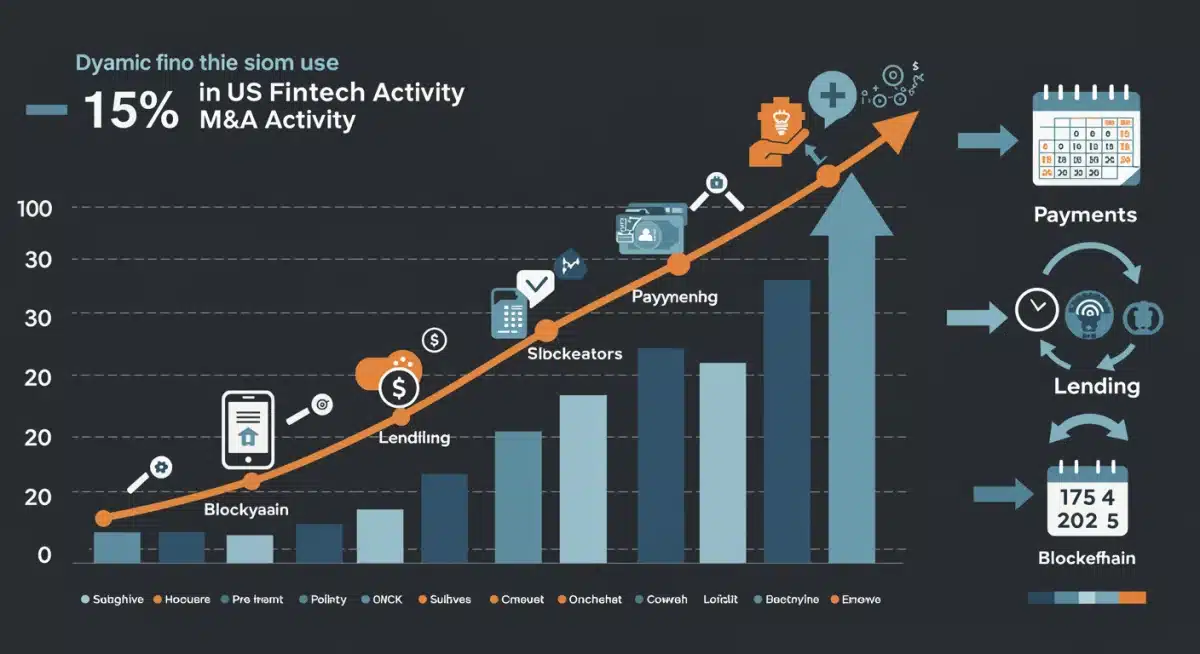
The 15% growth in US Fintech M&A activity signals a strategic market recalibration, driven by technological advancements and consolidation, anticipating sustained momentum and evolving challenges through late 2025.
The landscape of financial technology in the United States is in constant flux, a dynamic environment where innovation meets strategic consolidation. Recently, the sector has witnessed a significant uptick, with a notable 15% growth in US Fintech M&A activity. This surge is not merely a statistical anomaly but a clear indicator of deeper currents shaping the future of finance. Understanding these trends is crucial for stakeholders navigating this rapidly evolving market.
Decoding the 15% Surge in US Fintech M&A Activity
The reported 15% growth in US Fintech M&A activity is a compelling narrative of a maturing industry. This expansion reflects a strategic shift among both established financial institutions and burgeoning fintech startups, aiming to enhance market share, acquire cutting-edge technology, and broaden service offerings. It’s a clear signal that the sector is moving beyond initial startup phases into a period of more structured consolidation and growth.
This growth isn’t uniform across all sub-sectors; rather, it’s concentrated in areas demonstrating strong potential for innovation and scalability. Companies are increasingly seeking synergies that can accelerate their digital transformation journeys and address evolving consumer demands. The underlying motivations often include accessing new customer segments, integrating advanced AI and machine learning capabilities, or consolidating market positions against fierce competition.
Key Drivers Behind the M&A Boom
Several factors are fueling this intensified M&A environment. Economic conditions, evolving regulatory landscapes, and the relentless pace of technological innovation all play pivotal roles. Companies recognize that organic growth alone may not be sufficient to maintain a competitive edge, prompting them to look externally for strategic acquisitions that offer immediate value and future potential.
- Technological Advancement: Acquiring firms with superior AI, blockchain, or data analytics capabilities.
- Market Consolidation: Larger players absorbing smaller, innovative startups to expand their ecosystem.
- Regulatory Clarity: Increased understanding and adaptation to new fintech regulations, reducing investment uncertainty.
- Customer Acquisition: Gaining access to new customer bases and demographics through acquired platforms.
The drive to stay ahead of the curve in a competitive market is a powerful motivator. This often translates into acquisitions that fill technological gaps or provide immediate access to specialized expertise. The growth we are observing is therefore a multifaceted phenomenon, reflecting both internal industry dynamics and external market pressures.
Ultimately, the 15% increase underscores a strategic pivot within the US fintech ecosystem. It highlights a proactive approach by industry leaders to adapt, innovate, and consolidate in a bid to secure long-term sustainability and market dominance. This trend is expected to continue shaping the landscape, with further strategic alignments anticipated as companies vie for a stronger foothold.
The Strategic Imperatives Driving Fintech Acquisitions
Fintech acquisitions are rarely random; they are driven by a set of clear strategic imperatives designed to create value and competitive advantage. Companies are not just buying revenue streams; they are investing in intellectual property, talent, and future growth opportunities. This strategic focus ensures that each M&A deal aligns with broader corporate objectives, whether it’s expanding into new markets or bolstering existing technological infrastructure.
One primary imperative is the pursuit of technological superiority. In a sector where innovation is paramount, acquiring companies with advanced platforms or proprietary algorithms can significantly accelerate a firm’s development roadmap. This bypasses the lengthy and costly process of in-house development, allowing for faster market entry with cutting-edge solutions. The ability to integrate these technologies seamlessly is often a key determinant of success.
Enhancing Product Offerings and Market Reach
Many acquisitions are motivated by a desire to diversify or enhance product portfolios. For instance, a digital payments company might acquire a lending platform to offer a more comprehensive suite of financial services. This cross-selling potential can unlock new revenue streams and increase customer lifetime value. Similarly, expanding geographical market reach is a powerful driver.
- Diversification: Adding new services like insurance, wealth management, or specialized lending.
- Geographic Expansion: Entering new regional markets without the need to build infrastructure from scratch.
- Talent Acquisition: Securing specialized fintech engineers, data scientists, and product managers.
- Competitive Advantage: Eliminating rivals or acquiring their unique market positioning.
Furthermore, the race to acquire top talent is a silent but significant driver. Fintech is a talent-intensive industry, and acquiring a successful startup often means bringing on board a team of highly skilled individuals with deep domain expertise. These teams can infuse new energy and innovative thinking into larger organizations, fostering a culture of continuous improvement.
The strategic imperatives underpinning current fintech M&A activities reflect a sophisticated understanding of market dynamics. Companies are not just reacting to trends but are actively shaping the future of finance through targeted acquisitions. These moves are designed to build more robust, diversified, and technologically advanced entities capable of thriving in an increasingly complex financial ecosystem.
Navigating Regulatory Shifts: A Key Factor for M&A in Late 2025
The regulatory environment in the US is a critical, albeit often complex, factor influencing fintech M&A activity. As the industry matures, regulators are increasingly scrutinizing new financial products and services, aiming to protect consumers and maintain financial stability. For companies contemplating mergers or acquisitions, understanding and adapting to these evolving regulatory shifts is paramount, particularly as we look towards late 2025.
New regulations concerning data privacy, consumer protection, and anti-money laundering (AML) measures can significantly impact the valuation and feasibility of M&A deals. Companies must conduct thorough due diligence to assess the regulatory compliance of potential targets, identifying any red flags that could lead to post-acquisition liabilities or operational hurdles. The integration of compliance frameworks becomes a central challenge in many deals.
Anticipated Regulatory Developments
Several key regulatory areas are expected to see increased attention, directly affecting fintech M&A. The Consumer Financial Protection Bureau (CFPB) continues to play a significant role in shaping consumer lending and payment regulations. Additionally, state-level regulations can vary widely, adding another layer of complexity for firms operating across different jurisdictions.
- Data Privacy Laws: Stricter enforcement of existing laws like CCPA and potential new federal mandates.
- Open Banking Directives: Further clarity and implementation guidelines for data sharing and API standards.
- Digital Asset Regulation: Evolving frameworks for cryptocurrencies and blockchain-based financial services.
- Cross-Border Payments: Harmonization of rules for international fintech transactions.
The ability to navigate these regulatory complexities will be a significant differentiator for successful M&A strategies. Firms that proactively engage with regulators and build robust compliance programs will be better positioned to execute deals smoothly and unlock value. Conversely, those that overlook regulatory risks may find themselves facing costly delays or even deal cancellations.
In conclusion, the regulatory landscape is not a static backdrop but an active participant in the fintech M&A narrative. Strategic foresight and a deep understanding of impending regulatory shifts are essential for any company looking to thrive in this environment, especially as new guidelines are expected to solidify by late 2025, shaping the very nature of future transactions.
Emerging Technologies Fueling Future M&A Targets
The rapid evolution of technology is consistently reshaping the fintech sector, creating new opportunities and, consequently, new M&A targets. Companies are keenly seeking out startups and innovators who are at the forefront of these technological waves, recognizing that integrating these capabilities is vital for long-term survival and competitive advantage. As we approach late 2025, several emerging technologies are poised to become central to M&A strategies.
Artificial intelligence (AI) and machine learning (ML) remain at the top of the list. These technologies are not just about automation; they are fundamentally transforming how financial services are delivered, from personalized banking experiences to sophisticated fraud detection. Acquiring companies with advanced AI/ML capabilities can provide a significant leap in operational efficiency and customer engagement.
Key Technological Focus Areas for Acquisitions
Beyond AI, the distributed ledger technology (DLT), often associated with blockchain, is another area of intense interest. Its potential to revolutionize cross-border payments, asset tokenization, and secure record-keeping makes it an attractive acquisition target. Companies are looking to leverage DLT for enhanced security, transparency, and efficiency in their operations.
- Embedded Finance: Seamless integration of financial services into non-financial platforms.
- Web3 and Decentralized Finance (DeFi): Exploring blockchain-based financial applications and infrastructure.
- Cybersecurity Solutions: Acquiring advanced threat detection and data protection technologies.
- Personalized Financial Management: AI-driven tools for budgeting, investment advice, and financial planning.
Furthermore, the rise of embedded finance is creating new avenues for M&A. This involves integrating financial services directly into non-financial platforms, such as e-commerce sites or ride-sharing apps. Companies specializing in embedded finance solutions are highly sought after, as they offer direct access to customers at their point of need, blurring the lines between traditional finance and everyday consumer activities.
Ultimately, the technological arms race within fintech will continue to drive M&A activity. Firms that can identify and integrate these emerging technologies effectively will be best positioned to capture market share and innovate at scale. The landscape of M&A targets will increasingly be defined by their technological prowess and their ability to solve complex financial challenges with novel solutions.
Challenges and Opportunities in the Evolving M&A Landscape
While the 15% growth in US Fintech M&A activity presents numerous opportunities, it is not without its challenges. The competitive nature of the market, the complexities of integration, and valuation discrepancies can all pose significant hurdles to successful deals. Understanding these challenges is crucial for developing robust M&A strategies that can navigate the evolving landscape effectively.
One of the primary challenges lies in valuation. Fintech startups, particularly those with innovative but unproven business models, can be difficult to value accurately. Overpaying for an acquisition can lead to diminished returns, while underpaying can result in missed opportunities. Striking the right balance requires extensive due diligence and a deep understanding of market trends and future potential.
Overcoming Integration Complexities
Post-merger integration is another significant hurdle. Merging disparate technological systems, corporate cultures, and operational processes can be complex and time-consuming. Failed integrations can erode value, lead to talent attrition, and disrupt customer services. Successful integration requires meticulous planning, strong leadership, and effective communication across both entities.
- Cultural Integration: Merging different corporate cultures and employee expectations.
- Technological Integration: Harmonizing disparate IT systems and platforms.
- Regulatory Compliance: Ensuring unified adherence to all relevant financial regulations.
- Talent Retention: Preventing key employees from leaving post-acquisition.
Despite these challenges, the opportunities presented by the current M&A environment are substantial. Strategic acquisitions can enable companies to achieve economies of scale, reduce operational costs, and accelerate their pace of innovation. They can also provide a fast track to new markets and customer segments, offering significant growth potential that might otherwise be unattainable organically.
In conclusion, the evolving M&A landscape in US fintech is a double-edged sword, offering both significant potential and considerable risks. Firms that approach M&A with a clear strategy, thorough due diligence, and a robust integration plan will be best positioned to capitalize on the opportunities and mitigate the inherent challenges, ensuring sustainable growth into late 2025 and beyond.
What to Expect in Late 2025: A Forward Look at US Fintech M&A
As we project forward to late 2025, the trajectory of US Fintech M&A activity suggests a continued, albeit perhaps more refined, period of growth and consolidation. The initial surge, driven by pent-up demand and strategic realignment, is likely to evolve into a more selective and targeted approach. Companies will prioritize acquisitions that offer clear strategic alignment, demonstrable technological advantages, and strong potential for synergistic value creation.
The market is expected to mature further, with a greater emphasis on profitability and sustainable business models. This shift may lead to a decrease in speculative acquisitions and an increase in deals focused on established, revenue-generating fintechs. Investors and acquirers will likely demand clearer pathways to profitability and a robust competitive moat from their targets.
Key Trends Shaping Late 2025 M&A
We anticipate a continued focus on specific sub-sectors within fintech that demonstrate high growth potential and resilience. Digital payments, cybersecurity, and embedded finance are likely to remain hotbeds of activity. Additionally, companies leveraging AI for personalized financial services and advanced data analytics will continue to attract significant interest. The integration of environmental, social, and governance (ESG) factors into fintech offerings may also become a more prominent driver for M&A.
- Increased Specialization: Acquisitions targeting niche fintechs with highly specialized solutions.
- ESG Integration: Growing interest in fintechs that incorporate sustainable and ethical practices.
- Global Expansion via M&A: US firms acquiring international fintechs to expand global footprint, and vice versa.
- Strengthened Due Diligence: More rigorous evaluation of financial health, regulatory compliance, and technological compatibility.
Furthermore, the role of private equity and venture capital will remain critical. These sophisticated investors will continue to fuel M&A activity, both by backing innovative startups that become acquisition targets and by facilitating consolidation among their portfolio companies. Their strategic insights and financial backing will be instrumental in shaping the market.
In summary, late 2025 is poised to be a period of strategic refinement for US Fintech M&A. While the overall volume of deals may stabilize, the quality and strategic significance of acquisitions are expected to increase. This will create a more resilient and innovative fintech ecosystem, better equipped to meet the evolving demands of consumers and businesses alike.
| Key Aspect | Brief Description |
|---|---|
| 15% Growth Drivers | Fueled by technological advancements, market consolidation, and strategic expansion into new customer segments. |
| Strategic Imperatives | Acquisitions driven by product enhancement, market reach expansion, talent acquisition, and competitive advantage. |
| Regulatory Influence | Evolving data privacy, open banking, and digital asset regulations significantly impact deal feasibility and valuation. |
| Late 2025 Outlook | Anticipates refined, targeted M&A with focus on profitability, ESG, and advanced technologies like AI and embedded finance. |
Frequently Asked Questions About US Fintech M&A
The growth is primarily driven by the need for technological advancement, market consolidation, expanding product offerings, and acquiring specialized talent. Companies seek to enhance their competitive edge and adapt to evolving consumer demands through strategic acquisitions.
Regulatory changes, particularly in data privacy, consumer protection, and digital assets, significantly impact M&A decisions. Firms must conduct thorough due diligence to ensure compliance, as regulatory hurdles can affect deal valuation and post-acquisition integration complexities.
By late 2025, AI, machine learning, blockchain (DLT), embedded finance, and advanced cybersecurity solutions are expected to be primary drivers for M&A targets. These technologies offer significant potential for innovation, efficiency, and expanded service delivery.
Key challenges include accurate valuation of innovative startups, complex technological integration, cultural assimilation of disparate teams, and ensuring seamless regulatory compliance post-merger. These factors require meticulous planning and execution to overcome.
Late 2025 is expected to see a more refined and targeted M&A approach, focusing on profitability, sustainable business models, and strong strategic alignment. Specialization, ESG integration, and rigorous due diligence will likely characterize future deal-making.
Conclusion
The 15% growth in US Fintech M&A activity underscores a pivotal moment for the financial technology sector, signaling a robust drive towards consolidation, innovation, and strategic expansion. This surge is propelled by a complex interplay of technological advancements, evolving market dynamics, and a maturing regulatory landscape. As companies navigate these currents, the emphasis remains on acquiring capabilities that promise not just immediate gains but also long-term competitive advantage. Looking towards late 2025, the market is poised for continued, albeit more focused, activity, with a clear preference for targets that offer strong strategic fit, technological superiority, and a clear path to profitability. Success in this dynamic environment will depend on a nuanced understanding of market trends, meticulous due diligence, and a proactive approach to both opportunities and challenges, ultimately shaping a more resilient and innovative US fintech ecosystem.