US Open Banking Adoption: 2026 Push for Standardized API Access
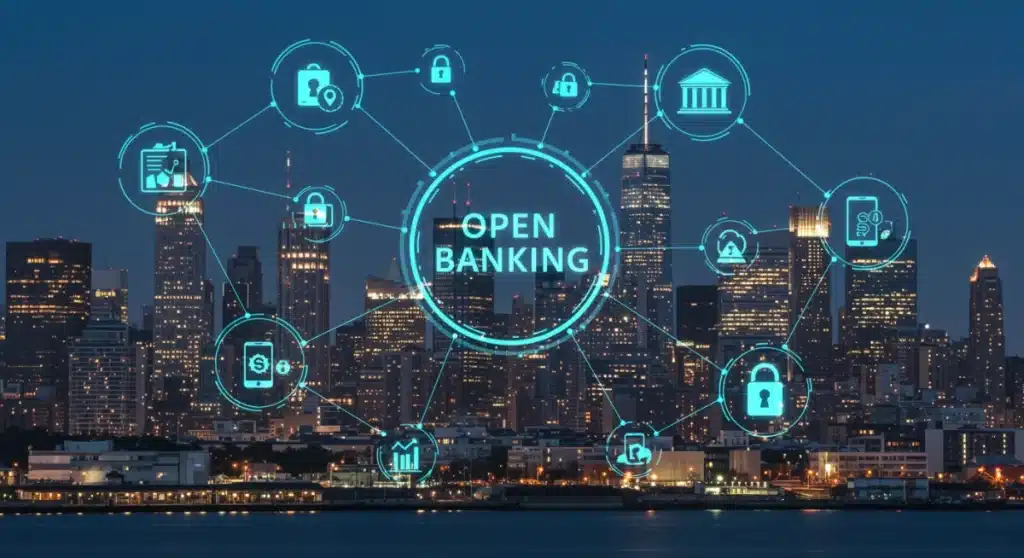
US Open Banking Adoption is accelerating towards 2026, marked by significant strides in standardized API access and critical advancements in data portability, reshaping the American financial ecosystem.
The financial landscape in the United States is on the precipice of a profound transformation. By 2026, the vision of widespread US Open Banking Adoption is expected to materialize, fundamentally altering how consumers and businesses interact with financial institutions. This shift is not merely an incremental update; it represents a paradigm change, driven primarily by an insistent push for standardized API access and enhanced data portability, promising a more integrated, efficient, and user-centric financial experience.
The evolving landscape of US Open Banking
Open Banking, while a familiar concept in other global markets, has seen a more nuanced and gradual evolution in the United States. Unlike the top-down regulatory mandates seen in Europe or the UK, the US approach has been largely market-driven, fostered by consumer demand and fintech innovation. However, the momentum is undeniably building, with 2026 emerging as a critical year for the widespread implementation of key open banking principles.
This evolving landscape is characterized by a growing consensus among stakeholders—from major banks to agile fintech startups and regulatory bodies—that a harmonized approach is essential. The fragmentation of data access methods, often relying on screen scraping, has long been a point of contention, raising concerns about security, reliability, and user control. The move towards standardized API access seeks to resolve these issues, paving the way for a more robust and secure financial data infrastructure.
From screen scraping to secure APIs
Historically, third-party financial applications in the US often relied on screen scraping to access consumer financial data. This method, while functional, presented inherent security vulnerabilities and operational inefficiencies. It involved users sharing their bank login credentials, a practice that many financial institutions and security experts rightfully deemed risky.
- Security Risks: Screen scraping often required sharing sensitive login credentials, increasing the risk of data breaches.
- Reliability Issues: Changes to bank website layouts could break screen scraping connections, leading to service interruptions.
- Limited Control: Consumers had less granular control over what specific data was shared and for how long.
- Scalability Challenges: Maintaining numerous screen scraping connections across various banks was resource-intensive for fintechs.
The shift to secure, API-based access is a monumental leap forward. APIs (Application Programming Interfaces) allow for direct, secure, and permission-based data exchange between financial institutions and authorized third-party providers. This method puts the consumer firmly in control, enabling them to grant explicit consent for specific data sharing, thereby enhancing privacy and security.
The progression towards API-driven data exchange is foundational for true open banking. It not only bolsters security but also improves the reliability and efficiency of data transfers, fostering a more dynamic and innovative financial services ecosystem. This transition is pivotal for the US Open Banking Adoption agenda, setting the stage for a new era of financial interactivity.
Driving forces behind the 2026 push
Several powerful forces are converging to accelerate the push for standardized API access and data portability, targeting significant milestones by 2026. These drivers span regulatory initiatives, competitive pressures, and evolving consumer expectations, all contributing to an environment ripe for open banking transformation.
One of the most significant catalysts is the regulatory environment. While the US has favored a market-led approach, the Consumer Financial Protection Bureau (CFPB) has been instrumental in advocating for consumer data rights. Their focus on Section 1033 of the Dodd-Frank Act, which grants consumers the right to access their financial data, is a strong signal that regulatory oversight will ensure fair and secure data sharing practices.
Regulatory guidance and consumer protection
The CFPB’s ongoing efforts to clarify and enforce consumer data rights are central to the 2026 open banking objectives. By providing guidance on data access and portability, the bureau aims to create a level playing field and prevent anti-competitive practices that could hinder innovation. This regulatory push is not about mandating specific technologies but about securing consumer rights within a rapidly digitizing financial world.
- Empowering Consumers: Ensuring individuals have the ability to access and share their financial data securely.
- Promoting Competition: Lowering barriers for new entrants and encouraging innovation in financial services.
- Enhancing Security: Advocating for secure API standards to replace less secure data access methods.
- Establishing Trust: Building a framework where consumers can trust that their data is handled responsibly.
Beyond regulation, competitive dynamics within the US financial sector are also a major force. Fintech startups, unburdened by legacy systems, thrive on data access to create innovative products and services. Traditional banks, recognizing the threat of disruption and the opportunity for new revenue streams, are increasingly embracing open banking to remain competitive and attract tech-savvy customers. This dual pressure from both ends of the market is fueling the rapid evolution.
Consumer expectations are also evolving at an unprecedented pace. Today’s consumers expect seamless, personalized, and integrated digital experiences across all aspects of their lives, and financial services are no exception. The ability to manage multiple accounts from a single app, receive tailored financial advice, or apply for loans with pre-filled information are no longer luxuries but anticipated norms. This demand for convenience and interoperability is a powerful impetus for US Open Banking Adoption.
Standardized API access: the technical backbone
The concept of standardized API access is the technical bedrock upon which the entire US Open Banking ecosystem will be built. Without a common language and set of protocols for data exchange, the vision of seamless data portability remains elusive. The industry is actively working towards establishing these standards, with several key initiatives gaining traction.
Standardization ensures interoperability, meaning that applications and services from different providers can communicate effectively and securely. This reduces complexity for fintechs, allowing them to focus on innovation rather than adapting to a multitude of proprietary bank APIs. For banks, it streamlines the process of exposing data, reducing development costs and accelerating market entry for new services.
Key initiatives for API standardization
Various industry groups and consortia are playing crucial roles in developing these essential standards. Organizations like the Financial Data Exchange (FDX) are at the forefront, creating common API specifications that are being widely adopted across the US financial sector. Their framework provides a blueprint for secure, consumer-permissioned data sharing, addressing critical aspects like authentication, authorization, and data payload definitions.
- FDX API Specifications: Widely adopted guidelines for secure and standardized data sharing, promoting interoperability.
- Common Data Models: Efforts to define consistent data formats across institutions, simplifying data consumption for third parties.
- Security Protocols: Establishing robust encryption and authentication measures to protect sensitive financial information.
- Developer Portals: Banks are increasingly offering well-documented API portals to facilitate easier integration for developers.
The widespread adoption of these standards is crucial for realizing the full potential of open banking. It moves the industry away from bilateral agreements and custom integrations, which are costly and time-consuming, towards a more scalable and efficient ecosystem. By 2026, a significant majority of financial institutions are expected to have implemented FDX-compliant APIs, making data access more uniform and predictable for third-party developers.
This technical harmonization is not just about convenience; it is about creating a resilient and secure infrastructure. Standardized APIs incorporate best practices for data security and privacy by design, offering a far more secure alternative to older data access methods. This focus on a robust technical backbone is fundamental to the long-term success of US Open Banking Adoption.
Enhancing data portability and consumer control
Data portability, defined as the ability of consumers to easily move their financial data between different service providers, is a cornerstone of open banking. It empowers individuals, giving them greater control over their financial lives and fostering a more competitive market where service providers must genuinely compete for their business based on merit and innovation.
The push for enhanced data portability by 2026 is deeply intertwined with standardized API access. Once data can be accessed securely and uniformly via APIs, the practical mechanisms for porting that data become significantly simpler. This allows consumers to switch financial products or services with far less friction, reducing customer lock-in and encouraging providers to offer superior value.
Benefits of greater data portability
The advantages of robust data portability extend far beyond mere convenience. It unlocks a wealth of opportunities for consumers and the broader financial ecosystem. Consumers can gain a holistic view of their finances, leverage personalized budgeting tools, and access more competitive financial products tailored to their specific needs.
- Personalized Financial Management: Aggregating data from various accounts for a comprehensive financial overview.
- Improved Credit Access: Allowing alternative lenders to assess creditworthiness using a broader range of data, potentially benefiting underserved populations.
- Seamless Product Switching: Making it easier to move between banks or financial products without cumbersome data transfers.
- Innovative Service Development: Fueling fintechs to create novel solutions based on readily available, consented data.
For financial institutions, embracing data portability, while initially challenging, ultimately leads to a more dynamic and innovative market. It encourages them to focus on providing exceptional customer experiences and developing cutting-edge products, rather than relying on the inertia of customer switching costs. The ability to attract customers through superior service, knowing that they can easily move their data if dissatisfied, creates a powerful incentive for continuous improvement.
The consumer-centric nature of enhanced data portability is a key driver for its rapid development. As consumers become more aware of their data rights and the potential benefits, their demand for seamless data movement will continue to shape the trajectory of US Open Banking Adoption.
Challenges and opportunities on the path to 2026
While the momentum for US Open Banking Adoption is strong, the path to widespread implementation by 2026 is not without its challenges. Navigating these obstacles while capitalizing on the immense opportunities will be crucial for all stakeholders in the financial ecosystem.
One primary challenge remains data security and privacy concerns. Despite the move to more secure APIs, the sheer volume and sensitivity of financial data necessitate robust cybersecurity measures and clear frameworks for data governance. Building and maintaining consumer trust in these new data-sharing paradigms is paramount for sustained adoption.
Overcoming hurdles and seizing potential
Regulators, financial institutions, and fintechs must collaborate to establish clear guidelines for data handling, consent management, and incident response. Educating consumers about how their data is protected and how they maintain control is also vital to alleviate privacy fears. This collaborative approach will be key to fostering a trusted open banking environment.
- Data Security: Implementing stringent cybersecurity protocols and continuous monitoring to protect sensitive financial data.
- Consumer Trust: Transparent communication about data usage and robust consent mechanisms to build confidence.
- Interoperability: Ensuring seamless communication and data exchange between diverse systems and platforms.
- Regulatory Harmony: Balancing innovation with effective oversight to prevent market abuses and protect consumers.
However, the opportunities presented by open banking far outweigh the challenges. For financial institutions, it offers avenues for new revenue streams through partnerships with fintechs, enhanced customer engagement through personalized services, and operational efficiencies through streamlined data processes. Fintechs, in turn, gain access to a broader customer base and more reliable data, accelerating their innovation cycles.
The push towards 2026 represents a unique opportunity for the US to solidify its position as a global leader in financial innovation. By addressing security concerns head-on, fostering a spirit of collaboration, and prioritizing consumer benefits, the nation can unlock the full transformative power of open banking, creating a more dynamic, inclusive, and efficient financial future. This journey requires continuous adaptation and a forward-thinking mindset from all participants in the US Open Banking Adoption movement.
The future impact on US financial services
The widespread US Open Banking Adoption by 2026 is poised to fundamentally reshape the American financial services landscape, leading to a more integrated, personalized, and competitive ecosystem. This transformation will impact everything from how consumers manage their daily finances to how businesses access capital, fostering an era of unprecedented innovation and choice.
One of the most immediate impacts will be the proliferation of highly personalized financial products and services. With easier access to consolidated financial data (with consumer consent), fintechs and traditional banks can develop offerings that are precisely tailored to individual needs, risk profiles, and financial goals. This could include dynamic budgeting tools, hyper-personalized investment advice, or real-time credit offers based on spending patterns.
Transforming consumer and business interactions
For consumers, this means a significant upgrade in their financial experience. Imagine a single dashboard where all your bank accounts, credit cards, investments, and even loyalty programs are seamlessly integrated. This level of aggregation and insight will empower individuals to make more informed financial decisions, optimize their spending, and achieve their financial objectives more efficiently.
- Holistic Financial Views: Consolidated dashboards offering a complete picture of an individual’s financial health.
- Personalized Product Recommendations: Tailored banking, lending, and investment products based on spending habits and financial goals.
- Streamlined Lending: Faster and more efficient loan applications with pre-populated data and real-time eligibility checks.
- Enhanced Fraud Detection: Cross-institutional data analysis to identify and prevent fraudulent activities more effectively.
Businesses, particularly small and medium-sized enterprises (SMEs), will also benefit immensely. Open banking can facilitate easier access to working capital through embedded finance solutions and tailored credit products based on their transaction data. It can also streamline accounting and treasury management, integrating financial data directly into business operations software. This efficiency gain can be a game-changer for economic growth.
Furthermore, open banking is expected to drive increased competition and innovation. New entrants will find it easier to launch services, challenging established players and pushing the entire industry to evolve. This competitive pressure will ultimately benefit consumers through better products, lower fees, and superior customer service. The 2026 horizon for US Open Banking Adoption marks not just a technical shift, but a profound redefinition of financial relationships and possibilities.
| Key Point | Brief Description |
|---|---|
| 2026 Target | Significant milestone for widespread US Open Banking Adoption, emphasizing standardized API access and data portability. |
| Standardized APIs | Transition from screen scraping to secure, common Application Programming Interfaces for reliable data exchange. |
| Data Portability | Empowering consumers to easily move and share their financial data securely across different service providers. |
| Key Drivers | Regulatory guidance (CFPB), competitive pressures from fintechs, and evolving consumer expectations for digital services. |
Frequently Asked Questions About US Open Banking
By 2026, US Open Banking Adoption refers to the widespread implementation of standardized API access and enhanced data portability across the US financial sector, enabling consumers to securely share their financial data with third-party providers for innovative services.
Standardized API access benefits consumers by providing a more secure and reliable way to share their financial data. It replaces less secure methods like screen scraping, giving users greater control over their information and promoting innovative, personalized financial tools.
Data portability is crucial as it empowers consumers to easily move their financial data between different service providers. This fosters competition, encourages better service offerings, and allows individuals to gain a comprehensive view of their finances through various applications.
The US approach to Open Banking is primarily market-driven, unlike the top-down regulatory mandates in Europe. However, the CFPB plays a significant role in advocating for consumer data rights under Section 1033 of the Dodd-Frank Act, guiding the industry towards secure practices.
Key challenges for US Open Banking include ensuring robust data security and privacy, building consumer trust in data-sharing mechanisms, achieving widespread interoperability among diverse financial systems, and balancing innovation with effective regulatory oversight to prevent market abuses.
Conclusion
The journey towards widespread US Open Banking Adoption by 2026 signals a transformative era for American financial services. The concerted push for standardized API access and enhanced data portability is not merely a technological upgrade but a fundamental shift towards a more consumer-centric, secure, and innovative financial ecosystem. While challenges in security and interoperability persist, the collaborative efforts of regulators, financial institutions, and fintechs are paving the way for a future where seamless, personalized, and efficient financial management becomes the norm, ultimately benefiting both individuals and businesses across the nation.