Cross-Border Digital Payments: 20% Faster Settlement for US Biz by 2026

Achieving 20% faster settlement times for cross-border digital payments by 2026 is a critical objective for US businesses, driven by advancements in fintech, blockchain technology, and the expansion of real-time payment infrastructures, promising significant operational efficiencies and reduced costs.
The global economy is more interconnected than ever, making efficient international transactions crucial for growth. For US businesses, optimizing cross-border digital payments is not just an aspiration but a strategic imperative, with a clear goal of reducing settlement times by 20% by 2026.
The urgent need for faster cross-border payments
In today’s fast-paced global marketplace, the speed at which funds move across borders directly impacts a business’s liquidity, supply chain efficiency, and competitive edge. Traditional cross-border payment methods, often reliant on correspondent banking networks, can be slow, opaque, and costly, creating significant friction for US businesses engaged in international trade.
These delays tie up capital and introduce unpredictability, making financial planning and risk management more challenging. Furthermore, the complexities of navigating different regulatory environments and currency conversions add layers of administrative burden. The current landscape often leaves businesses waiting days, sometimes even weeks, for international funds to settle, which can be detrimental in volatile markets.
The demand for faster, more transparent, and cost-effective solutions is therefore not merely a convenience but a fundamental business requirement. Companies are increasingly seeking ways to streamline their payment processes to better manage cash flow, reduce operational expenses, and enhance customer and supplier relationships globally. The push for a 20% reduction in settlement times by 2026 reflects a collective recognition of these pressing needs and the potential for significant economic gains.
Ultimately, the slow pace of traditional cross-border payments hinders innovation and limits growth opportunities for US businesses. Addressing this challenge through technological advancements and strategic partnerships is essential for maintaining global competitiveness and fostering a more agile financial ecosystem.
Technological drivers accelerating settlement times
The ambitious target of reducing cross-border payment settlement times by 20% by 2026 is largely fueled by transformative technological advancements. These innovations are dismantling historical barriers, offering unprecedented speed, security, and transparency in international transactions.
Blockchain and distributed ledger technology (DLT)
One of the most significant drivers is the widespread adoption of blockchain and distributed ledger technologies. Blockchain offers a decentralized, immutable ledger that can process transactions in near real-time, bypassing traditional intermediaries. This not only speeds up settlement but also reduces costs and enhances security.
- Increased Transparency: All parties can view transaction status in real-time.
- Reduced Intermediaries: Direct peer-to-peer transfers minimize reliance on multiple banks.
- Enhanced Security: Cryptographic security protects transactions from fraud.
- Lower Costs: Reduced operational overhead due to automation and fewer intermediaries.
The inherent architecture of DLT platforms makes them ideal for cross-border payments, providing a single source of truth for all participants. This eliminates the need for reconciliation across disparate systems, a major source of delays in conventional methods. As more financial institutions and fintech companies invest in these technologies, their capabilities to facilitate quicker settlements will only expand.
Another key aspect is the emergence of digital currencies and stablecoins built on DLT, which can facilitate instant value transfer across borders without the need for traditional banking hours. These digital assets are poised to play a crucial role in achieving the 2026 settlement time reduction goal.
Real-time payment networks and interoperability
Beyond blockchain, the expansion of real-time payment (RTP) networks within and between countries is fundamentally reshaping the cross-border payment landscape. These networks allow for immediate fund availability, significantly cutting down settlement delays.
The push for greater interoperability among these diverse RTP systems is critical. Efforts to create standardized protocols and APIs (Application Programming Interfaces) are enabling seamless communication between different payment infrastructures globally. This means a payment initiated in one country’s RTP system can be quickly received and settled in another, regardless of the underlying technology.
The Federal Reserve’s FedNow Service in the US, for instance, provides a foundation for domestic real-time payments, and its eventual integration with international counterparts will be pivotal for cross-border efficiency. Similar initiatives worldwide are creating a web of interconnected real-time payment rails that will collectively contribute to faster international settlements.
- Instant Fund Availability: Payments processed and settled within seconds.
- Extended Operating Hours: 24/7/365 availability, unlike traditional banking.
- API-driven Connectivity: Seamless integration with diverse financial systems.
- Global Reach: Increasing number of countries adopting real-time payment infrastructures.
The combination of advanced DLT solutions and expanding real-time payment networks provides a powerful synergy. This dual approach tackles both the underlying settlement mechanism and the speed of transaction processing, paving the way for the targeted 20% reduction in cross-border payment settlement times. These technologies are not just incremental improvements; they represent a paradigm shift in how international payments are conducted.
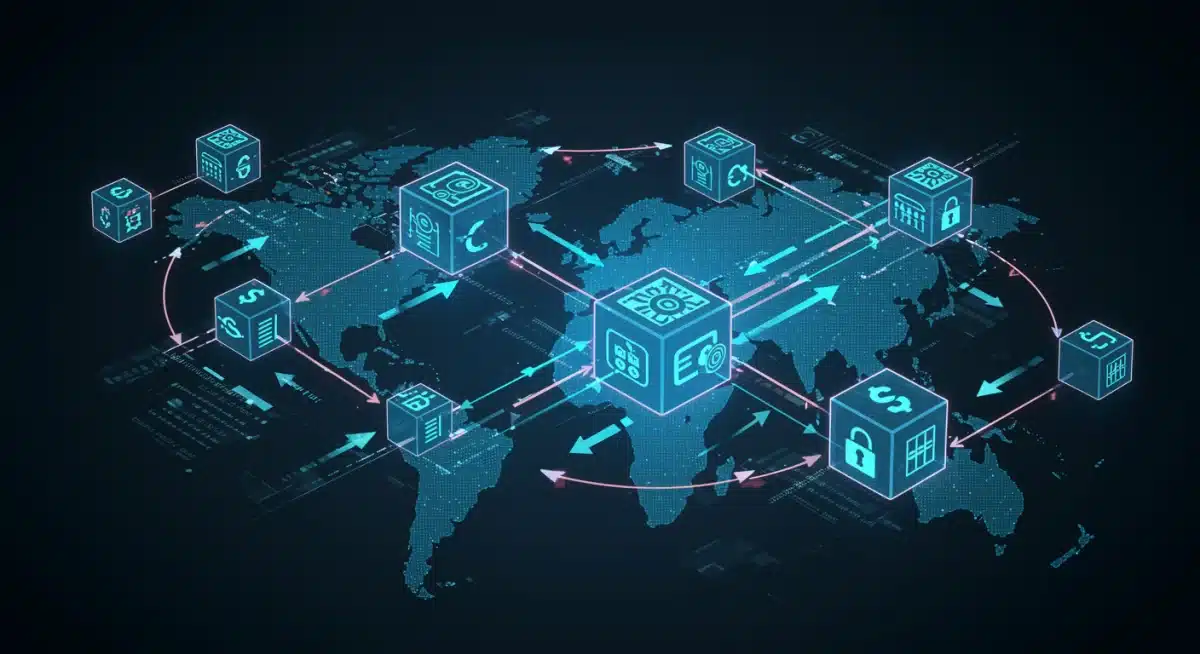
The ongoing development and refinement of these technologies, coupled with increasing industry adoption, are paving the way for a new era of efficiency and transparency in global financial transactions. US businesses actively embracing these innovations will be well-positioned to capitalize on the benefits of reduced settlement times.
Regulatory frameworks facilitating faster payments
While technological innovation provides the tools, robust and forward-thinking regulatory frameworks are essential to enable their effective and secure deployment. Governments and regulatory bodies in the US and globally are increasingly recognizing the importance of modernizing payment systems to support faster cross-border transactions.
Harmonization and standardization efforts
A key focus is on the harmonization of regulatory standards and payment messaging protocols. Conflicting regulations across jurisdictions can create bottlenecks and increase compliance costs, slowing down the very processes technology aims to accelerate. Initiatives like the global adoption of ISO 20022 messaging standards are crucial.
ISO 20022 offers a richer, more structured data format for payment messages, allowing for greater transparency and automation. This standardization facilitates easier communication between diverse payment systems and reduces the need for manual intervention, which often contributes to delays. US regulators are actively encouraging its adoption, understanding its role in a more efficient global payment ecosystem.
Furthermore, regulatory sandboxes and innovation hubs are becoming common tools to allow fintech companies to test new solutions in a controlled environment, fostering innovation while ensuring consumer protection and financial stability. This proactive approach helps regulators understand emerging technologies like blockchain and tailor regulations accordingly, rather than reacting after the fact.
- ISO 20022 Adoption: Standardized messaging for richer data and automation.
- Regulatory Sandboxes: Safe environments for testing new payment technologies.
- Cross-border Collaboration: International efforts to align payment regulations.
- AML/KYC Modernization: Streamlining compliance without compromising security.
The objective is to create a regulatory environment that supports innovation and efficiency without compromising anti-money laundering (AML) and know-your-customer (KYC) requirements. Regulators are exploring how DLT can actually enhance compliance by providing immutable audit trails and greater transparency, potentially simplifying complex checks that currently add time to cross-border transactions.
The collaboration between central banks, financial institutions, and payment service providers (PSPs) is also critical. Joint working groups and forums are dedicated to addressing interoperability challenges and developing common legal and operational frameworks for new payment technologies. This collaborative spirit is vital for building a truly integrated and fast cross-border payment infrastructure.
Impact on US businesses: operational efficiency and competitive advantage
Achieving a 20% reduction in cross-border digital payments settlement times by 2026 will have a profound and transformative impact on US businesses across various sectors. This efficiency gain translates directly into tangible benefits, from improved cash flow to enhanced global competitiveness.
Optimized cash flow and liquidity management
Faster settlement means businesses gain quicker access to incoming funds, significantly improving their cash flow. This enhanced liquidity allows companies to better manage their working capital, reduce reliance on short-term financing, and make more timely investment decisions. For businesses with extensive international operations, this can be a game-changer, freeing up capital that would otherwise be tied up in transit.
Reduced settlement times also minimize foreign exchange exposure. The shorter the time between initiating and settling a transaction, the less risk businesses face from adverse currency fluctuations. This predictability in financial planning is invaluable for managing global revenues and expenses.
Strengthened supply chains and international trade
- Faster Supplier Payments: Enables quicker payment to international suppliers, fostering stronger relationships and potentially securing better terms.
- Reduced Inventory Holding Costs: More efficient payment cycles can lead to optimized inventory management, reducing the need for large buffer stocks.
- Enhanced Trust: Prompt payments build trust with international partners, crucial for long-term collaborations.
- Expanded Market Access: Easier and faster international transactions lower barriers to entry for US businesses looking to expand into new global markets.
For supply chain-dependent industries, faster international payments mean goods can move more quickly, reducing lead times and improving overall operational efficiency. This can lead to lower inventory holding costs and a more responsive supply chain, allowing US businesses to adapt faster to market demands.
Furthermore, the ability to pay international partners faster and more reliably can improve supplier relationships, potentially leading to better pricing or service. In a competitive global landscape, such operational advantages can provide a significant edge.
Ultimately, the drive for faster cross-border digital payments is about empowering US businesses to operate more efficiently, intelligently, and competitively on the global stage. It’s about turning a historical friction point into a source of strategic advantage, fueling growth and innovation across the economy.
Challenges and considerations for adoption
While the benefits of faster cross-border digital payments are clear, achieving the 20% settlement time reduction by 2026 is not without its challenges. US businesses and the broader financial ecosystem must navigate several key considerations to ensure successful adoption and implementation.
Interoperability and standardization hurdles
One of the most significant challenges remains the fragmentation of payment systems globally. Different countries and regions often employ distinct payment infrastructures, regulatory requirements, and technical standards. Achieving seamless interoperability between these diverse systems is complex, requiring extensive collaboration and agreement among numerous stakeholders.
Even with the push for standards like ISO 20022, full adoption takes time and significant investment from financial institutions. Legacy systems, deeply embedded within many banks, can be difficult and costly to upgrade or replace, creating resistance to change. Bridging these technological gaps while ensuring secure and reliable data exchange is a continuous endeavor.
- Legacy System Integration: Overcoming challenges of connecting modern solutions with outdated banking infrastructure.
- Diverse Regulatory Landscapes: Navigating varying data privacy, AML, and consumer protection laws across jurisdictions.
- Technical Complexity: Ensuring secure and efficient communication between disparate DLT and RTP platforms.
- Cost of Implementation: Significant investment required for new technology adoption and system upgrades.
Regulatory compliance and risk management
As payments accelerate, so too does the need for robust regulatory compliance. Ensuring adherence to Anti-Money Laundering (AML), Know Your Customer (KYC), and sanctions screening requirements in near real-time poses a complex task. The speed of new payment rails must not come at the expense of financial integrity and security.
Cybersecurity risks also escalate with increased digitalization. Protecting sensitive financial data and preventing fraud in a real-time, cross-border environment requires continuous investment in advanced security protocols and threat detection systems. Businesses must be vigilant in safeguarding their transactions and customer information.
Furthermore, managing currency exchange rate volatility in a faster settlement environment requires sophisticated hedging strategies. While faster settlement reduces exposure time, the underlying volatility remains, and businesses need tools to mitigate this risk effectively.
Addressing these challenges requires a concerted effort from technology providers, financial institutions, regulators, and businesses themselves. Collaborative innovation, clear regulatory guidance, and a commitment to robust security will be crucial in realizing the full potential of faster cross-border digital payments.
The role of fintech innovation in achieving the 2026 target
Fintech companies are at the forefront of driving the advancements necessary to achieve the 20% reduction in cross-border digital payments settlement times by 2026. Their agile approach and focus on specialized solutions are disrupting traditional models and introducing unprecedented efficiencies.
Niche solutions and specialized platforms
Unlike traditional banks, fintechs often specialize in specific aspects of the payment ecosystem, developing highly efficient and user-friendly platforms. Many are leveraging APIs to seamlessly integrate with existing banking infrastructure while offering superior front-end experiences for businesses.
These platforms frequently offer direct access to real-time payment networks, optimize currency conversions, and provide enhanced analytics for tracking international transactions. Their ability to rapidly iterate and deploy new features gives them an edge in responding to evolving market demands for speed and transparency.
- API-First Approach: Seamless integration with existing business systems for automated payments.
- Optimized FX Solutions: Real-time currency conversion rates and transparent fee structures.
- Enhanced Analytics: Detailed tracking and reporting for international transactions.
- Faster Onboarding: Streamlined processes for businesses to access cross-border payment services.
Partnerships and collaboration with traditional financial institutions
While fintechs are disruptive, their greatest impact often comes through collaboration with established financial institutions. Many banks are partnering with fintech providers to integrate their innovative technologies, rather than building everything from scratch. This synergy combines the fintech’s agility with the bank’s regulatory expertise, trust, and extensive customer base.
These partnerships can lead to hybrid solutions that offer the best of both worlds: the speed and efficiency of fintech innovation coupled with the security and compliance rigor of traditional banking. This collaborative ecosystem is crucial for widespread adoption and for ensuring that new payment rails are reliable and meet regulatory standards.
The continuous innovation from the fintech sector, whether through independent solutions or strategic partnerships, is indispensable for pushing the boundaries of what’s possible in cross-border payments. Their relentless pursuit of efficiency and customer-centric design will be a primary catalyst in reaching the ambitious 2026 settlement time reduction goal for US businesses.
Future outlook: beyond 2026 for cross-border payments
As US businesses strive for and eventually achieve the 20% reduction in cross-border digital payments settlement times by 2026, the trajectory of innovation will not stop there. The landscape of international payments is continuously evolving, with exciting prospects on the horizon that promise even greater efficiency and integration.
Further reduction in settlement times and instant global payments
The 2026 target is likely just a stepping stone towards near-instant global payments. As DLT and real-time payment networks become more mature and universally adopted, the aspiration for settlement times measured in seconds, rather than hours or days, will become a reality for an increasing volume of transactions. This will effectively eliminate the concept of “settlement risk” for many international transfers.
The development of central bank digital currencies (CBDCs) and their cross-border interoperability initiatives could also play a pivotal role in this future. If major economies launch interoperable CBDCs, it could create a direct, real-time rail for international transactions that is both secure and highly efficient, bypassing many of the current complexities.
Hyper-automation and AI in payment processing
- AI-driven Fraud Detection: Sophisticated AI models will enhance real-time fraud detection and prevention.
- Automated Reconciliation: AI and machine learning will further automate reconciliation processes, reducing manual errors.
- Predictive Analytics: AI will provide insights into payment flows, optimizing liquidity and currency management.
- Smart Contract Integration: Payments triggered automatically upon fulfillment of contractual conditions.
Artificial intelligence and machine learning will play an increasingly significant role in automating various aspects of cross-border payment processing. From intelligent routing of payments to optimize for speed and cost, to enhanced fraud detection and compliance checks, AI will streamline operations and reduce the need for human intervention.
Hyper-automation, combining AI, robotic process automation (RPA), and other advanced technologies, will create end-to-end automated payment workflows. This will not only accelerate processing but also significantly reduce operational costs and human error, making cross-border transactions virtually seamless.
The future of cross-border payments for US businesses is one of continuous evolution towards greater speed, transparency, and intelligence. The achievements by 2026 will lay a strong foundation for a truly integrated and hyper-efficient global financial ecosystem, empowering businesses to operate without the traditional constraints of geographical distance and time zones.
| Key Point | Brief Description |
|---|---|
| 2026 Settlement Goal | US businesses aim to reduce cross-border payment settlement times by 20%. |
| Technology Drivers | Blockchain, DLT, and real-time payment networks are key accelerators. |
| Business Impact | Improved cash flow, stronger supply chains, and enhanced global competitiveness. |
| Challenges Ahead | Interoperability, legacy systems, and complex regulatory compliance. |
Frequently asked questions about cross-border digital payments
Reducing settlement times is crucial for improving cash flow, enhancing liquidity management, and strengthening supply chain efficiency. Faster payments minimize capital tied up in transit, reduce foreign exchange risk, and boost overall operational agility, providing a significant competitive advantage in the global market.
>
Key technologies include blockchain and distributed ledger technology (DLT), which offer transparent, secure, and near real-time transaction processing. Additionally, the expansion and interoperability of real-time payment (RTP) networks are enabling instant fund availability across different international systems, revolutionizing payment speed.
Regulatory bodies are fostering faster payments through harmonization of standards like ISO 20022, which provides richer data and automation. They also utilize regulatory sandboxes to test new fintech solutions and collaborate internationally to align compliance and security protocols, ensuring innovation occurs within a secure and regulated environment.
Challenges include achieving interoperability between diverse global payment systems and overcoming integration issues with legacy banking infrastructure. Businesses also grapple with complex regulatory compliance for AML/KYC in real-time environments and managing increased cybersecurity risks associated with digital transactions.
Fintechs are pivotal, developing niche solutions and specialized platforms that leverage APIs for seamless integration and optimized FX. Their agile innovation and willingness to partner with traditional financial institutions accelerate the adoption of new payment technologies, driving the industry towards the 20% settlement time reduction by 2026.
Conclusion
The journey towards reducing cross-border digital payments settlement times by 20% for US businesses by 2026 is an ambitious yet achievable goal. Fueled by relentless technological innovation, supportive regulatory frameworks, and the agility of the fintech sector, this transformation promises to redefine global commerce. The benefits extend far beyond mere speed, touching upon enhanced operational efficiency, optimized cash flow, and a significant boost to the competitive standing of US enterprises on the international stage. While challenges remain, particularly around interoperability and regulatory alignment, the collaborative efforts across the financial ecosystem are paving the way for a more integrated, transparent, and almost instantaneous future for cross-border transactions. This evolution is not just about payments; it’s about empowering businesses to thrive in an increasingly interconnected world.