Series A Funding 2026: Fintech Startup Valuation Insights

Navigating Series A Funding in 2026: What US Fintech Startups Need to Know About Investor Valuations (INSIDER KNOWLEDGE)
The landscape of venture capital, particularly for the vibrant US fintech sector, is in constant flux. As we cast our gaze towards 2026, securing Series A funding remains a pivotal milestone for promising startups. However, the path to successful capital acquisition is paved with intricate considerations, none more critical than understanding investor valuations. For US fintech startups, decoding the expectations and methodologies of venture capitalists is not just an advantage; it’s a necessity for survival and growth. This comprehensive guide delves deep into the nuances of fintech Series A valuation, offering insider knowledge to help you navigate this complex terrain.
The journey from seed to Series A is transformative. It signifies a startup’s transition from an idea or early-stage product to a proven concept with demonstrable traction. For fintech companies, this often means moving beyond a minimum viable product (MVP) to a robust platform with a growing user base, clear revenue streams, and a viable path to scalability. Investors at the Series A stage are looking for more than just potential; they demand evidence of execution, market fit, and a compelling vision for future dominance.
Understanding the intricacies of fintech Series A valuation is paramount. It’s not merely about assigning a monetary figure to your company; it’s about articulating your value proposition in a language that resonates with sophisticated investors. This involves a blend of quantitative analysis, qualitative storytelling, and a keen awareness of prevailing market conditions and investor appetites. As 2026 approaches, certain trends are solidifying, making it even more crucial for founders to be well-versed in valuation methodologies and negotiation strategies.
The Evolving Landscape of Fintech Series A Valuation in 2026
The fintech sector has experienced explosive growth over the past decade, driven by technological innovation, shifting consumer behaviors, and a demand for more efficient and accessible financial services. This growth, however, has also led to increased competition and a more discerning investor base. In 2026, venture capitalists evaluating US fintech startups for Series A funding will be operating with a refined lens, focusing on sustainable growth, defensible moats, and clear paths to profitability.
Key Drivers of Fintech Valuation
Several factors coalesce to determine a fintech company’s valuation at the Series A stage. While every startup is unique, common threads run through successful funding rounds. These drivers are not static; they evolve with market dynamics and technological advancements. Founders must understand how each component contributes to their overall valuation narrative.
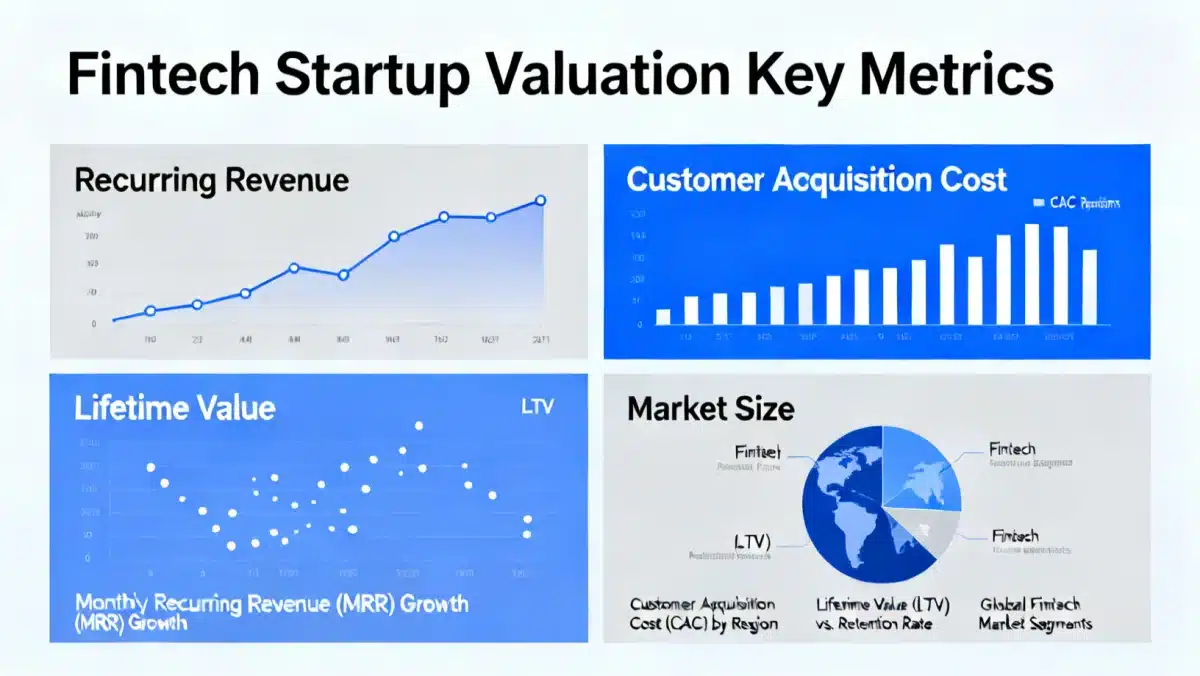
- Revenue Growth and Predictability: For fintech, recurring revenue models (subscriptions, transaction fees, AUM-based fees) are highly prized. Investors want to see consistent, strong month-over-month or quarter-over-quarter growth. Furthermore, the predictability of this revenue stream, often tied to sticky customer relationships, significantly enhances valuation.
- Customer Acquisition Cost (CAC) and Lifetime Value (LTV): The efficiency with which a fintech startup acquires customers and the long-term value those customers bring are critical. A low CAC combined with a high LTV indicates a sustainable and profitable business model, making the company highly attractive to investors.
- Market Opportunity and Total Addressable Market (TAM): A large and growing TAM is essential. Investors want to know that the market is big enough to support significant scale and that your fintech solution can capture a substantial portion of it. This often involves demonstrating a clear understanding of market trends and competitive landscapes.
- Technology and Product Innovation: The underlying technology, its defensibility, and its innovation are paramount. Is your product solving a unique problem? Does it leverage cutting-edge AI, blockchain, or data analytics in a differentiated way? Proprietary technology that creates a barrier to entry for competitors adds considerable value.
- Team Experience and Expertise: A strong, experienced, and cohesive founding team with relevant industry expertise is a huge asset. Investors bet on people as much as ideas. A team that has a proven track record of execution and a deep understanding of the financial services sector instills confidence.
- Regulatory Compliance and Risk Management: Fintech operates in a heavily regulated environment. A clear strategy for navigating compliance, managing regulatory risks, and demonstrating a commitment to security and data privacy is non-negotiable. Proactive engagement with regulatory frameworks can be a significant de-risking factor.
- Unit Economics: Beyond overall revenue, investors scrutinize unit economics. This means understanding the profitability of each customer or transaction. Positive unit economics indicate a scalable business model that can generate profit as it grows.
- Network Effects and Moats: Does your fintech solution exhibit network effects, where the value of the product increases with each new user? Or does it possess other defensible moats, such as proprietary data, exclusive partnerships, or strong brand loyalty? These factors create sustainable competitive advantages and justify higher valuations.
Valuation Methodologies for Fintech Series A
While the drivers listed above inform the valuation, venture capitalists employ specific methodologies to arrive at a tangible figure. Founders should be familiar with these approaches to effectively communicate their worth and negotiate terms.
1. The Scorecard Method
Often used in earlier stages, the scorecard method compares the target startup to other funded startups in the region and industry. It involves assigning a weighted score based on factors like management team, market size, product/technology, competitive environment, marketing/sales, and need for additional funding. This provides a qualitative adjustment to an average pre-money valuation of similar companies.
2. The Venture Capital Method
This method works backward from a projected exit valuation. Investors estimate the terminal value of the company (e.g., in 5-7 years) and then discount it back to the present day using a target rate of return (e.g., 20-50% for Series A). This approach heavily relies on robust financial projections and a clear exit strategy.
3. Comparable Company Analysis (Comps)
This involves analyzing the valuations of recently funded or acquired companies in the fintech space that are similar in terms of business model, stage, and market. Multiples (e.g., revenue multiples, EBITDA multiples) from these comparable companies are then applied to the target startup’s financial metrics. The challenge here is finding truly comparable private companies, as data can be scarce.
4. Discounted Cash Flow (DCF) Analysis
While typically more challenging for early-stage startups with uncertain cash flows, a well-constructed DCF can be valuable. It projects future free cash flows and discounts them back to the present value. For Series A fintech, this often requires significant assumptions and a clear path to profitability.
5. Traction and Metrics-Based Valuation
For fintech, specific metrics often take center stage. These include:
- Annual Recurring Revenue (ARR) or Monthly Recurring Revenue (MRR) multiples: A common benchmark, especially for SaaS-based fintechs.
- Assets Under Management (AUM) multiples: Relevant for wealthtech or asset management platforms.
- Transaction Volume/Value: Key for payment processing or lending platforms.
- Number of Active Users/Customers: Essential for consumer-facing fintechs.
Investors will often apply a multiple to these key metrics, adjusting based on growth rates, market conditions, and profitability.
Strategic Considerations for US Fintech Founders in 2026
Beyond understanding the mechanics of valuation, founders must adopt strategic approaches to maximize their company’s appeal and secure favorable terms. The Series A round is not just about capital; it’s about partnering with investors who bring strategic value, network connections, and mentorship.
1. Build a Robust Data Room
Preparation is key. A well-organized, comprehensive data room that showcases your company’s performance, legal documents, intellectual property, and financial projections will streamline the due diligence process and demonstrate professionalism. This includes detailed information on:
- Historical and projected financial statements (P&L, Balance Sheet, Cash Flow)
- Key performance indicators (KPIs) dashboard (CAC, LTV, churn, growth rates)
- Customer testimonials and case studies
- Product roadmap and technology stack
- Legal documents (incorporation, cap table, material contracts)
- Team biographies and organizational chart
2. Craft a Compelling Narrative
Numbers tell a story, but a compelling narrative brings it to life. Articulate your vision, the problem you’re solving, your unique solution, and why your team is uniquely positioned to execute. This narrative should be consistent across your pitch deck, executive summary, and all investor communications. Emphasize your unique selling proposition (USP) and how you differentiate from competitors in the crowded fintech space.
3. Understand Your Market Positioning
Be acutely aware of where your fintech company stands within the broader market. Are you a disruptor, an enabler, or a niche player? How do you compare to direct and indirect competitors? A clear understanding of your market positioning will help you articulate your value and justify your valuation expectations. For example, if you are targeting an underserved segment, highlight the strong demand and lack of viable alternatives.
4. Focus on Growth and Efficiency
While growth is always important, investors in 2026 are increasingly scrutinizing capital efficiency. Can you achieve significant growth without burning through excessive amounts of cash? Demonstrate a clear path to profitability and sustainable unit economics. Show how your marketing and sales efforts are optimized for ROI.
5. Engage with the Right Investors
Not all VCs are created equal, especially in fintech. Seek out investors who have a deep understanding of the financial services industry, a track record of successful fintech investments, and a network that can benefit your company. Aligning with the right partners can provide invaluable strategic guidance and open doors to future opportunities. Research their portfolio companies, their investment thesis, and the value they bring beyond capital.
6. Prepare for Rigorous Due Diligence
Series A due diligence is thorough. Expect investors to scrutinize every aspect of your business, from your technology stack and cybersecurity measures to your legal compliance and customer contracts. Be transparent and proactive in addressing potential concerns. Having a clean cap table and well-documented intellectual property will significantly smooth this process.
7. Negotiate Wisely
Valuation is just one component of term sheet negotiation. Understand the implications of liquidation preferences, anti-dilution clauses, board composition, and vesting schedules. Seek legal counsel experienced in venture capital deals to ensure you understand all terms and protect your interests. Remember that a lower valuation with favorable terms can sometimes be better than a higher valuation with onerous conditions.
The Importance of Timing and Market Conditions
The broader economic environment and specific market conditions within the fintech sector play a significant role in Series A valuations. In times of economic uncertainty or tighter capital markets, investors may become more risk-averse, leading to lower valuations and stricter terms. Conversely, in buoyant markets, valuations can soar. Being aware of these cycles and strategically timing your fundraising efforts can be crucial.
Navigating Macroeconomic Headwinds
As we approach 2026, potential macroeconomic headwinds, such as inflation, interest rate fluctuations, or geopolitical instability, could influence investor sentiment. Fintech startups should model various scenarios and demonstrate resilience in their business plans. Proving that your business can thrive even in challenging economic climates will make you a more attractive investment.
Sector-Specific Trends
Within fintech, certain sub-sectors may experience greater investor interest than others. For example, embedded finance, B2B fintech solutions, sustainable finance (ESG fintech), and AI-driven personalized financial services are likely to remain hot areas. Position your company to capitalize on these trends if applicable, or clearly articulate your value proposition within your specific niche.
Common Pitfalls to Avoid in Series A Funding
Even well-prepared startups can stumble. Being aware of common pitfalls can help founders sidestep potential deal-breakers.
1. Overvaluation Expectations
While confidence is good, unrealistic valuation expectations can deter investors. Be grounded in market realities and be prepared to justify your valuation with data and compelling projections. Over-optimistic projections without a clear execution path will raise red flags.
2. Lack of Data and Metrics
Failing to track and present key metrics effectively is a common mistake. Investors rely heavily on data to make informed decisions. Ensure your data is clean, consistent, and easily digestible.
3. Weak Team Dynamics
Disagreements among founders, lack of clear roles, or a team that doesn’t inspire confidence can be a major deterrent. Investors are backing the team as much as the idea.
4. Neglecting Legal and Regulatory Compliance
Fintech is highly regulated. Any signs of non-compliance or a casual attitude towards legal requirements can immediately kill a deal. Proactive engagement with legal counsel and regulatory experts is vital.
5. Poor Communication and Follow-up
Responsiveness, clarity, and professionalism in all communications with potential investors are critical. Delays, vague answers, or unprofessional conduct can quickly sour a relationship.

Post-Funding Expectations and Growth Trajectory
Securing Series A funding is not the finish line; it’s the starting gun for the next phase of intense growth and execution. Investors will have clear expectations regarding milestones, reporting, and strategic direction. Founders must be prepared to deliver on their promises and maintain transparent communication.
Accountability and Reporting
Post-Series A, expect regular board meetings and detailed reporting. This typically includes monthly or quarterly updates on financial performance, key metrics, hiring progress, product development, and strategic initiatives. Maintaining a strong relationship with your investors through consistent, honest communication is crucial for future funding rounds and overall success.
Scaling Operations
The capital raised in Series A is intended to fuel significant scaling. This involves expanding your team, investing in product development, entering new markets, and aggressively growing your customer base. Founders must have a clear operational plan for how they will deploy the capital to achieve these growth objectives efficiently.
Strategic Partnerships and M&A
Series A funding often opens doors to strategic partnerships that can accelerate growth or even lead to future M&A opportunities. Investors, with their extensive networks, can play a pivotal role in facilitating these connections. Being open to exploring such avenues, while staying true to your core vision, can be a powerful growth lever.
Conclusion: Mastering Fintech Series A Valuation in 2026
For US fintech startups eyeing Series A funding in 2026, success hinges on a sophisticated understanding of investor expectations, valuation methodologies, and strategic execution. It’s a complex dance between demonstrating past traction, articulating future potential, and negotiating terms that align with your long-term vision.
By focusing on robust revenue growth, efficient customer acquisition, a defensible technology stack, and an exceptional team, fintech founders can build a compelling case for investment. Proactive preparation, a clear and honest narrative, and strategic engagement with the right investors will not only help secure the necessary capital but also lay a strong foundation for sustainable growth and future success in the dynamic world of financial technology.
Remember, the journey to Series A is challenging but incredibly rewarding. With the right knowledge and strategic approach to fintech Series A valuation, your startup can successfully unlock the capital required to scale new heights and revolutionize the financial landscape.