Series A Funding for US Fintech: Early 2026 Investor Guide

Attracting Series A investors in early 2026 requires US fintech startups to demonstrate robust product-market fit, innovative technological differentiation, and clear pathways to scalable revenue, alongside a strong, experienced leadership team.
Navigating the competitive landscape of early-stage funding can be daunting, but for US fintech startups, securing a Series A Fintech Funding round in early 2026 is a pivotal step towards scaling and market dominance. This guide offers an insider’s look into what venture capitalists are actively seeking, providing actionable insights to help your startup stand out.
Understanding the Early 2026 Investor Landscape
The venture capital market for fintech in early 2026 is characterized by a discerning approach, prioritizing sustainability and clear value propositions over rapid growth at all costs. Investors are increasingly risk-averse but remain eager to back innovative solutions addressing genuine market needs. The macroeconomic climate, while stabilizing, still influences funding decisions, leading to a focus on efficient capital deployment.
Fintech startups must demonstrate not just potential, but tangible progress and a resilient business model. The era of inflated valuations based solely on user acquisition without clear monetization paths is largely behind us. Instead, VCs are scrutinizing unit economics, customer lifetime value, and the true cost of acquisition with greater intensity than ever before.
Key Shifts in Investor Focus
- Profitability Pathways: A clear, defensible roadmap to profitability is paramount, showing how the startup will achieve positive cash flow within a reasonable timeframe.
- Capital Efficiency: Startups that can achieve significant milestones with less capital burn are highly attractive.
- Defensible Moats: Proprietary technology, strong network effects, or unique regulatory advantages are crucial for long-term success.
- ESG Integration: Environmental, Social, and Governance factors are increasingly considered, reflecting a broader shift in investment philosophy.
The early 2026 investor landscape demands a strategic, data-driven approach to fundraising. Gone are the days when a compelling vision alone sufficed; today’s investors want to see that vision underpinned by solid execution and a deep understanding of market dynamics.
Product-Market Fit and Traction: The Non-Negotiables
For any US fintech startup seeking Series A funding, proving strong product-market fit (PMF) is not merely a suggestion; it’s a fundamental requirement. This means demonstrating that your product effectively solves a significant problem for a clearly defined customer segment, and that customers are actively using and deriving value from it. Traction metrics serve as the undeniable proof of this fit.
Investors in early 2026 are looking beyond vanity metrics. They want to see consistent, organic growth in active users, high retention rates, and evidence of increasing engagement over time. These indicators suggest that your product resonates with its target audience and has the potential for sustainable expansion. Without compelling traction, even the most innovative technology will struggle to secure Series A capital.
Essential Traction Metrics to Showcase
- Monthly Recurring Revenue (MRR) / Annual Recurring Revenue (ARR): For subscription-based models, consistent growth here is critical.
- Customer Acquisition Cost (CAC) & Customer Lifetime Value (CLTV): A healthy ratio (CLTV:CAC > 3:1) indicates a sustainable growth engine.
- Retention and Churn Rates: Low churn and high retention demonstrate customer satisfaction and stickiness.
- Transaction Volume/Value: For payment or transaction-based fintechs, showing increasing activity is vital.
Beyond the numbers, be prepared to articulate the qualitative aspects of your PMF. Share customer testimonials, case studies, and stories that illustrate the impact your product has on users’ lives or businesses. This blend of quantitative data and qualitative evidence creates a powerful narrative for investors.
Technological Innovation and Scalability
Fintech, by its very nature, is driven by technology. For US fintech startups eyeing Series A in early 2026, demonstrating genuine technological innovation is paramount. This isn’t just about using the latest buzzwords; it’s about leveraging technology to create a superior product, achieve operational efficiencies, or unlock new market opportunities that wouldn’t otherwise be possible. Investors are looking for defensible technology that provides a competitive edge.
Scalability is equally crucial. A Series A investment is designed to help a startup grow significantly. Therefore, your technology architecture must be robust enough to handle exponential increases in users, data, and transactions without compromising performance or security. This often means investing in cloud-native solutions, microservices architectures, and advanced data processing capabilities from the outset.
What Investors Expect from Your Tech Stack
- Proprietary Technology: Highlight any unique algorithms, AI models, or data processing techniques that set you apart.
- Security & Compliance: Given the sensitive nature of financial data, robust cybersecurity measures and a clear understanding of regulatory compliance (e.g., GDPR, CCPA, state-specific regulations) are non-negotiable.
- API-First Approach: Demonstrating an ability to integrate seamlessly with other platforms or offer your services via APIs can significantly enhance market reach.
- Future-Proofing: Discuss how your technology can adapt to future changes in market demands and regulatory landscapes.
A strong technology team, experienced in building scalable and secure financial systems, is also a significant selling point. Investors want to be confident that the team can execute on the technical vision and maintain a competitive advantage as the company grows.
Team and Leadership: The Human Factor
While product, market, and technology are critical, the team behind the US fintech startup often represents the most significant factor for Series A investors in early 2026. Investors aren’t just backing an idea; they’re backing the people who will execute that idea. A strong, cohesive, and experienced leadership team instills confidence and mitigates execution risk.
Diversity in experience, skills, and perspectives within the founding and leadership team is increasingly valued. This includes a blend of financial services expertise, technological prowess, marketing acumen, and operational experience. Each member should bring a unique and complementary skill set that addresses key areas of the business, demonstrating a holistic approach to building and scaling the company.
Key Attributes of an Investable Team
- Domain Expertise: Deep understanding of the financial industry and the specific niche your fintech addresses.
- Execution Track Record: Evidence of past successes, either in previous ventures or significant achievements within corporate roles.
- Resilience & Adaptability: The ability to navigate challenges, pivot when necessary, and learn from failures.
- Clear Vision & Communication: The capacity to articulate the company’s mission, strategy, and progress effectively to investors and employees alike.
Furthermore, investors will assess the team’s ability to attract and retain top talent. A compelling company culture and a clear hiring strategy are important indicators of future success. The human element remains central to investment decisions, proving that even in a technology-driven sector, people make the difference.
Market Opportunity and Competitive Advantage
When pitching for Series A Fintech Funding in early 2026, US fintech startups must clearly define the market opportunity they are addressing. This includes quantifying the total addressable market (TAM), serviceable available market (SAM), and serviceable obtainable market (SOM). Investors want to see that the market is large enough to support significant growth and generate substantial returns.
Equally important is articulating your competitive advantage. In a crowded fintech landscape, simply having a good product isn’t enough. You must demonstrate what makes your solution uniquely better or different from existing players, including both traditional financial institutions and other emerging fintechs. This could stem from superior technology, a differentiated business model, unique data insights, or a more efficient distribution channel.
Defining Your Market & Edge
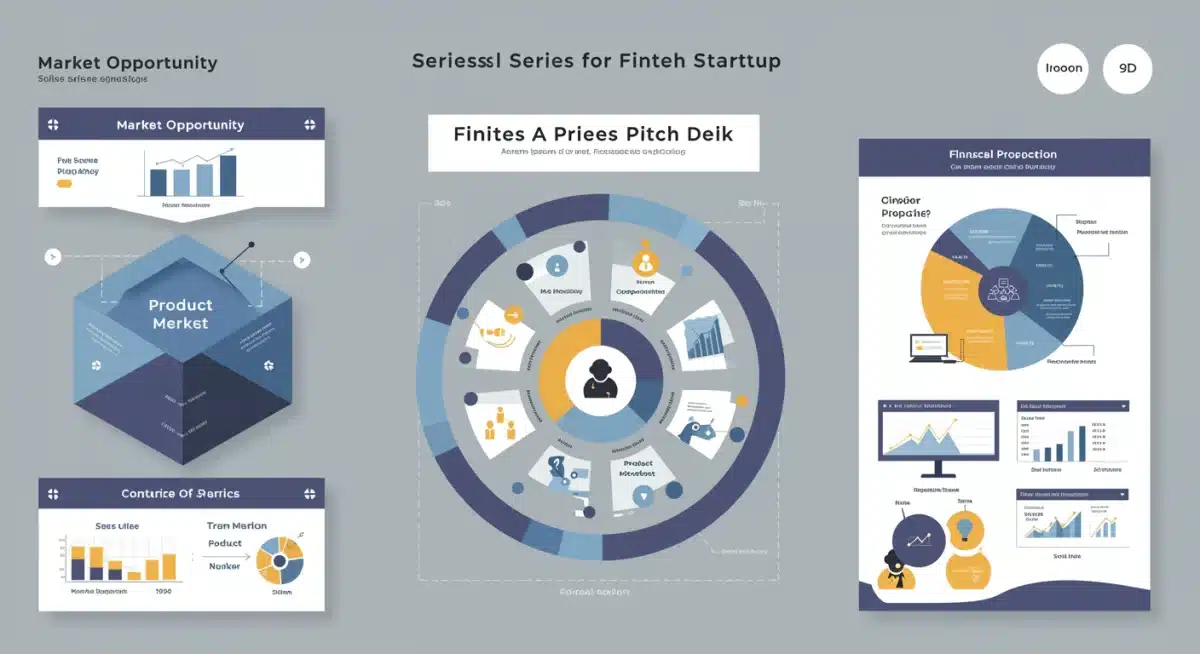
Identifying a niche within the broader fintech market can often lead to a more compelling value proposition. Instead of trying to be everything to everyone, focusing on a specific underserved segment allows for deeper penetration and stronger product-market fit. This targeted approach can also reduce customer acquisition costs and build a loyal user base.
- Market Size Validation: Present robust data and research to support your market size claims.
- Unique Value Proposition: Clearly state what makes your offering distinct and superior.
- Barrier to Entry: Explain how you will create and maintain a defensible position against competitors.
- Go-to-Market Strategy: Outline your plan to acquire customers and scale operations effectively within your chosen market.
Ultimately, investors seek startups that not only understand their market but also possess a clear, sustainable strategy to dominate a significant portion of it. This requires a deep dive into competitor analysis, understanding their strengths and weaknesses, and positioning your startup to exploit market gaps.
Financial Projections and Exit Strategy
For US fintech startups seeking Series A funding in early 2026, robust financial projections and a well-thought-out exit strategy are critical components of a compelling pitch. While early-stage projections are inherently uncertain, they must be grounded in realistic assumptions and demonstrate a clear path to significant revenue growth and, eventually, profitability. Investors want to see that you understand the levers of your business and how they translate into financial performance.
Your financial model should detail key metrics such as revenue forecasts, operating expenses, cash burn, and key performance indicators (KPIs) that align with your business model. Be prepared to defend your assumptions and show how different scenarios might impact your financial outlook. Transparency and a conservative approach often build more trust than overly optimistic, unsubstantiated claims.
Crafting Your Financial Narrative
- Detailed Revenue Streams: Clearly outline how your startup generates revenue and project its growth based on current traction and market expansion.
- Expense Breakdown: Provide a granular view of your operational costs, demonstrating capital efficiency and cost management.
- Unit Economics: Show a clear understanding of the profitability of each customer or transaction.
- Funding Utilization: Explain precisely how the Series A capital will be deployed to achieve specific milestones and accelerate growth.
Furthermore, while an exit might be several years away, investors will want to understand potential pathways for their return on investment. This includes discussing potential acquisition targets, industry consolidation trends, or the long-term vision for an IPO. A credible exit strategy demonstrates that you are thinking strategically about the company’s ultimate value creation.
Regulatory Compliance and Risk Management
In the highly regulated financial sector, US fintech startups must demonstrate a proactive and comprehensive approach to regulatory compliance and risk management when seeking Series A funding in early 2026. Investors are acutely aware of the potential for regulatory hurdles to derail even the most promising fintech ventures. A clear understanding of and adherence to relevant laws and regulations instills confidence and minimizes perceived risk.
This includes compliance with federal and state-specific financial regulations, data privacy laws (like CCPA or emerging state-level privacy acts), and anti-money laundering (AML) and know-your-customer (KYC) requirements. Proactively building a compliance framework into your product and operations from day one is far more effective and less costly than retrofitting it later. Investors will scrutinize your approach to these critical areas.
Navigating the Regulatory Landscape
- Dedicated Compliance Officer/Team: Highlight whether you have internal expertise or external counsel dedicated to regulatory adherence.
- Robust Internal Controls: Detail the systems and processes in place to prevent fraud, manage data, and ensure operational integrity.
- Data Security Protocols: Explain your cybersecurity measures and data encryption practices, crucial for protecting sensitive financial information.
- Regulatory Filings & Licenses: If applicable, discuss any licenses obtained or pending, and your strategy for navigating the regulatory approval process.
Demonstrating a strong risk management framework, including how you identify, assess, and mitigate operational, financial, and reputational risks, is also vital. This shows maturity and foresight, assuring investors that your startup is built on a solid, compliant foundation capable of navigating the complexities of the financial industry.
The Art of the Pitch and Due Diligence Readiness
Beyond all the strategic, technical, and financial preparations, the actual pitch and subsequent due diligence process for Series A Fintech Funding in early 2026 are crucial. Your pitch deck is not just a collection of slides; it’s a narrative that tells your startup’s story, highlights its achievements, and outlines its future potential. It must be concise, compelling, and tailored to the specific investors you are engaging.
Practice your pitch relentlessly, ensuring that every team member involved can articulate the company’s vision, market opportunity, and competitive advantages with clarity and conviction. Be prepared for rigorous questioning and anticipate potential objections. This demonstrates confidence and a deep understanding of your business.
Preparing for Due Diligence
- Data Room Organization: Have a well-structured and comprehensive data room ready with all necessary legal, financial, operational, and technical documents.
- Financial Model Scrutiny: Be ready to walk investors through your financial projections, defending assumptions and explaining sensitivities.
- Customer References: Prepare to provide access to satisfied customers who can vouch for your product and service.
- Technical Deep Dives: Your tech lead should be prepared to discuss architecture, security, and scalability in detail.
The due diligence phase is where investors validate everything you’ve presented. Transparency, honesty, and a willingness to provide complete information are paramount. Any red flags or inconsistencies can quickly erode trust and jeopardize the deal. Approaching this phase with meticulous preparation and an open mindset is key to securing that coveted Series A investment.
| Key Investment Area | Investor Focus in Early 2026 |
|---|---|
| Product-Market Fit | Demonstrate strong user engagement, retention, and clear value proposition with compelling traction metrics. |
| Technological Edge | Showcase proprietary, scalable technology with robust security, offering a defensible competitive advantage. |
| Team Expertise | Highlight a diverse, experienced leadership team with a proven track record and clear vision. |
| Financial Clarity | Provide realistic, data-backed projections and a clear understanding of unit economics and capital efficiency. |
Frequently Asked Questions About Series A Fintech Funding
Valuations for Series A fintech startups in early 2026 can vary widely, typically ranging from $20 million to $80 million pre-money, depending on market traction, revenue, team experience, and the specific market segment. Exceptional growth and strong competitive moats can command higher valuations.
A typical Series A round for a US fintech startup aims to raise between $5 million and $20 million. The exact amount should be sufficient to fund 18-24 months of operations, hit key milestones, and demonstrate significant progress towards Series B metrics.
Common reasons for failure include insufficient product-market fit, weak or unproven traction metrics, an undifferentiated product, an inexperienced team, unrealistic financial projections, or a lack of clear understanding of the regulatory landscape. Poor communication during the pitch also plays a role.
Regulatory compliance is critically important. Fintech operates in a highly regulated environment, and investors view a robust compliance framework as essential for mitigating risk. Startups must demonstrate a clear strategy for adhering to all relevant financial and data privacy regulations.
While not always strictly mandatory, having demonstrable revenue, even if modest, significantly strengthens a Series A pitch. It provides tangible proof of product-market fit and validates the business model, making the startup much more attractive to discerning investors in early 2026.
Conclusion
Securing Series A funding for a US fintech startup in early 2026 is a complex endeavor that demands meticulous preparation and a deep understanding of investor expectations. From demonstrating undeniable product-market fit and showcasing cutting-edge, scalable technology to assembling an exceptional team and presenting clear financial pathways, every aspect of your business will be under scrutiny. By proactively addressing these critical areas and preparing for rigorous due diligence, fintech founders can significantly enhance their chances of attracting the capital needed to transform their innovative visions into market-leading realities.