FedNow 2026 Expansion: Real-Time Payments for US Businesses

Unpacking FedNow’s 2026 Expansion: What US Businesses Need to Know for Real-Time Payments Adoption
The financial landscape in the United States is on the cusp of a monumental transformation. With the Federal Reserve’s FedNow Service already operational, its upcoming FedNow 2026 expansion is poised to redefine how US businesses manage and execute payments. This isn’t just an incremental update; it’s a foundational shift towards pervasive real-time payments, promising unprecedented speed, efficiency, and innovation across various sectors. For businesses, understanding and preparing for this expansion is not merely an option but a strategic imperative to maintain competitiveness and unlock new growth opportunities.
The advent of real-time payment systems like FedNow marks a significant departure from traditional payment rails, which often involve delays, batch processing, and limited operating hours. Imagine a world where payments clear instantly, 24/7, 365 days a year, with immediate confirmation for both sender and receiver. This is the promise of FedNow, and its full realization by 2026 will have far-reaching implications for everything from payroll processing and supply chain management to customer invoicing and treasury operations. This comprehensive guide will delve into the intricacies of the FedNow 2026 expansion, exploring its core functionalities, the benefits it offers, the challenges businesses might face, and crucial strategies for successful adoption.
Understanding the FedNow Service: A Primer
Before diving into the FedNow 2026 expansion, it’s essential to grasp the fundamentals of the FedNow Service itself. Launched in July 2023, FedNow is an instant payment infrastructure developed by the Federal Reserve. It enables financial institutions of all sizes to offer real-time payment services to their customers, facilitating immediate transfer of funds between accounts at participating institutions. Unlike existing payment systems like ACH or wire transfers, FedNow operates around the clock, with payments settling in seconds, not hours or days. This continuous availability and immediate finality are game-changers.
Key Characteristics of FedNow:
- 24/7/365 Availability: Payments can be sent and received at any time, including weekends and holidays.
- Instant Settlement: Funds are made available to the recipient almost immediately, typically within seconds.
- Payment Confirmation: Both sender and receiver receive instant confirmation of payment.
- Overlay Services: FedNow supports a range of innovative overlay services, such as Request for Payment (RfP), which allows a payee to request a payment from a payer, simplifying billing and collection processes.
- Fraud Mitigation Tools: Built-in features and best practices are designed to help mitigate fraud and ensure security.
- Accessibility: Designed to be accessible to financial institutions of all sizes, promoting broad adoption across the US financial system.
The initial rollout of FedNow focused on building the foundational infrastructure and onboarding early adopters. The FedNow 2026 expansion signifies a more mature phase, where the goal is widespread adoption and integration into the daily operations of a vast majority of US businesses and consumers. This expansion will likely involve a greater number of participating financial institutions, enhanced functionalities, and a more robust ecosystem of third-party providers offering value-added services built on FedNow.
The Significance of the FedNow 2026 Expansion for US Businesses
The FedNow 2026 expansion is not just a technical upgrade; it represents a paradigm shift in business operations. For US businesses, this means a complete re-evaluation of current payment strategies and processes. The benefits are numerous and span across various aspects of business management.
Enhanced Cash Flow Management
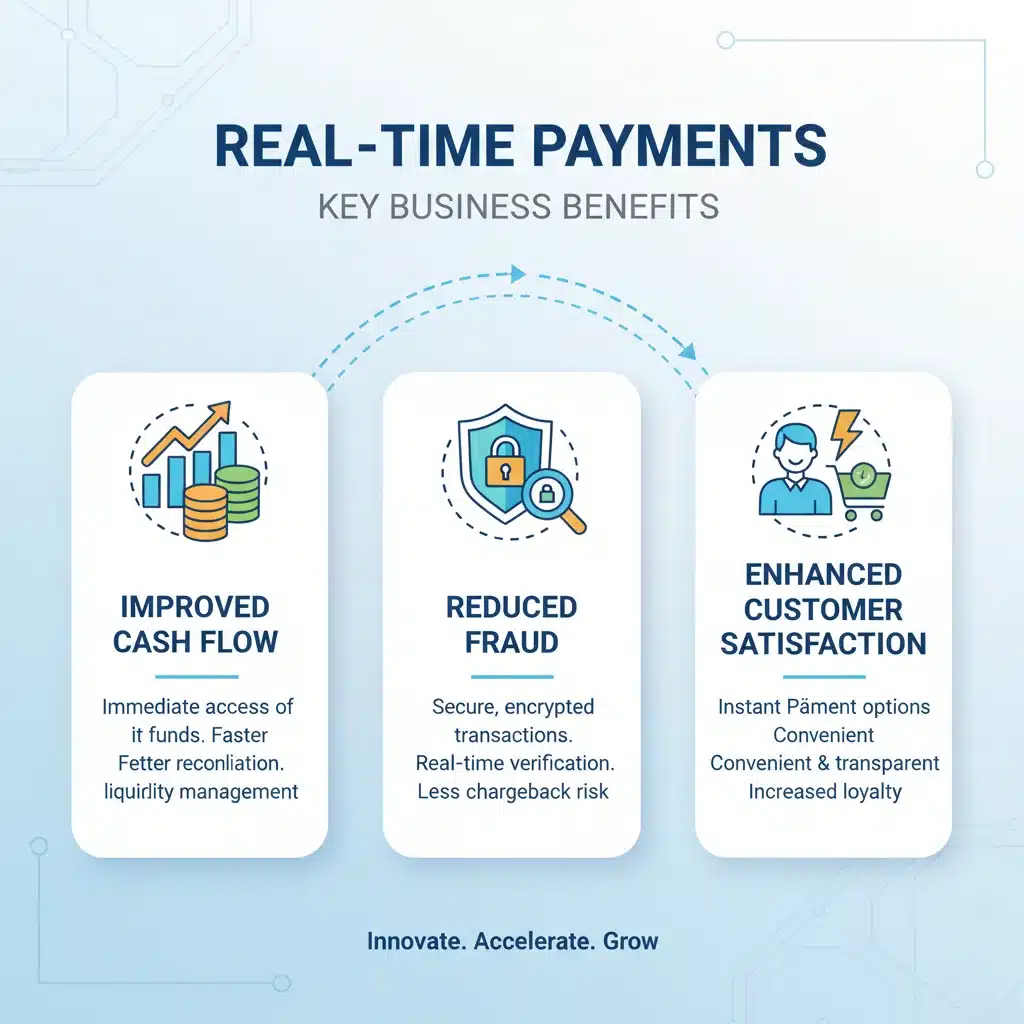
One of the most immediate and impactful benefits of real-time payments is the dramatic improvement in cash flow. Businesses will no longer have to wait days for payments to clear, allowing for quicker access to funds. This is particularly crucial for small and medium-sized enterprises (SMEs) that often operate with tighter cash reserves. Immediate access to funds means businesses can pay suppliers faster, manage unexpected expenses more efficiently, and make more agile investment decisions. This improved liquidity can significantly reduce the need for short-term borrowing and improve overall financial health.
Streamlined Operations and Efficiency
The FedNow 2026 expansion will enable businesses to streamline various operational processes. Payroll can be executed instantly, reducing administrative burden and ensuring employees receive their wages without delay. Vendor payments can be expedited, strengthening supplier relationships and potentially unlocking early payment discounts. Real-time reconciliation will become a reality, as payments are instantly confirmed and reconciled with invoices, reducing manual effort and errors in accounting departments. This operational efficiency translates directly into cost savings and increased productivity.
Improved Customer and Supplier Relationships
For businesses, offering real-time payment options can significantly enhance customer satisfaction. Imagine customers receiving instant refunds, or paying for services with immediate confirmation. This level of speed and transparency builds trust and improves the overall customer experience. Similarly, suppliers will appreciate faster payments, leading to stronger partnerships and potentially better terms. The Request for Payment (RfP) functionality, in particular, can simplify billing and collection, making it easier for customers to pay and for businesses to receive funds.
Fraud Reduction and Enhanced Security
While instant payments might initially raise concerns about fraud, FedNow incorporates robust security features. The immediate finality of payments, combined with enhanced data capabilities, can actually help in fraud detection and prevention. Businesses will have real-time visibility into transactions, allowing for quicker identification of suspicious activity. Additionally, the move away from paper checks, which are susceptible to various forms of fraud, will inherently improve security. The FedNow 2026 expansion will likely see further enhancements in these security protocols, fostering a safer payment environment.
Innovation and New Business Models
The real-time nature of FedNow opens doors for entirely new business models and innovative services. Businesses can leverage instant payments to offer on-demand services, develop just-in-time inventory management, and create more dynamic pricing strategies. The ability to send and receive payments 24/7 facilitates global trade and cross-border transactions, even if indirectly through intermediary institutions. The API-driven nature of FedNow also encourages fintech companies to build innovative overlay services, further expanding the possibilities for businesses.
Challenges and Considerations for Businesses Adopting FedNow
While the benefits of the FedNow 2026 expansion are compelling, businesses must also be aware of the challenges and considerations involved in adopting this new payment rail. Proactive planning and strategic foresight will be crucial for a smooth transition.
Integration with Existing Systems
One of the primary challenges for businesses will be integrating FedNow capabilities with their existing enterprise resource planning (ERP) systems, accounting software, and treasury management systems. This integration will require technical expertise and potentially significant investment in software upgrades or new solutions. Businesses will need to assess their current IT infrastructure and identify any gaps that need to be addressed to support real-time payment processing and reconciliation.
Operational Changes and Workflow Adjustments
The shift to real-time payments will necessitate changes in internal operational workflows. Accounting and treasury teams will need to adapt to 24/7 processing, potentially requiring new staffing models or automated solutions. Reconciliation processes will need to be re-evaluated to leverage instant confirmation. Training employees on new procedures and systems will be essential to ensure a smooth transition and maximize the benefits of FedNow.
Fraud Management in a Real-Time Environment
While FedNow offers features to mitigate fraud, the instant and irrevocable nature of payments means that once a fraudulent transaction occurs, recovery can be challenging. Businesses will need to implement robust internal controls, enhanced fraud detection systems, and strong authentication protocols to protect themselves. This includes educating employees about phishing scams and other social engineering tactics that might target real-time payment systems. The FedNow 2026 expansion will likely bring more sophisticated fraud prevention tools, but vigilance remains paramount.
Liquidity Management and Funding
For financial institutions, participating in FedNow requires maintaining sufficient liquidity to process payments 24/7. Businesses relying on these institutions will need to understand how their bank manages liquidity and how it might impact their ability to send or receive large-value payments instantly. While most businesses won’t directly manage FedNow liquidity, it’s an underlying factor that affects the reliability and availability of the service from their financial partners.
Cost of Adoption
Adopting FedNow may involve initial costs, including software upgrades, integration services, and potential fees charged by financial institutions for real-time payment services. Businesses will need to conduct a thorough cost-benefit analysis to understand the return on investment and budget accordingly. While the long-term benefits in terms of efficiency and cash flow are expected to outweigh these initial costs, careful planning is necessary.
Strategies for Successful FedNow Adoption by 2026
To fully capitalize on the opportunities presented by the FedNow 2026 expansion, US businesses should start preparing now. A proactive and strategic approach will ensure a seamless transition and maximize the benefits of real-time payments.
1. Engage with Your Financial Institution Early
The first and most crucial step is to communicate with your primary banking partners. Inquire about their FedNow readiness, their plans for offering FedNow services, and their timelines for implementation. Understand the specific services they will offer (e.g., send, receive, Request for Payment) and any associated fees. Your bank will be your primary gateway to FedNow, so a strong partnership is essential. Ask about their support for API integration and any resources they provide for business clients.
2. Conduct an Internal Assessment of Payment Workflows
Perform a comprehensive review of all your current payment-related processes. Identify areas where real-time payments can offer significant improvements, such as payroll, vendor payments, customer refunds, and collections. Map out your current state and envision the future state with FedNow. This assessment will help pinpoint specific integration needs, operational changes, and potential areas for automation. Consider which payment types are most suitable for immediate real-time transition versus those that might require a phased approach.
3. Evaluate Your Technology Infrastructure
Assess your current ERP, accounting, and treasury management systems. Determine if they are compatible with real-time payment processing and if they can integrate with FedNow via your bank’s APIs. You may need to invest in upgrades, new software modules, or even entirely new systems. Collaboration with your IT department or external technology consultants will be vital to ensure a robust and secure integration.
4. Develop a Phased Implementation Plan
Rather than attempting to overhaul all payment processes at once, consider a phased approach. Start with a pilot program for a specific payment type (e.g., urgent vendor payments or instant refunds) to gain experience and iron out any issues. Gradually expand FedNow usage to other areas of your business as you become more comfortable and confident with the system. This incremental strategy minimizes disruption and allows for continuous learning and optimization.
5. Focus on Fraud Prevention and Security
Proactively strengthen your fraud prevention measures. This includes implementing multi-factor authentication, robust access controls, and real-time transaction monitoring. Educate your employees about the risks associated with real-time payments and best practices for preventing social engineering attacks. Work with your financial institution to understand the fraud mitigation tools available through FedNow and how to best leverage them.
6. Train Your Teams
Provide comprehensive training for your finance, accounting, treasury, and customer service teams. They need to understand how FedNow works, the new workflows, and how to handle real-time payment inquiries or issues. Proper training will empower your employees to efficiently utilize the new system and address any customer or vendor concerns effectively.
7. Explore Overlay Services and Future Innovations
Beyond basic send and receive functionalities, explore the potential of FedNow’s overlay services, such as Request for Payment. These tools can further optimize your billing and collection processes. Stay informed about emerging innovations and third-party solutions that are being built on the FedNow rail. The FedNow 2026 expansion will undoubtedly spur a wave of new financial products and services, and staying ahead of these developments can provide a competitive edge.

The Future Beyond 2026: A Real-Time Payment Ecosystem
The FedNow 2026 expansion is not the end goal but rather a significant milestone in the evolution of the US payment landscape. Beyond 2026, we can anticipate a fully mature real-time payment ecosystem where instant payments become the norm rather than the exception. This will have profound implications for economic activity, fostering greater efficiency, transparency, and innovation across all sectors.
Expect to see increased interoperability between different payment systems, potentially leading to a more unified and seamless payment experience for businesses and consumers. The data-rich nature of FedNow transactions will also enable more sophisticated analytics and personalized financial services. As more businesses adopt FedNow, the network effects will amplify, making real-time payments an indispensable part of doing business in the US.
The long-term vision includes a future where instantaneous payments facilitate a wide array of use cases, from gig economy payouts and instant insurance disbursements to dynamic supply chain financing and cross-border payment innovations. The foundational infrastructure laid by FedNow, and significantly bolstered by the FedNow 2026 expansion, will be the bedrock upon which these future financial innovations are built.
Conclusion: Embracing the Real-Time Revolution
The FedNow 2026 expansion represents a pivotal moment for US businesses. It offers an unparalleled opportunity to transform payment operations, enhance cash flow, improve efficiency, and foster stronger relationships with customers and suppliers. While challenges related to integration and operational adjustments exist, proactive planning and strategic adoption can turn these into manageable hurdles.
Businesses that embrace this real-time payment revolution early will be better positioned to thrive in an increasingly dynamic and competitive market. By engaging with financial institutions, assessing internal systems, developing phased implementation plans, and prioritizing security, businesses can navigate the transition successfully and unlock the full potential of FedNow. The future of payments is instant, and the time for US businesses to prepare is now.