Fintech API Integration: 25% Faster for US Companies by 2026
Optimizing API Strategies: Achieving 25% Faster Integration for US Fintechs by Mid-2026 (PRACTICAL SOLUTIONS)
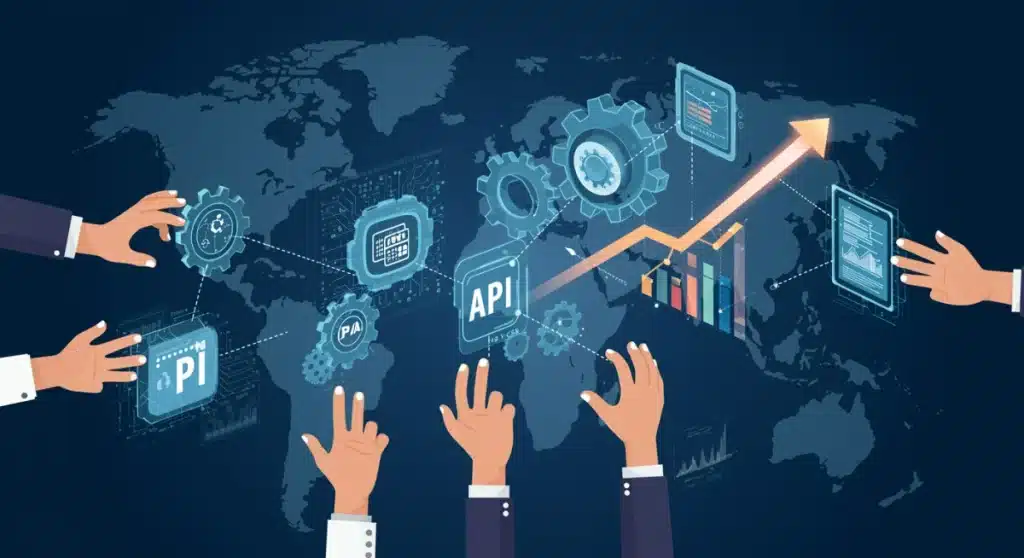
In the rapidly evolving landscape of financial technology, speed and efficiency are paramount. US Fintechs are constantly seeking innovative ways to gain a competitive edge, and one of the most critical areas for improvement lies in Fintech API Integration. The ability to seamlessly connect with partners, leverage third-party services, and offer new products to customers hinges on robust, efficient API strategies. Our goal is ambitious yet achievable: to help US Fintechs accelerate their API integration processes by a remarkable 25% by mid-2026. This article will delve into practical solutions, best practices, and strategic approaches that can transform your integration timelines from months to weeks, or even days, ensuring you stay ahead in the dynamic financial market.
The Imperative for Faster Fintech API Integration
The digital revolution has fundamentally reshaped the financial services industry. Customers demand instant, personalized, and secure experiences, pushing Fintechs to innovate at an unprecedented pace. At the core of this innovation lies Fintech API Integration. APIs (Application Programming Interfaces) act as digital bridges, allowing different software systems to communicate and share data. For Fintechs, this means connecting with banks, payment processors, credit bureaus, identity verification services, and a myriad of other financial tools to build comprehensive and competitive offerings.
The Current State of API Integration in US Fintech
While APIs have been a cornerstone of modern software development for years, their implementation within the Fintech sector often faces unique challenges. Regulatory complexities, stringent security requirements, legacy systems, and a lack of standardized practices can significantly slow down integration projects. Many US Fintechs grapple with:
- Fragmented Ecosystems: Integrating with a diverse range of partners, each with their own API standards and documentation.
- Security Concerns: Ensuring data privacy and compliance with regulations like GDPR, CCPA, and various financial industry standards.
- Resource Constraints: Limited developer bandwidth and specialized skills required for complex integrations.
- Maintenance Overhead: The ongoing effort to manage, update, and secure numerous API connections.
- Lack of Standardization: Inconsistent API design principles across different providers, leading to custom solutions for each integration.
These challenges collectively contribute to extended integration cycles, delaying product launches, increasing operational costs, and ultimately hindering a Fintech’s ability to capitalize on market opportunities. Achieving 25% faster Fintech API Integration is not just an aspiration; it’s a strategic necessity to remain competitive and responsive to market demands.
Strategic Pillars for Accelerated Fintech API Integration
To achieve a 25% acceleration in Fintech API Integration, a multi-faceted approach focusing on strategic planning, technological adoption, and operational excellence is required. Here are the key pillars:
1. Standardized API Design and Protocols
One of the most significant bottlenecks in API integration is the lack of uniformity. When every partner API adheres to different conventions, data formats, and authentication methods, each integration becomes a bespoke development project. Adopting and promoting standardized API design principles can drastically reduce this friction.
- RESTful API Design: Encourage the use of REST (Representational State Transfer) principles for their statelessness, scalability, and widespread adoption.
- OpenAPI Specification (OAS/Swagger): Mandate the use of OpenAPI Specification for defining, producing, consuming, and visualizing RESTful web services. OAS provides a language-agnostic interface description, allowing both humans and computers to discover and understand the capabilities of a service without access to source code, documentation, or network traffic inspection. This significantly streamlines the integration process for developers.
- GraphQL Adoption: For situations requiring more flexible data fetching and fewer round trips, consider GraphQL. It allows clients to request exactly the data they need, which can optimize performance and simplify client-side development, thus speeding up integration for specific use cases.
- Standardized Data Formats: Enforce the use of common data formats like JSON (JavaScript Object Notation) or XML (Extensible Markup Language) with clear schema definitions. JSON Schema can be particularly useful for validating data structures.
2. Robust Documentation and Developer Experience (DX)
Poor documentation is a silent killer of integration efficiency. Developers spend countless hours deciphering poorly explained endpoints, vague error messages, or missing examples. A superior developer experience is paramount for faster Fintech API Integration.
- Comprehensive API Reference: Provide up-to-date, detailed documentation for all API endpoints, including request/response examples, data types, and authentication methods.
- Interactive API Explorer: Tools like Swagger UI or Postman collections allow developers to interact with the API directly from the documentation, testing endpoints and observing responses without writing any code. This accelerates understanding and reduces initial setup time.
- Clear Use Cases and Tutorials: Offer practical guides and tutorials that walk developers through common integration scenarios, complete with code snippets in multiple popular programming languages.
- SDKs and Libraries: Provide Software Development Kits (SDKs) and client libraries for popular programming languages. These pre-built tools abstract away much of the underlying API complexity, allowing developers to integrate faster and with fewer errors.
- Dedicated Developer Portals: A centralized developer portal serves as a one-stop shop for everything an integrator needs: documentation, SDKs, forums, FAQs, and support channels. This fosters a self-service environment and reduces reliance on direct support.
3. Strategic API Management and Governance
Effective API management is not just about technical implementation; it’s about establishing a framework for how APIs are designed, developed, deployed, and maintained across the organization and with partners. This is crucial for accelerating Fintech API Integration at scale.
- API Gateway: Implement an API Gateway to act as a single entry point for all APIs. Gateways provide functionalities like authentication, authorization, rate limiting, caching, and traffic management. This centralizes control, enhances security, and simplifies the integration process for consumers by providing a consistent interface.
- Version Control: Establish a clear API versioning strategy (e.g., URL versioning, header versioning) to manage changes without breaking existing integrations. This allows for smooth transitions and reduced integration downtime.
- Performance Monitoring and Analytics: Utilize API monitoring tools to track performance, identify bottlenecks, and proactively address issues. Real-time insights into API usage, latency, and error rates can prevent integration delays and improve reliability.
- API Governance Policies: Define clear policies for API design, security, and lifecycle management. This ensures consistency, compliance, and maintainability across all APIs, making future integrations more predictable and faster.
Leveraging Technology for Faster Integration
Beyond foundational strategies, specific technological advancements and tools can significantly contribute to achieving a 25% faster Fintech API Integration rate.
4. Integration Platform as a Service (iPaaS)
iPaaS solutions provide a cloud-based platform for developing, executing, and governing integration flows between diverse applications. For Fintechs, iPaaS can be a game-changer.
- Pre-built Connectors: Many iPaaS platforms offer a vast library of pre-built connectors for popular financial systems, CRMs, ERPs, and other applications. This eliminates the need to build custom integrations from scratch for common services.
- Low-Code/No-Code Integration: iPaaS platforms often feature visual development environments that allow business users or less technical developers to create integration workflows, significantly reducing development time.
- Scalability and Reliability: Cloud-native iPaaS solutions offer inherent scalability and high availability, crucial for handling the fluctuating demands of financial transactions and data processing.
- Centralized Management: Manage all integrations from a single platform, simplifying monitoring, troubleshooting, and updates.
5. Event-Driven Architectures (EDA) and Webhooks
Traditional API polling can be inefficient, consuming resources and delaying real-time updates. Event-driven architectures, particularly through webhooks, offer a more efficient alternative for faster Fintech API Integration.
- Real-time Data Exchange: Instead of constantly checking for updates, webhooks allow an API provider to send an automated notification (a ‘webhook’) to a predefined URL whenever a specific event occurs. This enables real-time data synchronization and triggers immediate actions.
- Reduced API Calls: By only sending data when an event happens, webhooks significantly reduce the number of API calls, optimizing resource usage for both the provider and the consumer.
- Enhanced Responsiveness: Fintech applications can become more responsive and provide up-to-date information to users, improving the overall customer experience.
6. AI and Machine Learning for API Discovery and Mapping
The sheer volume and complexity of APIs can make discovery and data mapping a time-consuming task. AI and ML are emerging as powerful tools to streamline these processes, thereby accelerating Fintech API Integration.
- Automated API Discovery: AI-powered tools can analyze API specifications and documentation to automatically identify relevant APIs for a given integration need, reducing manual search efforts.
- Intelligent Data Mapping: Machine learning algorithms can learn from previous integration patterns to suggest optimal data mappings between different systems, significantly speeding up the transformation of data formats.
- Proactive Error Detection: AI can analyze API logs and performance data to predict potential issues before they cause failures, allowing for proactive maintenance and preventing integration delays.
Operational Best Practices for Integration Acceleration
Technology alone is not enough. Operational excellence and a cultural shift are vital for sustained acceleration in Fintech API Integration.
7. Agile Integration Methodology
Adopting agile principles for integration projects can bring significant benefits.
- Iterative Development: Break down large integration projects into smaller, manageable sprints. This allows for frequent feedback, early detection of issues, and continuous delivery of value.
- Cross-functional Teams: Foster collaboration between development, operations, security, and business teams. This ensures that all perspectives are considered from the outset, reducing rework and miscommunication.
- Automated Testing: Implement comprehensive automated testing for APIs, including unit tests, integration tests, and end-to-end tests. This catches bugs early, reduces manual testing effort, and ensures the reliability of integrations.
8. Continuous Integration/Continuous Delivery (CI/CD) for APIs
Applying DevOps principles to API development and deployment is critical for speed and reliability.
- Automated Builds and Deployments: Automate the process of building, testing, and deploying API changes. This reduces human error and accelerates the release cycle.
- Infrastructure as Code (IaC): Manage API infrastructure (e.g., API Gateway configurations, serverless functions) using code. This ensures consistency, reproducibility, and faster provisioning of environments.
- Monitoring and Feedback Loops: Integrate continuous monitoring into the CI/CD pipeline to track API performance and availability post-deployment. Establish feedback loops to quickly address any issues and continuously improve the API.
9. Strong Security Posture and Compliance by Design
In Fintech, security is non-negotiable. Building security into the API design and integration process from the ground up, rather than as an afterthought, can prevent costly delays and rework.
- API Security Gateways: Utilize advanced API security gateways that offer features like OAuth 2.0, OpenID Connect for authentication, API key management, and threat protection (e.g., SQL injection, XSS).
- Data Encryption: Ensure all data in transit and at rest is encrypted using industry-standard protocols (e.g., TLS 1.2+).
- Regular Security Audits and Penetration Testing: Conduct frequent security audits and penetration tests on APIs to identify and remediate vulnerabilities.
- Compliance Checks: Integrate automated compliance checks into the development pipeline to ensure adherence to relevant financial regulations (e.g., PCI DSS, SOC 2, GLBA).
- Least Privilege Principle: Implement granular access controls, ensuring that API consumers only have access to the data and functionalities they absolutely need.
Measuring and Tracking Progress Towards 25% Faster Integration
To achieve the goal of 25% faster Fintech API Integration by mid-2026, it’s essential to define clear metrics and continuously track progress.
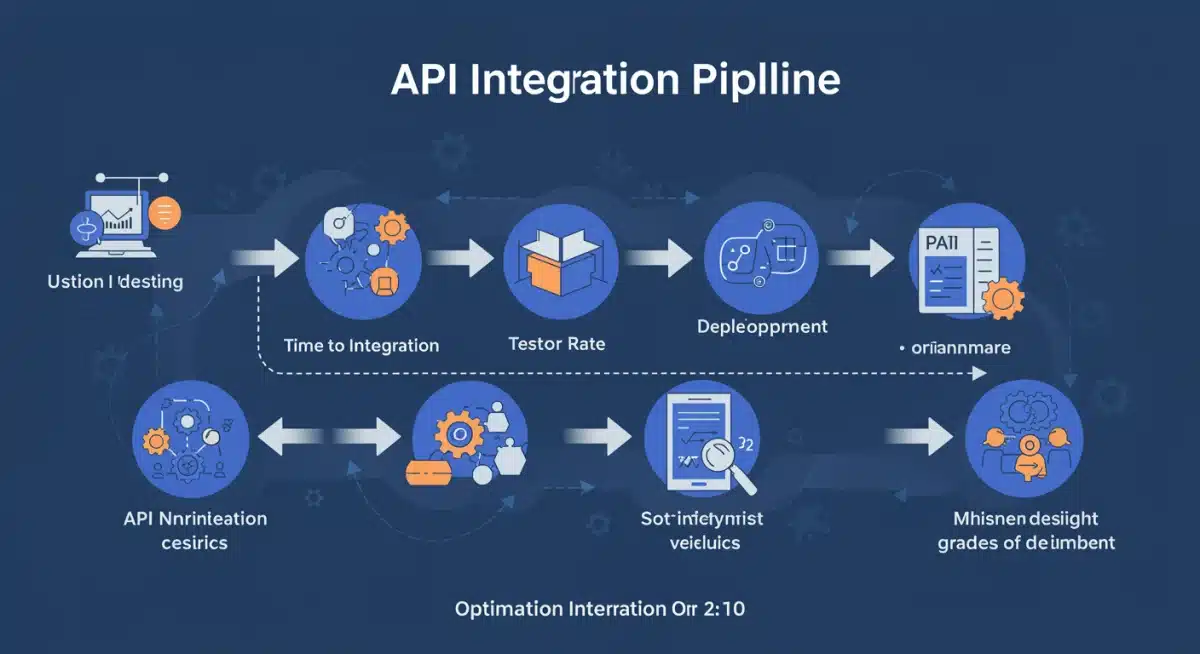
- Time to First Call (TTFC): Measure the time it takes for a new integrator to make their first successful API call after initial access.
- Time to Production (TTP): Track the total time from initial engagement to a fully integrated and live production system.
- Integration Cycle Time: Measure the average time taken for a typical integration project from start to finish.
- Developer Satisfaction (DSAT): Conduct surveys and gather feedback from integrating partners and internal teams to assess the developer experience.
- API Error Rate: Monitor the frequency of API errors, as high error rates indicate potential integration difficulties.
- Number of Integrations Completed: Track the volume of successful integrations over a specific period.
By establishing baseline metrics now and regularly monitoring these KPIs, US Fintechs can identify areas for improvement, validate the effectiveness of their strategies, and demonstrate tangible progress towards the 25% acceleration target.

Case Studies and Real-World Impact
While specific company names may vary, the principles discussed have been successfully applied across the Fintech landscape. Consider a hypothetical US Fintech, ‘RapidPay’, specializing in cross-border payments. Initially, their partner integrations took an average of 12 weeks due to bespoke API requirements, manual testing, and fragmented documentation.
RapidPay implemented a new strategy focusing on:
- Standardized OpenAPI Specifications: They refactored their core APIs to adhere strictly to OpenAPI standards, providing clear JSON Schemas.
- Enhanced Developer Portal: Launched a comprehensive developer portal with interactive documentation, SDKs for Python and Node.js, and a dedicated support forum.
- API Gateway Implementation: Centralized API access through an API Gateway, enforcing consistent security policies and rate limiting.
- CI/CD for API Releases: Automated their API deployment pipeline, reducing release cycles from days to hours.
Within 18 months, RapidPay reported a 30% reduction in average integration time, bringing their average down to 8.4 weeks. This enabled them to onboard new payment corridors faster, expand their service offerings, and significantly increase their market share. Their developer satisfaction scores also saw a substantial increase, leading to stronger partner relationships and a more robust ecosystem.
Another example is ‘LoanFlow’, a lending platform that struggled with integrating various credit data providers. By adopting an iPaaS solution with pre-built connectors and leveraging event-driven webhooks for credit score updates, LoanFlow reduced their integration time for new data sources by 40%. This allowed them to diversify their lending products more quickly and respond to market shifts with greater agility.
The Future of Fintech API Integration: Beyond 2026
Achieving a 25% faster Fintech API Integration by mid-2026 is an ambitious but attainable goal. However, the journey doesn’t end there. The financial technology landscape will continue to evolve, and with it, the demands on API strategies. Looking beyond 2026, we anticipate further trends:
- Hyper-personalization through AI-driven APIs: APIs will become even smarter, leveraging AI to offer hyper-personalized financial products and services based on real-time data analysis.
- Increased focus on API Monetization: Fintechs will increasingly explore strategies to directly monetize their APIs, creating new revenue streams and fostering innovation in the ecosystem.
- Regulatory APIs and Open Finance: The global push towards Open Banking and Open Finance will lead to more standardized regulatory APIs, further streamlining data exchange and accelerating integration across the financial sector.
- Quantum-Resistant Cryptography for APIs: As quantum computing advances, the need for quantum-resistant cryptographic algorithms in API security will become paramount, requiring continuous adaptation of security protocols.
- API Mesh Architectures: For large enterprises with hundreds or thousands of APIs, an API Mesh approach, which provides a universal layer for discovering, consuming, and observing APIs, will gain traction to manage complexity and accelerate integration at scale.
These future trends underscore the importance of building adaptable, resilient, and forward-thinking API strategies today. The foundations laid by focusing on standardization, developer experience, robust management, and leveraging advanced technologies will serve as the bedrock for navigating the Fintech landscape of tomorrow.
Conclusion: Paving the Way for a More Agile Fintech Future
The pursuit of 25% faster Fintech API Integration for US Fintechs by mid-2026 is not merely a technical endeavor; it’s a strategic imperative that promises to unlock immense value. By meticulously implementing standardized API designs, fostering a superior developer experience through comprehensive documentation and tools, adopting robust API management practices, and embracing cutting-edge technologies like iPaaS and event-driven architectures, Fintechs can dramatically reduce their time-to-market. Furthermore, embedding agile methodologies and strong security postures throughout the integration lifecycle ensures that speed does not come at the expense of quality or compliance.
The benefits extend far beyond mere efficiency. Faster integration means quicker product innovation, enhanced customer experiences, stronger partnerships, and a more resilient, competitive position in the dynamic financial services industry. US Fintechs that commit to these practical solutions will not only meet the 25% acceleration target but will also establish themselves as leaders, driving the next wave of financial innovation. The time to act is now, transforming integration from a bottleneck into a powerful accelerator for growth and success.