NYC Fintech Dominance: Why New York Leads US Capital Flow by 20% in 2026
The financial landscape of the United States is a dynamic and ever-evolving tapestry, with various cities vying for supremacy as centers of innovation and capital. Yet, amidst this fierce competition, one city consistently emerges as the undisputed leader in the fintech arena: New York City. As we project into 2026, the data unequivocally shows that New York continues to hold a commanding lead, particularly in capital flow, outstripping its closest rivals by a significant 20%. This impressive statistic is not merely a fleeting trend but a testament to a confluence of deeply entrenched advantages that solidify NYC’s position as the global capital of finance and increasingly, its technological evolution.
The term NYC Fintech Dominance encapsulates a multifaceted phenomenon. It speaks to the sheer volume of investment, the density of talent, the supportive regulatory environment, and the unparalleled access to traditional financial institutions that collectively create an ecosystem unlike any other. This article will delve into the core reasons behind New York’s enduring leadership, offering a comprehensive analysis of the factors that contribute to its 20% lead in capital flow and examining what this means for the future of fintech in the US and globally.
The Unwavering Foundation: New York’s Historical Financial Prowess
To understand New York’s current fintech dominance, one must first acknowledge its historical roots. For centuries, Wall Street has been synonymous with global finance, housing the world’s largest stock exchanges, investment banks, and asset management firms. This legacy has created an unparalleled concentration of financial expertise, infrastructure, and, crucially, capital. When fintech emerged as a disruptive force, it found a fertile ground in NYC, where the need for technological solutions to complex financial problems was most acute.
The established financial institutions in New York are not merely spectators in the fintech revolution; many are active participants. They serve as crucial partners, investors, and even acquirers of fintech startups. This symbiotic relationship provides fintech companies with immediate access to a vast customer base, regulatory guidance, and significant capital injections. Unlike other hubs that might have to build financial infrastructure from the ground up, New York already possesses it at an industrial scale, allowing fintech innovators to focus on technology rather than foundational ecosystem development.
Furthermore, the sheer volume of wealth managed within New York’s financial sector means there is a constant demand for cutting-edge solutions that can optimize trading, enhance risk management, streamline operations, and improve customer experience. This demand acts as a powerful magnet for fintech innovation, drawing in startups eager to solve these high-value problems. The presence of major private equity firms, venture capital funds, and angel investors, all deeply embedded within the financial fabric of the city, ensures that promising fintech ventures have readily available access to funding, a critical component of the NYC Fintech Dominance narrative.
Capital Flow: The 20% Lead Explained
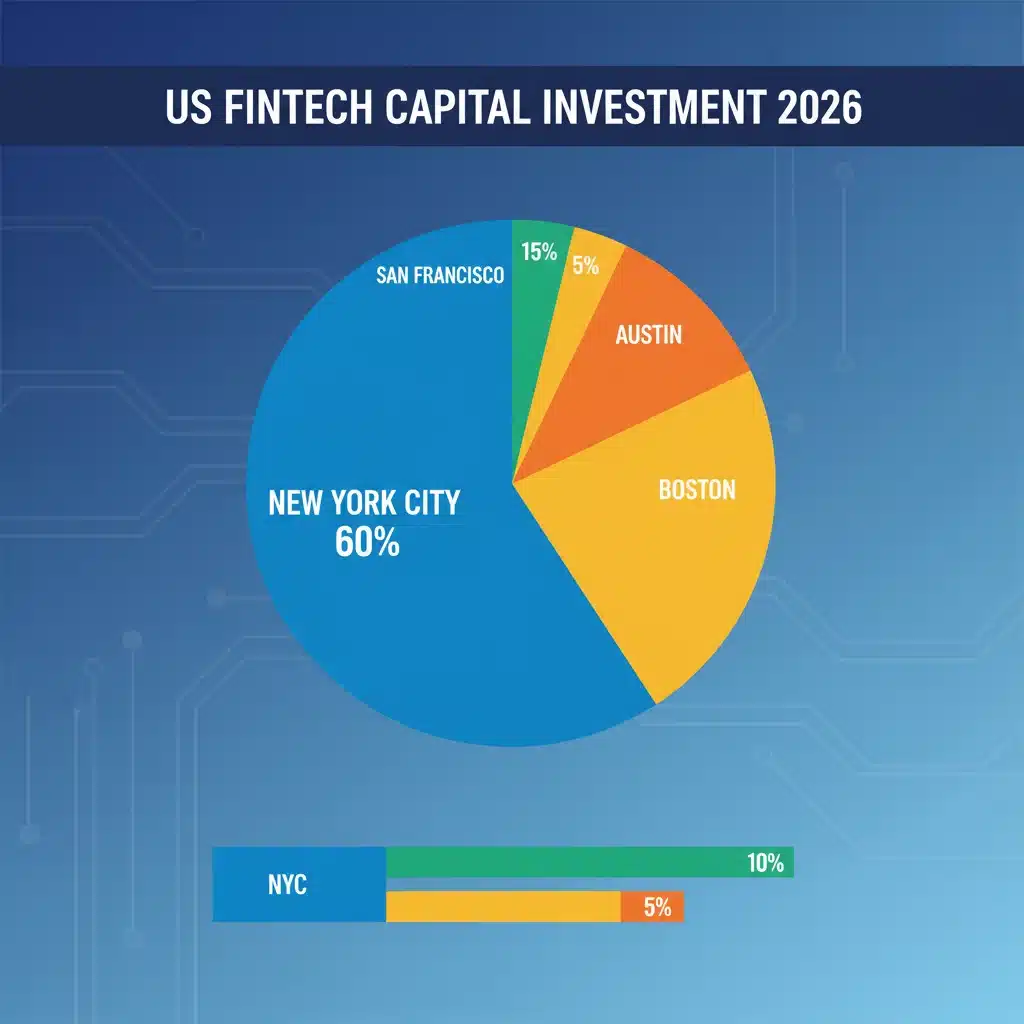
The 20% lead in capital flow is the most compelling metric of New York’s fintech supremacy. This figure represents the aggregate investment in fintech companies headquartered or with significant operations in NYC, surpassing the combined investment in the next leading US fintech hubs. Several factors contribute to this substantial advantage:
- Deep Pockets of Traditional Finance: As previously mentioned, New York’s financial giants are not just clients but also significant investors. Their corporate venture arms, strategic investment divisions, and direct acquisitions pour billions into the fintech ecosystem annually. This institutional capital provides a stable and substantial funding source that many other cities struggle to match.
- Venture Capital Concentration: While Silicon Valley is famous for its tech VC, New York boasts a robust and growing venture capital scene with a strong focus on fintech. Firms like Insight Partners, General Catalyst, and Bessemer Venture Partners, among many others, have dedicated fintech practices and significant portfolios in the city. Their proximity to both financial institutions and a burgeoning startup scene creates a powerful investment loop.
- Global Investor Appeal: New York is a global financial crossroads, attracting international investors looking to tap into the US market. Its reputation as a stable and sophisticated financial center makes it a preferred destination for foreign direct investment in fintech, further boosting its capital flow figures.
- M&A Activity: The maturity of New York’s financial ecosystem also means a higher volume of mergers and acquisitions. Successful fintech startups are often acquired by larger financial institutions or tech companies looking to integrate their innovative solutions. These exits provide lucrative returns for investors, encouraging further investment in the sector.
This concentrated capital ensures that promising fintech startups in NYC have the resources to scale rapidly, attract top talent, and weather economic fluctuations, further solidifying the city’s lead. The consistent influx of capital translates directly into more innovation, more job creation, and a more robust ecosystem, perpetuating the cycle of NYC Fintech Dominance.
Talent Pool: The Brain Trust of Fintech Innovation
A thriving innovation hub is only as strong as its talent pool, and New York City excels in this regard. The city attracts a unique blend of financial professionals, technologists, and entrepreneurs, creating a diverse and highly skilled workforce essential for fintech innovation. This talent advantage is multifaceted:
- Financial Expertise: Decades of financial dominance have cultivated a deep bench of professionals with unparalleled knowledge of markets, regulations, risk management, and financial products. These individuals are crucial for understanding the complex problems fintech aims to solve.
- Tech Talent: While not traditionally seen as a tech hub on par with Silicon Valley, NYC’s tech sector has grown exponentially. The presence of major tech companies, a vibrant startup scene, and world-class universities (Columbia, NYU, Cornell Tech) produces a steady stream of engineers, data scientists, AI/ML specialists, and cybersecurity experts.
- Entrepreneurial Drive: New York is a city of ambition and entrepreneurship. The competitive yet collaborative environment fosters a culture where risk-takers and innovators are celebrated, driving the formation of new fintech ventures.
- Educational Institutions: Top-tier universities and business schools in and around NYC offer specialized programs in finance, technology, and entrepreneurship, often with a specific focus on fintech. These institutions act as pipelines for fresh talent, feeding the ecosystem with skilled graduates ready to contribute.
- Diversity: New York’s unparalleled diversity attracts talent from all corners of the globe, bringing a wide range of perspectives and experiences that are vital for developing innovative solutions for a global financial market.
The ability to recruit and retain such a high caliber of talent is a critical factor in New York’s sustained NYC Fintech Dominance. Companies can find individuals with deep domain expertise in both finance and technology, allowing for the creation of sophisticated and impactful solutions.
Regulatory Environment and Policy Support
The regulatory landscape is often a significant hurdle for fintech companies. However, New York offers a unique blend of stringent oversight and a growing understanding of innovation. The presence of federal and state regulatory bodies, such as the Federal Reserve Bank of New York, the New York State Department of Financial Services (NYDFS), and the Securities and Exchange Commission (SEC), means that fintech companies operate within a clear, albeit demanding, framework.
While some might view strong regulation as a deterrent, in New York, it often acts as a competitive advantage. Sophisticated investors and financial institutions prefer to partner with companies that can navigate complex regulatory requirements. The NYDFS, in particular, has shown a proactive approach to fintech, engaging with startups and developing frameworks that encourage innovation while safeguarding consumers and financial stability. This proactive engagement helps foster trust and provides a more predictable environment for fintech development and deployment.
Furthermore, New York City and New York State governments have implemented various initiatives to support the tech and fintech sectors, including tax incentives, grants, and incubators. These policies aim to attract and retain businesses, further cementing the city’s status as a leading hub. The collaboration between policymakers, regulators, and industry stakeholders is a cornerstone of the NYC Fintech Dominance strategy, ensuring that the ecosystem remains robust and forward-looking.
Ecosystem Synergy: Collaboration and Innovation
The strength of New York’s fintech ecosystem lies not just in its individual components but in their synergistic interaction. There is a palpable sense of collaboration between startups, established financial institutions, academic researchers, and government bodies. This ecosystem synergy manifests in several ways:
- Accelerators and Incubators: A multitude of fintech-focused accelerators and incubators, such as Barclays Accelerator, Techstars Fintech, and the FinTech Innovation Lab, provide crucial support to early-stage companies. These programs offer mentorship, resources, and invaluable connections to potential investors and partners.
- Industry Events and Conferences: New York hosts numerous high-profile fintech conferences, meetups, and networking events throughout the year. These gatherings serve as vital platforms for knowledge sharing, deal-making, and community building, constantly refreshing the collective intelligence of the ecosystem.
- Corporate Partnerships: Large financial institutions are actively seeking partnerships with fintech startups to enhance their offerings, improve efficiency, and stay competitive. This willingness to collaborate provides startups with pilot opportunities, strategic guidance, and potential pathways to acquisition.
- Cross-Pollination of Ideas: The close proximity of diverse industries – finance, tech, media, fashion, real estate – fosters a unique environment for cross-pollination of ideas. Fintech solutions developed in NYC often benefit from insights gained from other sectors, leading to more innovative and holistic products.
This vibrant and interconnected ecosystem ensures that innovation is not an isolated event but a continuous process, driving the city’s NYC Fintech Dominance forward year after year.

Comparative Analysis: How NYC Stacks Up Against Other Hubs
While New York’s 20% lead in capital flow is significant, it’s important to understand how it compares to other burgeoning fintech hubs across the US. Cities like San Francisco, Boston, Austin, and even emerging centers like Miami, each have their unique strengths, but none yet match New York’s comprehensive advantage.
- San Francisco/Silicon Valley: Known for its deep tech talent and venture capital, Silicon Valley excels in pure technological innovation. However, its distance from traditional financial institutions and a less specialized financial regulatory environment mean that while it produces groundbreaking tech, integrating it into the complex financial world can be more challenging. While it has significant capital, much of it is sector-agnostic, whereas NYC’s capital is often specifically earmarked for fintech.
- Boston: With a strong academic foundation (MIT, Harvard) and a respectable presence of asset management firms, Boston is a strong contender in specific fintech niches, particularly in areas requiring deep quantitative analysis and institutional finance. However, its overall scale and diversity of financial institutions are smaller than New York’s.
- Austin: An emerging tech hub with a growing startup scene, Austin offers a lower cost of living and a vibrant entrepreneurial culture. While it attracts tech talent, its financial infrastructure and access to traditional financial markets are still developing, making it harder to compete with NYC’s established networks for large-scale capital.
- Miami: Positioned as a gateway to Latin America, Miami has seen a surge in interest, particularly in blockchain and crypto. It benefits from a favorable tax environment and a growing tech community. However, like Austin, it still lacks the deep-seated financial institutional presence and regulatory maturity that defines New York.
New York’s competitive edge lies in its unique fusion of finance and technology, combined with an unparalleled concentration of capital, talent, and regulatory sophistication. This holistic approach ensures that while other hubs may specialize in certain aspects of fintech, New York provides a complete ecosystem for the entire lifecycle of a fintech company, from ideation to IPO or acquisition, hence its sustained NYC Fintech Dominance.
Looking Ahead: Sustaining the Lead in 2026 and Beyond
Maintaining a 20% lead in capital flow is no small feat, and New York is not resting on its laurels. The city is actively investing in infrastructure, fostering new technologies, and adapting to global trends to ensure its continued NYC Fintech Dominance. Key areas of focus include:
- Emerging Technologies: New York is at the forefront of adopting and developing solutions in artificial intelligence, machine learning, blockchain, and quantum computing for financial applications. These technologies are expected to drive the next wave of fintech innovation, and NYC is positioning itself to lead this charge.
- ESG Fintech: With a growing global emphasis on Environmental, Social, and Governance (ESG) factors, NYC is becoming a hub for fintech solutions that facilitate sustainable investing, impact measurement, and green finance.
- Digital Assets and Web3: While other cities might be more vocal about crypto, New York’s institutional embrace of digital assets and Web3 technologies is significant. Major banks and financial firms are exploring blockchain-based solutions for trading, settlement, and asset tokenization, leveraging the city’s regulatory expertise to navigate this complex space.
- Global Connectivity: New York’s status as a global financial center means it’s uniquely positioned to facilitate cross-border fintech innovation and investment, acting as a bridge between US and international markets.
- Talent Development and Retention: Continuous investment in educational programs, training initiatives, and quality of life improvements are crucial to attracting and retaining the best talent in a highly competitive global market.
The commitment to these areas, coupled with its inherent advantages, suggests that New York’s lead in fintech capital flow is not only sustainable but likely to grow. The city’s ability to adapt, innovate, and integrate new technologies into its robust financial framework ensures its enduring position at the pinnacle of the fintech world.
Conclusion: New York’s Unrivaled Fintech Future
In conclusion, New York City’s sustained NYC Fintech Dominance, evidenced by its impressive 20% lead in capital flow by 2026, is a result of a powerful combination of historical financial strength, unparalleled access to capital, a deep and diverse talent pool, a supportive regulatory environment, and a vibrant, collaborative ecosystem. While other cities are making significant strides, none can yet match the comprehensive advantages that New York offers to fintech companies and investors.
The city’s ability to seamlessly integrate cutting-edge technology with the intricacies of global finance creates an environment where innovation thrives and capital is readily deployed to scale promising ventures. As the financial world continues its digital transformation, New York stands poised to not only maintain but further extend its leadership, cementing its status as the definitive global capital of finance and its technological future. For anyone looking to invest in, build, or be a part of the fintech revolution, New York City remains the ultimate destination.