Fintech Data Breach Costs 2026: Mitigating Financial Impact in the US
The digital age has ushered in an era of unprecedented convenience and innovation, particularly within the financial technology (Fintech) sector. However, with great innovation comes great responsibility, especially concerning the security of sensitive financial data. As we look towards 2026, the specter of data breaches looms larger than ever, threatening to inflict substantial financial damage on US Fintech companies. This comprehensive analysis delves into the projected Fintech Data Breach Cost in the United States by 2026 and outlines actionable strategies designed to reduce this financial impact by a significant 25%.
The financial services industry has consistently ranked among the most targeted sectors by cybercriminals, and Fintech, with its rapid growth and reliance on interconnected digital systems, presents an even more attractive target. The consequences of a data breach extend far beyond immediate remediation costs, encompassing regulatory fines, reputational damage, customer churn, and long-term operational disruptions. Understanding these multifaceted costs is the first step toward building a resilient cybersecurity posture.
The Escalating Threat Landscape in US Fintech
Before we project the Fintech Data Breach Cost, it’s crucial to acknowledge the evolving threat landscape. Cybercriminals are becoming more sophisticated, employing advanced tactics such as AI-driven phishing, supply chain attacks, ransomware-as-a-service, and zero-day exploits. The sheer volume of personal and financial data handled by Fintech companies makes them prime targets. Moreover, the increasing interconnectedness of financial systems, often involving third-party vendors and cloud services, expands the attack surface, creating more vulnerabilities that can be exploited.
The motivations behind these attacks are varied, ranging from financial gain through data exfiltration and fraud to industrial espionage and nation-state-sponsored disruptions. The rapid pace of digital transformation within Fintech, while beneficial for innovation, can sometimes outstrip the implementation of robust security measures, leaving gaps that malicious actors are quick to exploit.
Key Factors Driving Increased Data Breach Costs
Several critical factors contribute to the rising Fintech Data Breach Cost:
- Regulatory Fines and Penalties: The regulatory environment, both domestically and internationally (e.g., GDPR, CCPA, NYDFS Cybersecurity Regulation), is becoming increasingly stringent. Non-compliance or inadequate data protection after a breach can lead to substantial fines that significantly inflate the overall cost.
- Sophistication of Attacks: Advanced persistent threats (APTs) and highly targeted attacks require more resources and time to detect, contain, and remediate, driving up incident response costs.
- Increased Data Volume and Value: Fintech firms process vast amounts of highly sensitive personal and financial information, making successful breaches more lucrative for attackers and more damaging for victims.
- Cloud Migration Risks: While offering flexibility, cloud environments introduce new security challenges. Misconfigurations, inadequate access controls, and shared responsibility model misunderstandings can lead to costly breaches.
- Supply Chain Vulnerabilities: Breaches originating from third-party vendors and suppliers are increasingly common and often difficult to detect and prevent, adding complexity and cost to recovery efforts.
- Reputational Damage and Customer Churn: Beyond direct financial costs, a data breach severely erodes customer trust, leading to account closures, reduced new customer acquisition, and long-term brand rehabilitation efforts.
- Legal Fees and Litigation: Class-action lawsuits and individual litigation from affected customers can result in enormous legal expenses and settlement payouts.
- Business Disruption: Downtime, operational interruptions, and the diversion of resources to incident response can significantly impact revenue generation and productivity.
Projecting the Fintech Data Breach Cost in US by 2026
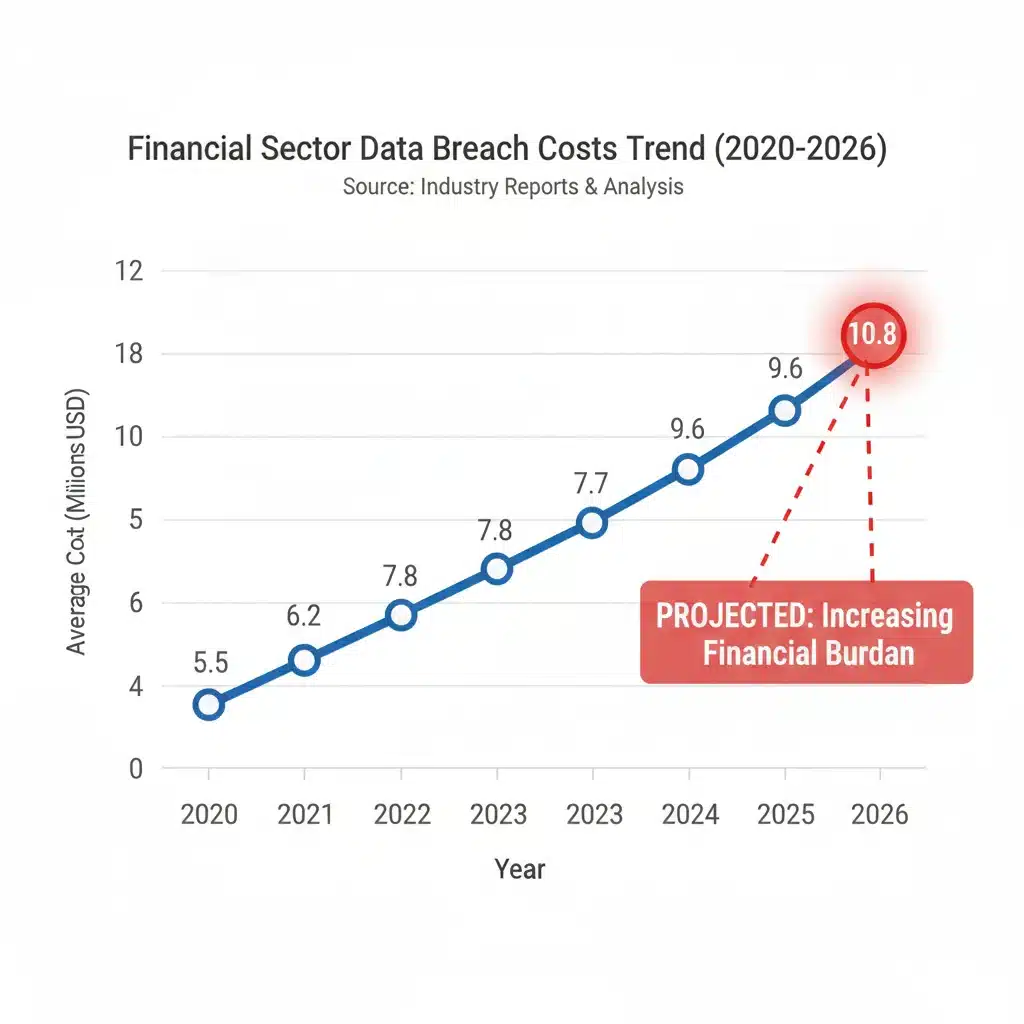
While precise figures are difficult to forecast, current trends and expert analyses provide a strong basis for projection. According to IBM’s Cost of a Data Breach Report, the average cost of a data breach in the financial sector has consistently been among the highest across industries. In recent years, this cost has hovered around the $5.97 million to $6.02 million mark globally for financial institutions. For the US, these figures tend to be even higher due to stricter regulations and higher litigation costs.
Considering an annual increase of approximately 5-7% in data breach costs, driven by the factors mentioned above, we can project a significant rise. If the average cost for a US financial institution was, for example, $9.44 million in 2022, a conservative 6% annual increase would lead to a projected average Fintech Data Breach Cost of approximately $11.90 million by 2026. This figure represents the average, and major breaches involving millions of records could easily exceed hundreds of millions of dollars.
This projection underscores the urgent need for Fintech companies to proactively invest in robust cybersecurity measures. The return on investment for prevention far outweighs the astronomical costs of recovery.
Strategies to Reduce Financial Impact by 25%
Achieving a 25% reduction in the Fintech Data Breach Cost by 2026 requires a multi-faceted and proactive approach. It’s not merely about preventing breaches entirely, which is an increasingly difficult task, but about enhancing resilience, minimizing damage, and accelerating recovery. Here are key strategies:
1. Strengthen Core Cybersecurity Foundations
A robust defense starts with fundamental security practices:
- Zero Trust Architecture (ZTA): Implement ZTA principles, assuming no user or device can be trusted by default, regardless of whether they are inside or outside the network perimeter. This requires strict verification before granting access to resources.
- Multi-Factor Authentication (MFA) Everywhere: Enforce MFA for all user accounts, especially those with privileged access. This significantly reduces the risk of credential compromise.
- Data Encryption: Encrypt sensitive data both at rest and in transit. This renders exfiltrated data useless to attackers without the decryption key.
- Regular Vulnerability Assessments and Penetration Testing: Proactively identify and remediate weaknesses in systems, applications, and networks before attackers can exploit them.
- Patch Management: Maintain a rigorous patch management program to ensure all software and systems are up-to-date with the latest security fixes.
- Secure Coding Practices: Integrate security into the software development lifecycle (SDLC) by training developers in secure coding practices and conducting regular code reviews.
2. Enhance Incident Response and Recovery Capabilities
The speed and effectiveness of incident response directly correlate with reducing the Fintech Data Breach Cost.
- Develop a Comprehensive Incident Response Plan (IRP): Create a detailed, well-documented IRP that outlines roles, responsibilities, communication protocols, and technical steps for detection, containment, eradication, recovery, and post-incident analysis.
- Regular Drills and Tabletop Exercises: Conduct frequent simulations of data breach scenarios to test the IRP, identify gaps, and train response teams.
- Automated Incident Response Tools: Utilize Security Orchestration, Automation, and Response (SOAR) platforms to automate repetitive tasks, accelerate threat detection, and streamline response workflows.
- Forensics Readiness: Ensure systems are configured to collect necessary logs and forensic data to aid in breach investigation and root cause analysis.
- Data Backup and Recovery: Implement robust, isolated, and tested backup and recovery strategies to minimize downtime and data loss in the event of a ransomware attack or data corruption.
3. Proactive Threat Intelligence and Monitoring
Staying ahead of threats is paramount in reducing the Fintech Data Breach Cost.
- Security Information and Event Management (SIEM): Deploy a SIEM system to centralize security logs, detect anomalies, and correlate security events across the entire infrastructure.
- Endpoint Detection and Response (EDR) / Extended Detection and Response (XDR): Implement EDR/XDR solutions to gain deep visibility into endpoint activities, detect sophisticated threats, and enable rapid response.
- Threat Intelligence Feeds: Subscribe to and integrate relevant threat intelligence feeds to understand emerging threats, attacker tactics, techniques, and procedures (TTPs) specific to the financial sector.
- Continuous Monitoring: Establish 24/7 security operations center (SOC) capabilities, either in-house or through a Managed Security Service Provider (MSSP), to continuously monitor for suspicious activities.
4. Third-Party Risk Management (TPRM)
Supply chain attacks are a significant vector for data breaches. Effective TPRM is crucial.
- Vendor Due Diligence: Conduct thorough security assessments of all third-party vendors and partners who handle or have access to sensitive data.
- Contractual Agreements: Include robust security clauses, incident notification requirements, and audit rights in all vendor contracts.
- Continuous Vendor Monitoring: Regularly assess the security posture of third-party vendors and ensure they adhere to agreed-upon security standards.
- Data Minimization with Third Parties: Only share the absolute minimum necessary data with vendors.
5. Employee Training and Awareness
Human error remains a leading cause of data breaches. A well-trained workforce is a strong defense.
- Regular Security Awareness Training: Educate employees on common cyber threats such as phishing, social engineering, and malware.
- Phishing Simulations: Conduct simulated phishing attacks to test employee vigilance and reinforce training.
- Data Handling Policies: Ensure employees understand and adhere to strict data handling and privacy policies.
- Reporting Mechanisms: Establish clear and easy-to-use channels for employees to report suspicious activities without fear of reprisal.
6. Compliance and Governance
Proactive compliance can mitigate regulatory fines and legal costs associated with a Fintech Data Breach Cost.
- Dedicated Compliance Officer/Team: Appoint personnel responsible for monitoring and ensuring adherence to all relevant data protection regulations (e.g., GLBA, PCI DSS, state-specific privacy laws).
- Privacy by Design: Integrate privacy considerations into the design and development of all new products, services, and systems.
- Regular Audits: Conduct internal and external audits to verify compliance with security policies and regulatory requirements.
- Cyber Insurance: While not a preventive measure, adequate cyber insurance can significantly offset the financial fallout from a breach, covering legal fees, notification costs, and business interruption.

The Role of Advanced Technologies in Cost Reduction
Leveraging cutting-edge technologies can significantly enhance a Fintech company’s ability to prevent, detect, and respond to breaches, thereby reducing the overall Fintech Data Breach Cost.
- Artificial Intelligence (AI) and Machine Learning (ML): AI/ML can analyze vast datasets to detect subtle anomalies and predict potential threats faster than human analysts. They are invaluable for fraud detection, behavioral analytics, and automated threat response.
- Blockchain Technology: While not a panacea, blockchain can enhance data integrity and security in specific use cases, such as secure transaction logging and identity verification, making data tampering more difficult.
- Quantum-Resistant Cryptography: As quantum computing advances, current encryption methods may become vulnerable. Fintech companies should begin exploring and implementing quantum-resistant cryptographic solutions to secure data for the long term.
- Deception Technology: Deploying honeypots and other deception technologies can lure attackers away from critical assets, gather intelligence on their methods, and provide early warning of an intrusion attempt.
Measuring and Achieving the 25% Reduction Target
To effectively reduce the Fintech Data Breach Cost by 25%, organizations must establish clear metrics and continuously monitor their progress.
- Baseline Establishment: Understand the current average cost of a data breach for your organization and the industry. This requires detailed tracking of all breach-related expenses.
- Key Performance Indicators (KPIs): Track KPIs such as Mean Time To Detect (MTTD), Mean Time To Contain (MTTC), number of security incidents, percentage of successful phishing attempts, and compliance scores.
- Risk Assessments: Regularly conduct quantitative risk assessments to understand the financial exposure to various cyber threats and prioritize security investments accordingly.
- Continuous Improvement: Cybersecurity is not a one-time project but an ongoing process. Regularly review and update security strategies based on new threats, technologies, and lessons learned from incidents (both internal and external).
- Budget Allocation: Ensure sufficient budget is allocated to cybersecurity. Viewing cybersecurity as an investment rather than an expense is critical for long-term financial health.
Conclusion: A Proactive Stance for a Secure Fintech Future
The projected Fintech Data Breach Cost in the US by 2026 presents a formidable challenge, but also an opportunity for proactive organizations to differentiate themselves through superior security. By implementing a layered defense strategy that encompasses strong foundational security, enhanced incident response, continuous monitoring, robust third-party risk management, employee training, and adherence to compliance, Fintech companies can significantly reduce their financial exposure.
The target of a 25% reduction in financial impact is ambitious but achievable. It requires a commitment from leadership, investment in the right technologies and talent, and a culture of security that permeates every level of the organization. As the digital economy continues to evolve, those Fintech firms that prioritize cybersecurity will not only protect their assets and customers but also build trust, foster innovation, and secure their position as leaders in the competitive financial landscape. The time to act is now, to build resilience and safeguard the future of US Fintech against the escalating tide of cyber threats.