Fintech Exit Strategies 2026: Maximizing Returns for US Founders

Fintech Exit Strategies 2026: Maximizing Returns for US Founders
The fintech landscape in the United States continues its rapid evolution, presenting both immense opportunities and complex challenges for startup founders. As we approach 2026, many entrepreneurs who launched their ventures in the early 2020s are now eyeing potential exit opportunities. Navigating these waters successfully requires foresight, strategic planning, and a deep understanding of market dynamics. This comprehensive guide will delve into the most effective Fintech Exit Strategies for US startup founders, aiming to maximize returns within a 3-5 year horizon.
The allure of a successful exit, whether through an acquisition, an Initial Public Offering (IPO), or a secondary sale, is a powerful motivator for startup founders. However, the path to a lucrative exit is rarely straightforward. It demands meticulous preparation, a robust business model, strong financial performance, and an acute awareness of the prevailing economic and regulatory environment. For fintech companies, these considerations are amplified by the sector’s inherent complexity, including rapid technological advancements, evolving customer expectations, and stringent regulatory oversight.
Understanding the current market sentiment is paramount. While venture capital funding has seen fluctuations, the long-term outlook for fintech remains positive, driven by digitalization, demand for more efficient financial services, and the unbundling/rebundling of traditional banking services. This sustained interest from investors and strategic buyers creates a fertile ground for well-positioned fintech companies to achieve significant valuations. However, founders must be proactive in shaping their companies for an exit, rather than merely reacting to opportunities as they arise.
Understanding the Current Fintech Exit Landscape
Before diving into specific Fintech Exit Strategies, it’s crucial to grasp the prevailing market conditions. The period leading up to 2026 is expected to be characterized by continued consolidation in certain fintech segments, increased regulatory scrutiny, and a greater emphasis on profitability and sustainable growth over mere user acquisition. This shift impacts how potential acquirers and public market investors evaluate fintech companies.
Market Consolidation and Strategic Acquisitions
We’ve already witnessed a significant trend of larger financial institutions and tech giants acquiring innovative fintech startups to enhance their capabilities, expand their customer base, or enter new markets. This trend is likely to accelerate. Traditional banks are seeking to integrate cutting-edge technology to remain competitive, while established tech companies are looking to embed financial services deeper into their ecosystems. For a fintech startup, being an attractive acquisition target means demonstrating clear market fit, proprietary technology, a strong customer base, and a clear path to profitability or synergy with a larger entity.
Investor Focus on Profitability and Unit Economics
The days of hyper-growth at any cost are largely behind us. Investors, both private and public, are increasingly scrutinizing unit economics, burn rates, and the path to sustainable profitability. Fintech companies aiming for an exit by 2026 must be able to present a compelling narrative around their financial health and long-term viability. This means focusing on efficient customer acquisition, strong retention rates, and diversified revenue streams.
Regulatory Environment and Compliance
The regulatory landscape for fintech is continuously evolving. New regulations around data privacy (e.g., CCPA, potential federal privacy laws), consumer protection, and financial stability are emerging. Compliance is not just a cost center; it’s a critical component of de-risking a company for potential buyers or public investors. A fintech company with a robust compliance framework and a proactive approach to regulatory changes will be significantly more appealing as an exit candidate.
Primary Fintech Exit Strategies for 2026
Founders typically consider a few main pathways when planning an exit. Each strategy has its own set of advantages, disadvantages, and requirements. Let’s explore the most common Fintech Exit Strategies relevant for the 2026 horizon.
1. Mergers and Acquisitions (M&A)
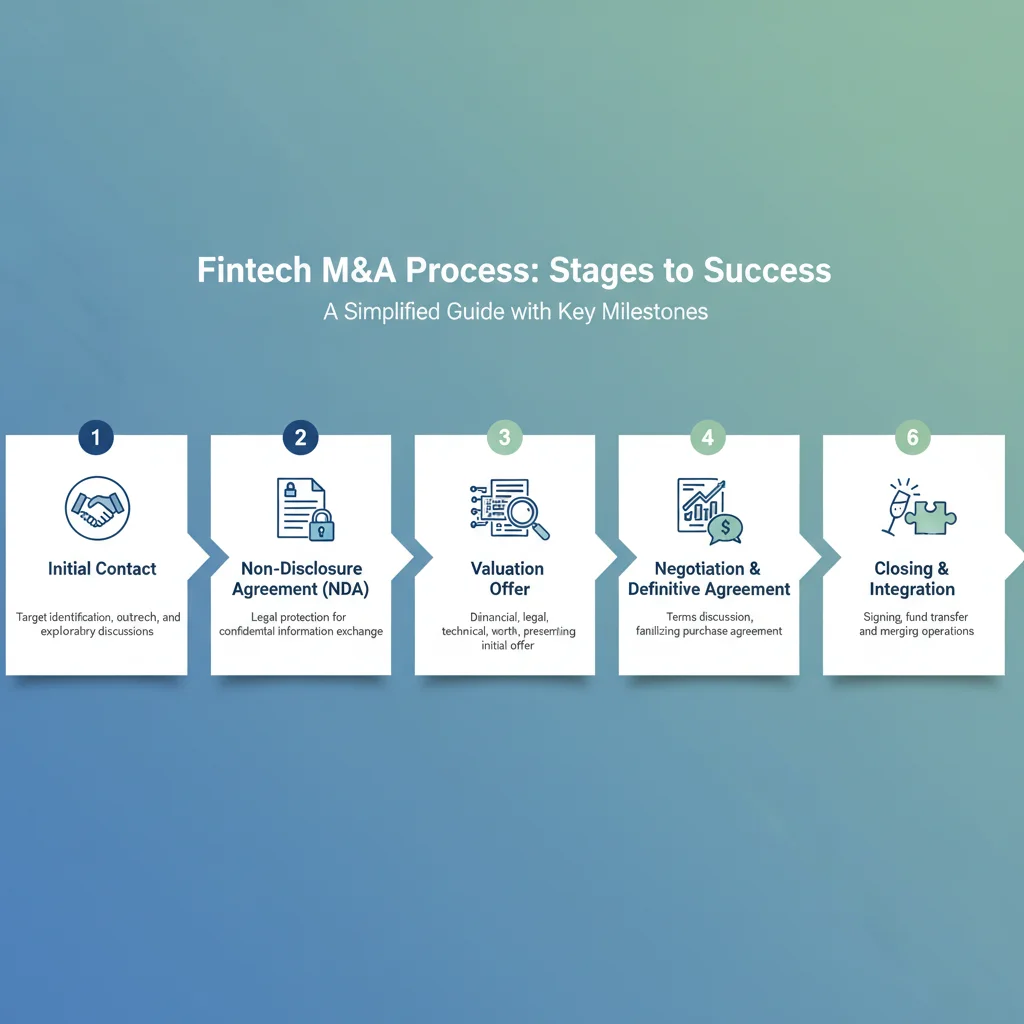
M&A remains the most common exit path for startups, including those in fintech. An acquisition involves another company purchasing your startup, either for its technology, customer base, talent, or strategic market positioning. The buyer could be a larger financial institution, a technology conglomerate, another fintech company seeking consolidation, or even a private equity firm.
Types of M&A Buyers for Fintech:
- Strategic Acquirers: These are typically larger corporations (banks, payment processors, established tech companies) looking to integrate your technology or services into their existing offerings. They value synergy, market share, and competitive advantage.
- Financial Acquirers (Private Equity): Private equity firms often acquire companies with strong cash flows, proven business models, and potential for further growth through operational improvements or bolt-on acquisitions. They aim to grow the company and then sell it for a higher valuation within a few years.
- Competitors: Sometimes, a direct competitor might acquire your company to eliminate competition, gain market share, or acquire specific talent/technology.
Preparing for an M&A Exit:
To make your fintech attractive for M&A, focus on:
- Scalable Technology: Your platform should be robust, secure, and easily integrated with other systems. API-first approaches are highly valued.
- Clear Market Differentiator: What makes your solution unique? Is it intellectual property, a proprietary algorithm, or a unique customer acquisition channel?
- Strong Customer Metrics: Demonstrate consistent user growth, high retention rates, and positive customer lifetime value (CLTV).
- Clean Financials and Legal Structure: Impeccable financial records, clear ownership, and a well-organized legal structure are non-negotiable for due diligence.
- Regulatory Compliance: Prove that your operations adhere to all relevant financial regulations and data privacy laws.
- Talent: A strong, experienced team can be a significant asset, especially in acqui-hires.
2. Initial Public Offering (IPO)
An IPO, while glamorous, is a less common and significantly more complex exit strategy, typically reserved for larger, more mature fintech companies with substantial revenue, established market leadership, and a clear path to sustained profitability. Going public means offering shares of your company to institutional investors and the general public for the first time.
Requirements for an IPO:
- Substantial Revenue and Profitability: Public markets demand consistent revenue growth and, increasingly, a clear path to or existing profitability.
- Market Leadership: Demonstrating a significant share in your target market or a highly differentiated product offering is crucial.
- Robust Governance and Reporting: Companies must establish rigorous internal controls, financial reporting systems, and a strong board of directors to meet public company standards.
- Scalable Business Model: The ability to scale operations efficiently and sustainably is key to attracting public investors.
- Strong Management Team: A credible and experienced management team is vital for investor confidence.
Considerations for an IPO:
The IPO process is lengthy, expensive, and involves intense scrutiny. It also brings ongoing obligations related to quarterly reporting, investor relations, and regulatory compliance. While an IPO can unlock significant liquidity and capital for expansion, it’s a demanding path that requires a company to be truly ready for the public spotlight. For most fintech startups on a 3-5 year horizon, M&A is often a more realistic and achievable goal, unless they are already on a hyper-growth trajectory with substantial funding.
3. Secondary Sales
Secondary sales involve existing shareholders (founders, early employees, or early investors) selling their shares to new investors while the company remains private. This can be a partial exit, allowing founders to gain some liquidity without selling the entire company. It’s often facilitated by venture capital firms, private equity funds, or specialized secondary market platforms.
Benefits of Secondary Sales:
- Liquidity for Founders/Early Employees: Provides an opportunity to realize some value from their equity earlier than a full acquisition or IPO.
- Investor Returns: Allows early investors to realize returns, potentially freeing up capital for new investments.
- No Change in Control: The company remains private, and the existing management team usually stays in place.
- Less Complex than IPO: Significantly less regulatory burden and cost compared to an IPO.
When to Consider Secondary Sales:
Secondary sales are typically viable when the company has achieved significant growth, has a clear path to future milestones, and there’s strong investor interest. It can also be a strategic move to manage cap table dynamics or provide incentives for key employees. While it doesn’t represent a full exit for the company, it’s a critical strategy for individual founders to realize personal wealth creation.
Key Factors Influencing Exit Valuations for Fintech
Regardless of the chosen Fintech Exit Strategies, several factors consistently drive valuation. Founders should proactively build their companies with these in mind to maximize their eventual return.
Revenue Growth and Profitability
While early-stage fintechs might be valued on user growth and potential, by the time an exit is contemplated (especially by 2026), strong, consistent revenue growth and a clear path to or actual profitability are paramount. Recurring revenue models (SaaS, subscription fees) are highly favored due to their predictability and scalability.
Customer Acquisition Cost (CAC) & Lifetime Value (LTV)
Efficient customer acquisition with a high customer lifetime value demonstrates a sustainable business model. Buyers want to see that your customer base is sticky and that you can acquire new customers at a reasonable cost.
Technology & Intellectual Property (IP)
Proprietary technology, patents, and unique algorithms provide a competitive moat and are highly valued. This can include advanced AI/ML capabilities, blockchain applications, or unique data analytics platforms that give your fintech a distinct advantage.
Regulatory Compliance and Risk Management
A clean bill of health regarding compliance with financial regulations, data security standards (e.g., PCI DSS for payments), and consumer protection laws significantly de-risks a potential acquisition or IPO. Any red flags here can drastically reduce valuation or scuttle a deal entirely.
Management Team & Culture
A strong, experienced, and cohesive management team is a major asset. Buyers often look to retain key talent post-acquisition, so a well-regarded leadership team can command a premium. A positive company culture also contributes to employee retention and overall operational efficiency.
Market Size and Opportunity
The total addressable market (TAM) for your fintech solution and your ability to capture a significant portion of it are crucial. Buyers want to see a large, growing market that your company is well-positioned to dominate.

Strategic Planning for a 2026 Exit Horizon
Planning for an exit isn’t something you do in the last year. It’s a journey that starts early in the company’s lifecycle. For founders aiming for an exit by 2026, the time to act strategically is now.
1. Build with an Exit in Mind from Day One
Even if you don’t know the exact exit path, building a company with strong fundamentals, clear documentation, and a scalable architecture will always serve you well. This includes:
- Modular Technology: Design your tech stack to be easily integrated or spun off.
- Clean Cap Table: Manage equity distribution carefully to avoid future complications.
- Robust Data Governance: Implement strong data management and security practices from the outset.
- Clear IP Ownership: Ensure all intellectual property is properly assigned to the company.
2. Focus on Sustainable Growth and Profitability
As mentioned, the market is increasingly valuing profitability. Develop a clear strategy for reaching profitability, even if it’s a few years out. This involves managing burn rate, optimizing customer acquisition costs, and identifying diversified revenue streams beyond initial offerings. Demonstrate strong unit economics and a clear path to scaling these profitably.
3. Cultivate Strategic Relationships
Engage with potential acquirers, strategic partners, and influential investors early on. These relationships can provide valuable insights into market needs, potential synergies, and even lead to informal expressions of interest. Attending industry conferences, participating in accelerators, and networking with corporate development teams are all crucial.
4. Strengthen Your Management Team
A strong leadership team is invaluable. As you approach an exit, consider bringing in experienced executives with a track record of scaling companies or navigating M&A processes. This not only enhances operational efficiency but also signals maturity and stability to potential buyers.
5. Prepare for Due Diligence Early
Due diligence is a rigorous process. Start preparing your data room well in advance. This includes:
- Financial records (audited if possible)
- Legal documents (contracts, IP registrations, corporate governance)
- Customer data and metrics
- Technology documentation
- HR records and employee agreements
- Compliance policies and audit reports
A well-organized and complete data room can significantly streamline the exit process and instill confidence in buyers.
6. Understand Valuation Methodologies
Educate yourself on how fintech companies are valued. Common methodologies include:
- Revenue Multiples: Often used for high-growth companies, based on a multiple of annual recurring revenue (ARR) or total revenue.
- EBITDA Multiples: More common for profitable, mature companies, based on earnings before interest, taxes, depreciation, and amortization.
- Discounted Cash Flow (DCF): Projects future cash flows and discounts them back to a present value.
- Comparables Analysis: Benchmarking against similar companies that have recently been acquired or gone public.
Understanding these will help you negotiate more effectively and set realistic expectations for your Fintech Exit Strategies.
Challenges and Considerations for Fintech Exits
Despite the opportunities, fintech founders must be aware of potential hurdles on their exit journey.
Regulatory Headwinds
Increased regulatory scrutiny, especially around data privacy, AI ethics, and consumer protection, can impact valuation and the feasibility of certain business models. Staying ahead of these changes is critical.
Competitive Landscape
The fintech market is crowded. Differentiating your offering and demonstrating a sustainable competitive advantage is crucial. Me-too products or services will struggle to attract premium valuations.
Economic Downturns
Market conditions can change rapidly. An economic downturn could reduce investor appetite, lower valuations, and make exits more challenging. Diversifying potential exit paths and building a resilient business model can mitigate some of this risk.
Integration Challenges
For M&A, the post-acquisition integration process can be complex. Buyers will assess how easily your technology, team, and culture can be integrated into their existing operations. Highlighting compatibility and a clear integration plan can be a differentiator.
The Role of Advisors in Fintech Exit Strategies
Engaging experienced advisors is not an expense; it’s an investment that can significantly enhance your exit outcome. This team typically includes:
- Investment Bankers: Specialized in M&A, they help identify buyers, manage the process, and negotiate terms.
- Legal Counsel: Essential for navigating complex legal agreements, due diligence, and regulatory compliance.
- Financial Advisors/Accountants: Critical for preparing financial statements, tax planning, and structuring the deal.
- Strategic Consultants: Can help refine your business strategy, market positioning, and prepare for investor presentations.
Choosing advisors with deep fintech expertise is paramount, as they understand the unique nuances of the sector.
Case Studies and Trends to Watch
Observing recent exits in the fintech space provides valuable lessons. For example, the acquisition of Credit Karma by Intuit, the IPO of companies like Affirm, or the strategic investments by major banks in various fintechs all demonstrate different facets of successful Fintech Exit Strategies. Key trends emerging include:
- Embedded Finance: Non-financial companies embedding financial services. Fintechs enabling this are highly valued.
- B2B Fintech: Solutions that empower businesses with better financial tools are seeing strong interest.
- AI and Machine Learning: Fintechs leveraging advanced AI for fraud detection, personalized finance, or underwriting are particularly attractive.
- Decentralized Finance (DeFi) & Web3: While nascent, companies building robust and compliant infrastructure in this space could see significant future value.
Conclusion: Charting Your Course to a Successful Fintech Exit
For US fintech startup founders looking towards a 2026 exit, the journey demands proactive planning, a deep understanding of market dynamics, and relentless execution. Whether your ambition lies in a strategic acquisition, a public offering, or a partial secondary sale, the foundational principles remain the same: build a robust, compliant, and differentiated product; demonstrate sustainable growth and a clear path to profitability; and cultivate strong relationships.
The fintech sector will continue its transformative trajectory, and those companies that are strategically positioned and meticulously prepared will be best placed to capitalize on the lucrative exit opportunities that lie ahead. By focusing on these core principles, founders can significantly enhance their chances of maximizing returns and achieving a truly successful exit in the coming years. The time for strategic preparation for your Fintech Exit Strategies is now, ensuring your venture is not just surviving but thriving towards a rewarding future.